Surveillance Valley: The Secret Military History of the Internet
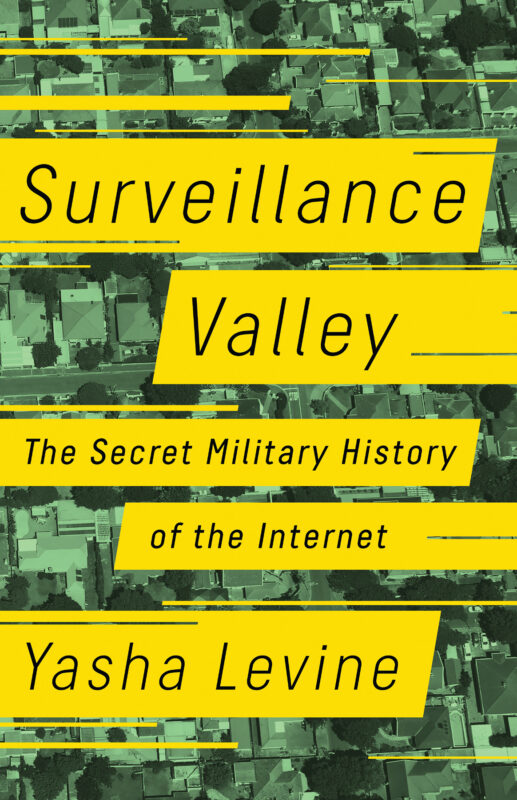
Surveillance Valley by Yasha Levine investigates the military and intelligence roots of the Internet, tracing its development from a Cold War instrument of control to a platform that shapes global power and society. Levine’s research reveals a foundational relationship between digital networks, surveillance, and the exercise of state and corporate power—a relationship that defines the digital world.
The Forgotten History of Networked Surveillance
Yasha Levine opens his narrative in Oakland, California, amid civic uproar over the planned Domain Awareness Center, a citywide surveillance hub integrating real-time video, facial recognition, and data from local and federal agencies. The controversy animates long-standing public suspicion: Who benefits from interconnected surveillance? What drives the expansion of these technologies? Protesters draw links between Silicon Valley’s economic dominance, gentrification, and intensified policing. Their intuition aligns with Levine’s thesis. Surveillance does not emerge in a vacuum. It springs from explicit strategies of power, population management, and intelligence.
Origins in Counterinsurgency
The ARPANET, later known as the Internet, began as a military project. Levine documents how military planners during the Vietnam War pursued information dominance. The Department of Defense’s Advanced Research Projects Agency (ARPA, later DARPA) led efforts to create computer systems capable of real-time intelligence, command, and control. The goal: analyze insurgencies, monitor civilian populations, and anticipate threats before they escalate. The creation of Project Agile in the early 1960s marked a decisive turn. ARPA deployed high-tech methods to support counterinsurgency, using surveillance, social science, and psychological warfare as weapons.
As Levine recounts, ARPA and its contractors, including the RAND Corporation, treated Southeast Asia as a laboratory for weaponized data. They mapped villages, tracked social networks, and designed predictive models to assess the likelihood of rebellion. This approach required unprecedented volumes of information, triggering rapid advances in computer networking. Engineers such as J.C.R. Licklider, who directed ARPA’s Command and Control Research, envisioned networks that could synthesize vast, disparate data streams, supporting both battlefield operations and broader campaigns of political control.
From Jungle to Urban Grid
The transition from the war zones of Vietnam to America’s cities reflected a logic of convergence, not mission drift. Techniques refined abroad moved homeward. Programs for tracking and predicting insurgent activity found domestic analogs in the policing of minority neighborhoods, labor unrest, and social movements. Social scientists, behavioral researchers, and computer technologists fused their disciplines. They developed systems to predict, manage, and preempt collective action—treating society itself as a field of operations.
Levine shows how the spread of networked surveillance coincided with the ascendance of Silicon Valley. The dual-use logic became a business model: technologies justified for defense enabled commercial surveillance and targeted advertising. Urban centers, such as Oakland, became sites where surveillance systems governed both security and social order, intensifying patterns of displacement and control.
Silicon Valley’s Private-Public Nexus
The book details the deep ties between Silicon Valley and the military-intelligence establishment. Technology companies did not simply profit from government contracts; they embedded their platforms and infrastructure into the core of military and intelligence operations. Google, for instance, developed mapping tools for the U.S. Army, supplied cloud computing for law enforcement, and provided artificial intelligence for intelligence agencies. These partnerships extended to other giants—Amazon, Facebook, Palantir—whose services underpin both commercial and government surveillance.
Levine tracks the evolution of this nexus. The boundaries separating government from industry collapse in practice. Corporate data-mining, predictive analytics, and platform infrastructure supplement or even surpass traditional state surveillance. As these companies scale, their methods permeate policing, border control, and counterterrorism. The architecture of civilian life converges with the machinery of intelligence and control.
Surveillance as Infrastructure
Surveillance Valley frames the Internet as a “dual-use” system, but this term minimizes the extent to which surveillance permeates its core design. Levine asserts that from its inception, the network served the needs of intelligence gathering and population management. Civilian applications—communication, commerce, information—emerge within this framework, not outside it.
This insight carries implications for debates over privacy, freedom, and democracy. The infrastructure of the Internet—servers, routing protocols, data standards—reflects priorities set by military and intelligence planners. As commercial actors scaled these platforms, they retained the ability to profile, track, and manipulate users. Corporate and government interests converge on the exploitation of data as a source of power and profit.
The Political Economy of Surveillance
Levine situates surveillance at the center of contemporary capitalism. Targeted advertising, predictive policing, social media analytics, and financial risk modeling all draw on techniques honed in intelligence and counterinsurgency. The capacity to monitor, analyze, and shape behavior constitutes a source of commercial and political advantage.
Gentrification and policing, for example, operate through predictive models that identify “risky” neighborhoods or individuals. City governments contract with private firms for surveillance platforms. Technology companies supply facial recognition, social media monitoring, and real-time data aggregation tools to law enforcement. These systems amplify the displacement of marginalized communities and intensify social sorting, often under the guise of “smart city” innovation.
Behavioral Science and Social Control
The use of social and behavioral science as a weapon emerges as a recurring motif. Military-funded researchers in the Vietnam era studied local cultures, mapped political loyalties, and designed pacification campaigns. These practices extended to domestic applications: the management of inner-city unrest, labor movements, and other perceived threats to social order.
Levine demonstrates how these scientific tools facilitate a shift from reactive policing to preemptive control. Predictive analytics guide resource allocation, surveillance targets, and interventions. By treating human behavior as a set of variables to be managed, these methods advance a model of governance premised on observation, categorization, and intervention.
Cooptation and the Privacy Movement
Surveillance Valley dissects the emergence of resistance movements, privacy activism, and “liberatory” narratives surrounding technology. Levine investigates the paradox that many high-profile privacy projects, including some open-source tools, receive funding or support from intelligence agencies. The drive to protect privacy, in some cases, folds into strategies of information warfare, regime change, or selective transparency. Movements seeking to reclaim the Internet as a space of autonomy encounter a landscape shaped by the very powers they seek to resist.
Levine’s research raises critical questions: What forms of resistance sustain themselves when the infrastructure of surveillance dominates? How do activists navigate a world in which technical expertise, financial resources, and institutional legitimacy often depend on the systems they critique? The book traces the ways in which privacy discourse can serve state and corporate interests, reinforcing narratives of empowerment while maintaining structural dependencies.
The Illusion of Technological Liberation
Levine exposes the ideological roots of the Internet as a utopian space. Narratives of decentralized power, individual empowerment, and democratic renewal suffuse popular accounts of Silicon Valley and its pioneers. These stories shape policy, investment, and cultural imagination. Yet as Levine demonstrates, the architecture of the Internet encodes imperatives of command, control, and surveillance.
The myth of technological liberation obscures the real dynamics of power embedded in networks. The promise of freedom and openness coexists with a machinery of data extraction, profiling, and intervention. As governments and corporations expand their reach, the scope for meaningful privacy and democratic self-determination contracts. Levine calls for a reckoning with the historical realities of the Internet—a recognition that power shapes networks as networks shape society.
Global Reach, Local Impact
Surveillance Valley documents the globalization of surveillance practices. American intelligence agencies, defense contractors, and technology companies export their methods and infrastructure worldwide. International alliances, data-sharing agreements, and cross-border contracts extend the reach of networked surveillance into new jurisdictions.
Cities, regions, and nations adapt these systems to local contexts. Policing strategies, social credit scores, and predictive analytics migrate across borders. The logics of counterinsurgency, developed in Cold War conflict zones, reappear in contemporary urban governance, border management, and information warfare. Surveillance becomes a defining feature of modern governance.
Enduring Consequences
The Internet’s origin as a tool for command, control, and surveillance continues to shape its trajectory. Levine’s narrative traces a causal arc from military planning rooms to the smartphones and cloud servers of the present. Corporate and state actors accumulate vast quantities of data, refine algorithms, and automate decisions. These processes alter the fabric of social life, influence public policy, and create new forms of vulnerability.
The convergence of corporate and government surveillance undercuts traditional checks on power. Mechanisms for accountability, transparency, and democratic oversight struggle to keep pace with technological innovation. The stakes intensify as machine learning, artificial intelligence, and biometric identification expand the repertoire of surveillance.
Towards Structural Reckoning
Levine concludes with a demand for structural analysis. The pursuit of privacy, autonomy, and democracy in the digital age requires more than technological fixes or individual vigilance. It demands scrutiny of the underlying architecture, the financial interests, and the institutional relationships that constitute Surveillance Valley. The challenge lies in confronting entrenched systems of power that benefit from opacity, fragmentation, and ideological mystification.
Surveillance Valley by Yasha Levine asserts the Internet’s defining role in the expansion and normalization of surveillance. The book’s synthesis of military history, social science, and technology studies provides a framework for understanding how digital networks facilitate control, both globally and locally. As the digital world matures, the need for critical engagement with its origins, operations, and implications grows ever more urgent.