The Ascent of Money: A Financial History of the World
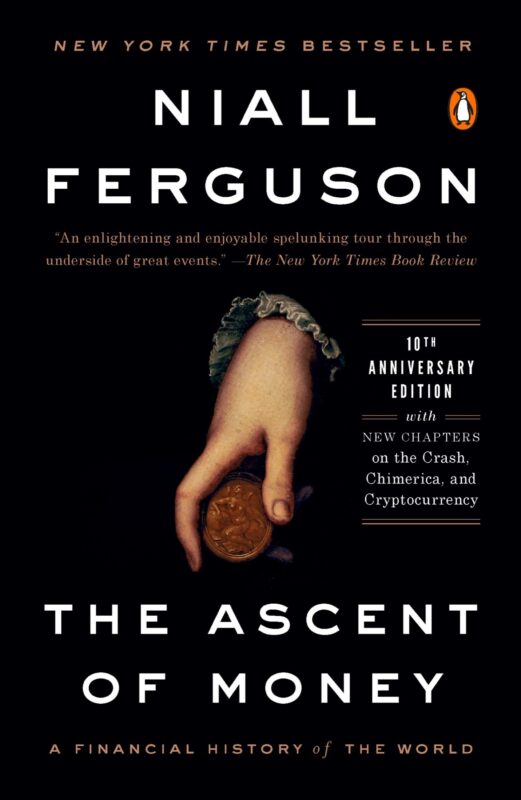
The Ascent of Money: A Financial History of the World by Niall Ferguson examines the forces that shape financial systems and the crucial role money plays in advancing civilizations. Ferguson explores how the rise of finance, with all its instruments, innovations, crises, and transformations, has determined the fate of empires, nations, and individuals. The book investigates how money evolved from simple barter and clay tablets to sophisticated digital currencies and global capital markets, revealing the deep connections between financial innovation and historical change.
The Birth of Money and the Dawn of Trust
In ancient Mesopotamia, early societies recorded obligations and trade with clay tokens and tablets. This innovation fostered trust among strangers and underpinned the emergence of complex economies. Coins forged from precious metals, stamped with the authority of kings, circulated widely, tying legitimacy to commerce. Ferguson shows that money gains value through confidence and the willingness to accept it in exchange. With the advent of paper currency in China and, later, Europe, finance began to detach itself from the need for intrinsic value and rely more on belief in institutions.
Financial Innovation Drives Empires
The financial infrastructure created in Renaissance Italy allowed city-states and merchants to channel capital into exploration, art, and commerce. Double-entry bookkeeping, letters of credit, and bills of exchange enabled businesses to flourish. Joint-stock companies, pioneered in Amsterdam and London, let investors pool risk and finance long-distance ventures. Bonds issued by city-states and nations funded wars and public works, enabling rulers to mobilize vast resources. Ferguson details how financial advances fueled the Dutch and British empires, providing the capital to conquer, trade, and govern far-flung territories.
The Spread of Banking and Credit Networks
Banking houses emerged as central hubs for deposits and loans, using pooled capital to support enterprise and trade. Banks bridged savers with entrepreneurs, amplifying productive capacity and economic mobility. Interest rates, first grounded in agricultural productivity and livestock, became the essential tool for allocating capital and managing risk. Ferguson describes how the rise of reliable credit networks liberated populations from local subsistence, allowing them to invest in business, housing, and education, setting the stage for periods of rapid advancement.
Bubbles, Speculation, and Systemic Risk
With the expansion of finance, societies experienced speculative booms and inevitable busts. Ferguson highlights the South Sea Bubble and the collapse of John Law’s Mississippi Company as formative episodes that revealed the volatility of mass speculation. Over centuries, market manias emerged as new assets and innovations appeared. The introduction of stocks, mortgage-backed securities, and derivatives enabled new investment opportunities but increased the complexity and interconnectedness of the financial system. Ferguson details how these instruments both democratized investment and heightened systemic risk, with each cycle generating waves of prosperity and crisis.
The Mechanics and Impact of the 2008 Financial Crisis
Ferguson dissects the global financial crisis of 2008, identifying six key factors: over-leveraged banks, the spread of toxic debt securities, flawed monetary policies, explosive growth in derivatives, policies promoting homeownership, and the financial symbiosis between the US and China. As housing prices in America faltered, default rates on adjustable-rate mortgages rose sharply. Financial products, which repackaged these risky debts, lost value rapidly, inflicting massive losses on banks and investors worldwide. The crisis spread through a web of interlinked obligations and undermined confidence in core institutions. Central banks intervened, injecting liquidity, but the cascade of failures revealed both the power and vulnerability of modern finance.
Finance and Human Behavior
The book asserts that financial systems reflect human psychology as much as rational analysis. Markets surge with optimism and crash in panic, with emotion driving prices and investment patterns. Ferguson applies insights from behavioral finance to explain why people repeatedly misjudge risk and reward, chasing returns in boom times and fleeing at the onset of crisis. This human tendency to swing between fear and exuberance shapes the rhythm of financial history and determines the frequency and severity of financial disruptions.
Inequality and the Distribution of Financial Knowledge
Ferguson claims that finance magnifies disparities among individuals and societies. Those who understand the principles of credit, risk, and investment benefit from capital accumulation and upward mobility. Financial ignorance increases the probability of loss and hardship. Survey data reveal widespread confusion about compound interest, asset returns, and even basic financial products among adults in advanced economies. As capital flows integrate markets, returns accrue disproportionately to those with access and expertise, deepening inequalities within and between nations.
Globalization and the Evolution of Capital Flows
Modern finance unites global markets in a dense network of capital flows. The “Chimerica” relationship—China’s massive purchase of US debt—transformed the landscape of global finance and affected interest rates, liquidity, and exchange rates worldwide. Ferguson examines how sovereign wealth funds, hedge funds, and multinational banks operate across borders, increasing both the availability of capital and the potential for contagion. The globalization of finance blurs lines between developed and emerging economies, as shocks in one region reverberate quickly through the entire system.
The Rise of Real Estate, Securitization, and Homeownership
Anglophone countries developed strong preferences for homeownership, encouraged by government policy and new financial products. Banks and investors repackaged home loans into mortgage-backed securities, transforming millions of individual loans into global investment vehicles. As interest rates shifted and home values fell, defaults surged, and the value of these securities plummeted. Ferguson illustrates how the architecture of modern finance transmitted losses from individual homeowners to pension funds, banks, and foreign investors, making local problems into global crises.
Financial Literacy and Its Societal Impact
Populations must acquire the knowledge to manage credit, savings, and investments effectively. Ferguson documents widespread deficiencies in financial education, even among citizens of rich countries. Many individuals do not understand how to calculate loan interest, the difference between stocks and bonds, or the nature of inflation. This lack of knowledge exposes individuals to predatory lending, poor investment choices, and inadequate retirement planning. Societies that encourage financial literacy and access to reliable institutions create more resilient economies and reduce the risk of personal financial disaster.
The Evolutionary Character of Financial History
Finance evolves in patterns similar to biological systems. Innovation creates new instruments, markets, and opportunities. When risks accumulate or new vulnerabilities emerge, the system experiences crises—moments of rapid transformation and creative destruction. Ferguson suggests that regulatory reform, technological change, and market adaptation together produce a financial landscape that is dynamic and unpredictable. No single institution or model guarantees stability, as each epoch brings unique challenges and opportunities.
Digital Money, Cryptocurrencies, and the Shape of the Future
Bitcoin and other cryptocurrencies represent the latest transformation in the history of money. Ferguson traces the emergence of digital currencies, from early experiments to the speculative bubbles that accompanied their rise. He recognizes the growing importance of technology giants—especially in China—which now operate vast online payment platforms and drive new forms of financial interaction. While cryptocurrencies capture headlines, state-backed currencies, debt instruments, and equities remain dominant. The intersection of finance and technology continues to reshape how people save, spend, and invest.
Finance and the Structure of Power
Money determines the reach and effectiveness of governments, corporations, and individuals. Ferguson documents how access to credit and investment enables some actors to build infrastructure, wage war, or weather economic shocks, while others falter. Financial strength underpins geopolitical power, as nations with deep capital markets and stable currencies exercise global influence. Changes in the financial system—such as shifts in reserve currency status or the rise of new financial centers—rearrange the global hierarchy and alter the prospects of nations and their citizens.
Patterns, Lessons, and the Ongoing Ascent
Ferguson’s narrative reveals repeating themes in financial history: innovation, expansion, exuberance, crisis, and adaptation. He presents evidence that the evolution of money underlies cultural and scientific achievement, military conquest, and social mobility. Crises appear not as interruptions but as intrinsic features of financial systems, prompting adaptation and reform. New technologies and ideas continually challenge existing models and create both risk and opportunity.
Conclusion: Finance as the Foundation of Progress
Money shapes destinies. The architecture of financial systems—rooted in trust, energized by innovation, and propelled by human ambition—supports the material and social advancement of societies. Ferguson’s analysis demonstrates that the ascent of money encompasses more than profit and loss; it embodies the capacity of human beings to cooperate, plan, and create across generations and continents. Financial history remains unfinished, as new crises, opportunities, and transformations continually emerge. The capacity to understand, adapt, and harness the power of finance defines the ongoing story of civilization.