Spy Schools: How the CIA, FBI and Foreign Intelligence Secretly Exploit America’s Universities
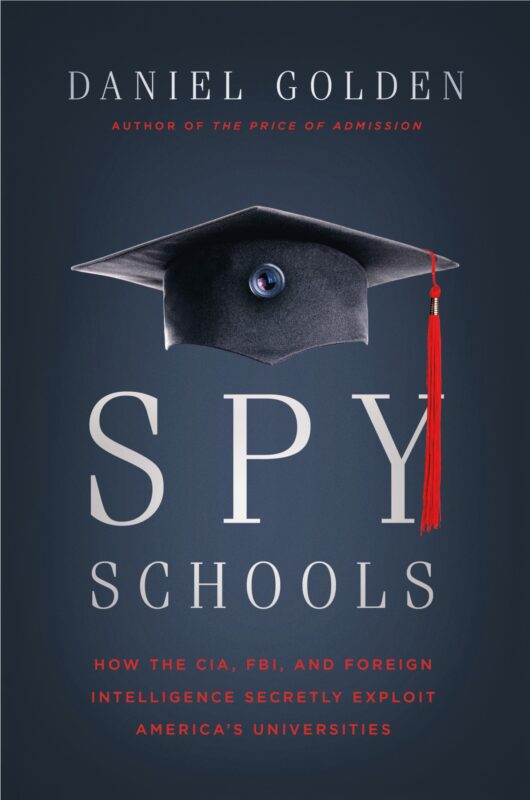
Spy Schools - How the CIA, FBI, and Foreign Intelligence Secretly Exploit America's Universities by Daniel Golden exposes the covert nexus between global espionage and higher education, tracing how intelligence agencies infiltrate American universities to recruit informants, extract sensitive research, and shape geopolitical influence. The book begins with a harrowing personal account: a Chinese-born professor, Dajin Peng, at the University of South Florida faces psychological collapse after being pressured by the FBI to inform on Chinese colleagues and Confucius Institutes. This story anchors a broader inquiry into the entanglements of academic openness and national security priorities.
Intelligence Targets Academic Vulnerability
University campuses offer ideal terrain for intelligence work. Their open architecture, diverse international populations, and research outputs funded by government agencies present abundant opportunity. Spies leverage casual access to labs and classrooms. Students and scholars carry dual roles—as researchers and potential conduits for data exfiltration or ideological influence. Chinese and Russian operatives exploit these vulnerabilities, but American agencies operate similarly. The CIA cultivates sources through academic programs and postdoctoral fellowships. The FBI maintains academic liaison officers and encourages professors to act as informants.
Confucius Institutes and Strategic Penetration
Confucius Institutes function as soft power instruments for the Chinese state, but U.S. intelligence views them as nodes of subversion. Golden investigates how the FBI profiles directors and affiliates, urging them to cooperate in identifying Chinese influence efforts. These institutes often employ staff affiliated with Chinese security or propaganda institutions. In several cases, individuals managing these centers face abrupt dismissals, opaque investigations, or coercive recruitment attempts from federal agents seeking leverage.
Economic Espionage Through Scientific Collaboration
Golden uncovers a pattern of knowledge extraction masked as scientific exchange. Ruopeng Liu, a Chinese graduate student at Duke University, works under Professor David Smith in a Pentagon-funded lab developing metamaterials for stealth technology. Liu uses the open research culture to gain deep familiarity with proprietary techniques. He arranges for visiting Chinese researchers to duplicate lab setups and transmits project insights back to Southeast University. After his return to China, Liu launches Kuang-Chi Science, a company that mirrors Duke’s research trajectory and receives significant investment from Chinese state agencies.
Recruitment by Design
Foreign intelligence agencies use education as a recruitment and placement mechanism. China’s Thousand Talents Program offers incentives for overseas scientists to return with intellectual property. The program does not merely fund research—it integrates scholars into a state agenda of technological acceleration. Golden documents how these schemes exploit academic mobility and diaspora loyalty. Scientists face implicit pressure: bring back useful research or lose favor and opportunity. This pattern appears in cases involving Chinese nationals but also among scientists from Iran and Cuba, where academic affiliations become instruments for long-term intelligence cultivation.
American Agencies Engineer Influence
U.S. intelligence does not restrict itself to foreign threats. The CIA and FBI design academic conferences to identify or convert foreign scientists. CIA officers embed themselves in executive education programs at institutions like Harvard, cultivating relationships with officials from adversarial states. Professors returning from fieldwork in volatile regions report to agency handlers. Some provide travel accounts voluntarily; others become embedded assets, trading information for immunity, protection, or personal advancement.
Institutional Collaboration and Denial
Universities rarely disclose the extent of their engagement with intelligence services. Golden reveals how federal agencies routinely communicate with public universities, often under non-disclosure or via untraceable intermediaries. Despite their commitment to transparency, universities participate in covert operations, share data with law enforcement, and allow surveillance on international students. Public records requests often meet redactions or refusals. The legal rationale—that agency correspondence belongs to the sender, not the recipient—creates structural opacity.
Geopolitical Ramifications of Educational Exchange
Globalization intensifies the stakes. U.S. institutions establish branches in regions sensitive to strategic interests. These campuses attract surveillance from both host and home country intelligence services. Golden observes that universities become geopolitical outposts where diplomatic rivalry plays out through student recruitment, research grants, and hiring decisions. China, in particular, monitors Chinese students abroad and maintains active efforts to influence their conduct and associations.
The Moral Economy of Intelligence Cooperation
Golden interrogates the ethical boundaries of academic collaboration with espionage. Professors justify cooperation as patriotism, obligation, or pragmatic self-interest. Some relish the challenge. One case follows a professor who agrees to meet with a Russian intelligence officer while reporting each meeting to the FBI. The officer offers escalating gifts—a watch, cash, publication support—and proposes employment in a federal agency. The professor complies without breaching classified lines, providing analyses instead. These episodes blur the line between scholarly engagement and covert influence.
Institutional Incentives and Cultural Blind Spots
Universities prize internationalization, prestige, and research output. They rarely vet incoming students or collaborators for intelligence ties. Faculty receive little to no training in intellectual property protection or counterespionage awareness. The cultural ethos of openness clashes with the strategic realities of global research. When foreign operatives exploit this dissonance, universities default to risk management rather than systemic reform. Some prefer ignorance to confrontation.
The Future of Academic Espionage
Surveillance and recruitment pressures will intensify as geopolitical rivalry deepens. The presence of over one million international students in the U.S., the proliferation of dual-use research, and the digitization of lab systems create new vectors for intrusion. Intelligence agencies expand their operations to accommodate these shifts. Golden asserts that universities must either redesign their boundaries of cooperation or accept their role as extensions of state power. The choice implicates not just policy, but the integrity of academic freedom itself.