The House of Rothschild: Volume 2: The World’s Banker: 1849-1999
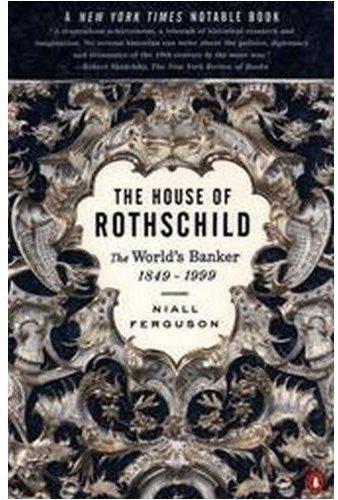
The House of Rothschild, Volume 2: The World’s Banker by Niall Ferguson reconstructs the global ascent of the Rothschild family across the nineteenth and early twentieth centuries, revealing the strategies, alliances, and financial innovations that sustained the family’s influence from Victorian Europe into the early modern era. Ferguson examines the Rothschilds’ command of international finance, their integration into the structures of European power, and the unfolding consequences of their operations across continents, empires, and regimes.
The Making of an International Dynasty
Amschel Mayer Rothschild established a commercial foundation in Frankfurt that allowed his sons to radiate outward—Nathan in London, James in Paris, Salomon in Vienna, and Carl in Naples. The sons' far-reaching partnerships gave the family an information advantage that made the Rothschilds indispensable to monarchs, ministers, and industrialists. The creation of a tightly coordinated but geographically dispersed partnership transformed family into firm, as the Rothschilds aligned kinship loyalty with the requirements of high finance. They maintained daily communication through coded letters and couriers, keeping their interests aligned and decisions immediate. The family’s balance of innovation and tradition enabled the Rothschilds to manage risk, shape credit markets, and outpace competitors.
Power and Politics in Victorian Europe
The Rothschilds navigated the European power structure through relationships with statesmen, royals, and industrialists. British, French, Austrian, and Italian states depended on Rothschild financing for war, infrastructure, and colonial expansion. Rothschild loans underwrote national debts, funded railways, and made possible imperial ventures. The family’s ability to negotiate sovereign loans and restructure national finances gave them privileged access to cabinets and courts. Their influence was never simply a product of capital but of their skill in transforming financial leverage into diplomatic power. The Rothschilds acted as unofficial advisers to ministers and as intermediaries in times of political crisis. The family cultivated a cosmopolitan style that made them at home in multiple capitals while reinforcing their identity through marriages, tradition, and faith.
The Dynamics of Global Finance
The Rothschilds developed new instruments of international finance, including the syndication of sovereign loans, the stabilization of currencies, and the creation of multinational investment consortia. Nathan Rothschild’s management of British government finances during the Napoleonic Wars established a model for later interventions. In the late nineteenth century, the family underwrote major infrastructure projects—railways, canals, utilities—whose scale required complex networks of co-investors, insurers, and governments. The family’s interlocking branches acted as a de facto international bank, able to transfer funds and settle balances with greater speed and discretion than any state or competitor. The family’s risk management and information networks enabled it to anticipate political events and financial trends, protecting capital through upheaval and recession.
Strategies of Survival and Renewal
Despite the perils of revolution, anti-Semitism, and geopolitical transformation, the Rothschilds secured the dynasty’s endurance through innovation and adaptation. The collapse of empires, wars, and market crashes demanded continual reinvention. The Rothschilds diversified into mining, energy, and new markets. The family’s philanthropy—support for hospitals, schools, and cultural institutions—created alliances beyond finance. Rothschilds entered the peerage in Britain and the nobility in France and Austria, embedding themselves within new social orders. Ferguson details the tensions between tradition and change, as younger generations confronted the paradoxes of wealth and assimilation. Rothschild leadership shifted from Nathan and James to Alphonse, Lionel, and subsequent heirs, each adapting strategies to the emerging realities of global power.
The Rothschilds and Jewish Modernity
The Rothschilds stood at the crossroads of Jewish emancipation and integration. Their ascent challenged the boundaries of European society, as the family negotiated its place within an often hostile social order. The Rothschilds became benefactors of Jewish communities across Europe, building synagogues, endowing charities, and supporting movements for civic rights. The family’s presence at court symbolized the new possibilities of Jewish citizenship, even as it exposed the Rothschilds to political attacks and conspiracy theories. Ferguson explores the dialectic between assimilation and identity, as Rothschilds balanced loyalty to Jewish tradition with participation in national cultures. Their success provoked admiration and resentment, fueling myths that continue to circulate in public discourse.
The Rothschild Women
The narrative reveals the influence of Rothschild women, whose marriages shaped alliances and whose philanthropy expanded the family’s public role. Charlotte, the wife of Lionel, presided over salons that brought together politicians and writers. Miriam, Constance, and others extended the family’s influence into education, science, and the arts. The women’s correspondence, networks, and charitable initiatives acted as channels for social and political capital, reinforcing the family’s position across generations.
Rothschild Philanthropy and Social Responsibility
Ferguson traces the emergence of a Rothschild philanthropic ethos, rooted in Jewish tradition but redefined in modern terms. The family endowed hospitals, libraries, and museums. They funded public health campaigns and educational reforms. Philanthropy became a strategy of integration, a means to counteract prejudice, and a source of legitimacy within new national and imperial orders. The scale and scope of Rothschild giving reshaped the landscape of European charity, setting precedents for modern social responsibility.
Crises, Catastrophes, and the Limits of Power
Rothschild power reached its zenith in the decades before the First World War. However, the family’s fortunes came under threat from war, revolution, and economic transformation. The destruction of the Viennese and Naples branches, the confiscation of property, and the challenge of new financial competitors forced the Rothschilds to reconsider their model. The family’s ability to adapt—to reposition capital, form new alliances, and maintain coherence—became essential. Ferguson examines the family’s conduct during the Dreyfus Affair, the rise of anti-Semitic movements, and the crises that foreshadowed the collapse of Europe’s old order. The Rothschilds’ resilience lay in their capacity for reinvention and in the continuity of family governance.
The Rothschild Legacy in the Twentieth Century
The transition from the long nineteenth century to the modern era demanded new strategies. The Rothschilds shifted resources into American, African, and colonial investments. They adopted new forms of business organization and sought opportunities in global commodities and banking. The family’s engagement with scientific research, the arts, and public life expanded. The story closes with the Rothschilds positioned as symbols of both tradition and innovation, at the intersection of finance, society, and politics.
The Rothschild Myth and Historical Reality
Ferguson confronts the legends and conspiracy theories that have surrounded the Rothschild name. The book grounds the family’s power in its mastery of information, its ability to construct networks of trust, and its skill at managing risk. Ferguson documents the limits of Rothschild influence and situates their achievements within the larger currents of European and global history. The Rothschilds shaped the structures of international finance, but their story is one of human agency, adaptation, and complexity.
Innovation, Information, and Financial Modernity
The Rothschilds redefined the scope and scale of financial innovation. Their use of private couriers, encrypted correspondence, and rapid communication allowed them to arbitrage news and opportunity. The family set standards for confidentiality and reliability that became benchmarks for modern banking. The development of syndicated loans, multinational investment consortia, and risk-pooling institutions reflected the Rothschilds’ commitment to adapting structure to circumstance. Their approach to business blended calculation with intuition, strategy with flexibility.
Networks and Global Reach
The Rothschild system functioned as a web of family alliances, trusted associates, and political patrons. The Rothschilds created a model of multinational enterprise in an age of fragmented states. Their ability to operate across languages, cultures, and regulatory systems expanded their reach. The family’s agents monitored markets from Buenos Aires to Bombay, from Cairo to St. Petersburg, acting as conduits for capital, information, and influence.
A New Aristocracy
Rothschilds entered the peerage, received royal honors, and built great houses that became centers of cultural and political life. Their patronage of the arts, sciences, and scholarship expressed both ambition and identity. The family combined economic power with social responsibility, turning wealth into a form of public service. The Rothschilds served as models for subsequent generations of financiers, philanthropists, and political actors.
Tensions of Assimilation and Identity
The Rothschilds navigated the complexities of Jewish emancipation, managing the expectations of state and community. Their success generated new challenges, as family members debated the terms of integration, the meaning of loyalty, and the responsibilities of leadership. Ferguson investigates the pressures of public scrutiny, the costs of visibility, and the dilemmas of heritage.
The Rothschilds in War and Revolution
During times of conflict, the Rothschilds faced direct threats to property, position, and even survival. The family responded with agility, moving assets, negotiating with authorities, and supporting humanitarian efforts. Rothschilds provided resources for relief, reconstruction, and public welfare. The crises of the late nineteenth and early twentieth centuries tested the family’s resilience and confirmed the continuing relevance of its networks and traditions.
From Financial Power to Social Influence
The Rothschild story illuminates the evolution of modern capitalism, the integration of financial and political power, and the responsibilities that come with wealth. The family’s investments in science, public health, and the arts extended the impact of its financial legacy. Rothschilds cultivated partnerships with governments, universities, and civic organizations, shaping policy and public debate.
The Meaning of Wealth and Responsibility
The Rothschilds viewed wealth as a resource for both family continuity and collective improvement. Their philanthropy reflected the imperatives of faith and the obligations of citizenship. The family’s sense of duty shaped its response to changing social conditions, creating models for leadership in public life.
Enduring Lessons
The Rothschilds offer a case study in the interplay of family, finance, and history. Ferguson’s analysis demonstrates how concentrated capital, aligned interests, and long-term vision can generate extraordinary influence. The family’s methods—risk management, information control, social integration—remain instructive for understanding the architecture of modern power. The Rothschild legacy persists in the institutions, ideas, and networks that define global finance today.
Complexity, Continuity, and Change
As generations of Rothschilds faced the challenge of modernity, they wove together innovation and tradition. Ferguson presents a narrative that tracks the convergence of family ambition, political opportunity, and economic transformation. The world the Rothschilds helped create shaped the patterns of global finance, the practices of philanthropy, and the possibilities of international cooperation. Their story invites further inquiry: How do networks sustain power? What are the ethical responsibilities of wealth? In the Rothschild saga, Ferguson provides answers that echo across history and into the present.