The Tragedy of Russia’s Reforms: Market Bolshevism Against Democracy
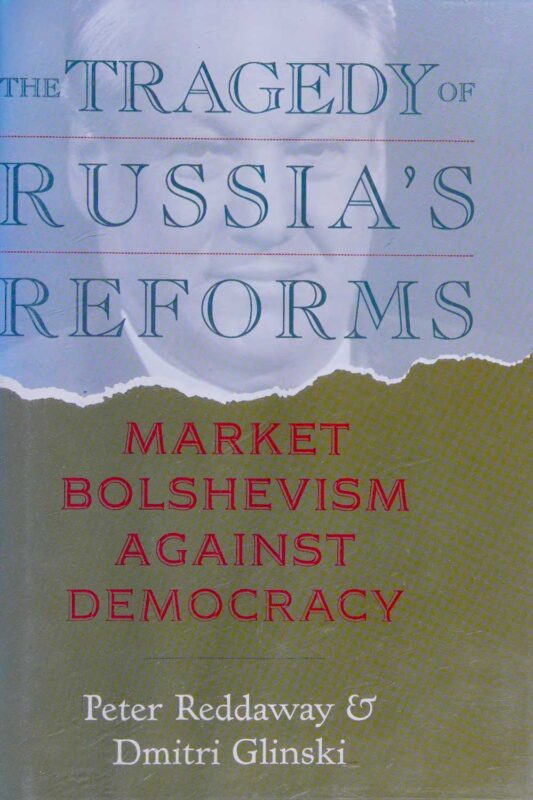
The Tragedy of Russia’s Reforms: Market Bolshevism Against Democracy by Peter Reddaway and Dmitri Glinski dissects Russia’s transformation in the 1990s as a decisive sequence of choices, consequences, and missed opportunities that redefined the nation’s future. Boris Yeltsin emerged from the ruins of the Soviet Union facing a choice between two distinct trajectories: building a civic-democratic revolution with mass participation, or orchestrating a rapid, top-down economic overhaul shaped by alliances between his government, Soviet-era bureaucrats, and new market actors. Yeltsin’s path catalyzed events that would reverberate through Russia’s economy, politics, and society for decades.
The Collapse and the Dilemma of Direction
Yeltsin’s government received an inheritance rife with institutional inertia, elite competition, and rising public expectations. The fall of the USSR created a vacuum, pulling Russia into a vortex of economic uncertainty and political volatility. With the state weakened and the population unmoored, two camps jostled for primacy: one called for participatory democracy and social reform, the other advocated for rapid marketization directed from the top. Yeltsin’s embrace of market reform, with Western support, established a coalition between the reformist leadership and the Soviet nomenklatura, setting the stage for the drama that would unfold.
Shock Therapy: Prescriptions and Catastrophe
Western advisors, including the International Monetary Fund, prescribed “shock therapy”—radical economic liberalization, abrupt price deregulation, mass privatization, and fiscal austerity. The architects of reform believed speed would forestall resistance, break old networks, and foster competitive markets. On January 2, 1992, the Yeltsin administration launched these measures, dissolving decades of planned economics in favor of spontaneous market forces. Factories, land, and resources shifted into private hands, and the ruble floated free. Russian society underwent rapid deindustrialization. Gross domestic product plunged by 43 percent between 1991 and 1998, while industrial output collapsed by 56 percent. Capital investment withered, dropping by 78 percent from 1991 to 1995, and high-technology sectors all but disappeared. Inflation soared, reaching 1,354 percent in 1992, slashing real incomes and eroding savings. Behind the numbers, millions endured poverty, wage arrears, food insecurity, and declining health. Russia’s transformation marked one of the most severe peacetime contractions in modern economic history.
Privatization and the Rise of the Oligarchs
Yeltsin’s government implemented privatization as the engine of reform, transferring ownership of state assets to new proprietors under programs directed by reformers and their Western partners. In practice, the process empowered those with bureaucratic connections, insider knowledge, and access to capital. Former Soviet elites, managers, and emerging bankers captured stakes in lucrative industries, from energy to metals to telecommunications. The new oligarchs acquired vast wealth and consolidated power, shaping government decisions, dominating media, and influencing elections. Economic liberalization forged an alliance between market ideology and the material interests of Russia’s new ruling class.
State Erosion and the Criminalization of Public Life
The sudden erosion of state capacity allowed non-state actors to fill the vacuum. Organized crime proliferated, entwining itself with business, politics, and law enforcement. Estimates from the Russian Ministry of Interior placed the shadow economy at 40 percent of GDP, far beyond typical market transitions. The state lost its monopoly on coercion, and local authorities struggled to maintain order. The judiciary faced intimidation, while law enforcement often aligned with criminal syndicates. As a result, the distinction between legal enterprise and criminal activity blurred, undermining public trust in institutions and leaders.
Democracy Marginalized: Constitutional Crisis and the Descent into Authoritarianism
In October 1993, conflict between Yeltsin and parliament erupted into open confrontation. The president dissolved the Supreme Soviet and Congress of People’s Deputies, using military force against the parliament’s defenders. The violence ended the most significant episode of legislative resistance to executive dominance in post-Soviet Russia. Yeltsin’s government imposed a new constitution, concentrating authority in the presidency and weakening the legislature. The electoral process continued, but political competition became a managed spectacle, with oligarch-controlled media and state resources favoring incumbents. The democratic aspirations of the early 1990s gave way to an executive-centric system that offered stability at the price of political pluralism.
The Disintegration of Social and Scientific Capital
Economic collapse reverberated through Russia’s intellectual and social fabric. The nation’s scientific establishment, once accounting for a quarter of the world’s scientists, shrank dramatically: from 3.4 million in the late 1980s to 1.3 million by the end of the decade. Budget cuts to education and research crippled innovation and prompted a mass exodus of talent. Public health deteriorated, birth rates plummeted, mortality rose, and life expectancy for men declined. The destruction of state welfare infrastructure and the breakdown of medical and social services produced cascading effects on the quality of life. Cultural institutions withered under financial stress, and the moral order that underpinned the late-Soviet social contract fractured.
Opposition, Missed Alternatives, and the Enigma of Inertia
Critics of shock therapy, both within Russia and abroad, identified dangers in the rush to market reforms and urged alternative paths. Some called for gradualism, state-guided restructuring, and broader public participation in reform design. The anti-Yeltsin opposition included nationalists, communists, social democrats, and civil society actors. Despite timely warnings and occasional surges in mobilization, these groups struggled to unite or offer coherent alternatives. The government’s co-optation tactics, media dominance, and periodic use of force neutralized resistance. The opposition’s failure reflected fragmentation, lack of leadership, and the demoralizing weight of social crisis. Inertia set in among broad segments of the population, deepening the sense of fatalism and inevitability.
Western Influence and the Export of Transitology
The designers of Russia’s reforms drew on Western “transitology”—theories of democratization and market transition formulated by academics and policy makers in Europe and the United States. Institutions like the IMF, the World Bank, and prominent economists such as Jeffrey Sachs provided blueprints for Russia’s economic overhaul. Western governments endorsed Yeltsin’s choices and offered loans, technical assistance, and diplomatic support. Western enthusiasm for market reform merged with geopolitical calculations, aiming to secure Russia’s alignment with the liberal international order. The resulting policies prioritized price liberalization, fiscal discipline, and privatization, often at the expense of political inclusion, legal safeguards, and social protection. The consequences included both the concentration of power among Russian elites and a growing disenchantment with Western prescriptions.
Long-Term Consequences and the Emergence of a New Order
By the end of the 1990s, Russia stood transformed yet deeply wounded. The market reforms installed a new economic and political hierarchy, but at immense social cost. The state emerged as a vehicle for oligarchic interests, while the broader population endured impoverishment and disenfranchisement. The collapse of public trust in government, combined with the fragmentation of political opposition, created conditions for the consolidation of executive authority under Vladimir Putin. The new order signaled the closing of Russia’s revolutionary period and the arrival of a pragmatic, security-driven, and often repressive regime. The authors argue that Russia’s trajectory did not simply reflect “transition” or “modernization,” but represented the creation of a new hybrid: market bolshevism, an amalgam of centralized authority and private accumulation.
Lessons and Implications for Russia and the World
The Russian experience of the 1990s challenges the assumptions of linear progress and the efficacy of imported reform models. The sequence of decisions, from shock therapy to privatization to the suppression of opposition, followed a discernible logic of elite self-preservation and adaptation. The structures of Soviet power did not vanish—they mutated, integrating market mechanisms to entrench a new elite. The case of Russia demonstrates the perils of sidelining popular participation, transparency, and legal oversight in the pursuit of rapid reform. The global consequences reach beyond Russia’s borders: the rise of criminal-syndicalist networks, the vulnerability of emerging democracies, and the risks of abrupt economic liberalization in complex societies.
Structural Patterns in Russian History and the Recurrence of Top-Down Revolution
Reddaway and Glinski situate the events of the 1990s within a millennium-long cycle of reform and reaction in Russian history. The book frames Yeltsin’s market revolution as the latest in a series of state-driven transformations, from Peter the Great’s westernization to the Bolshevik Revolution and Stalinist industrialization. Each phase combined promises of progress with the consolidation of centralized power, subordinating mass participation to elite agendas. The pattern recurs: sudden leaps, orchestrated from above, unleash both progress and destruction, and often culminate in the rise of new authoritarian arrangements. The market bolshevism of the 1990s perpetuated this pattern by fusing economic liberalization with executive domination.
Evaluating Reform, Statecraft, and the Scope of Agency
The book contends that Russian reformers faced real constraints: economic crisis, fiscal dependency on Western loans, and political divisions. However, the shape and outcome of reform derived not only from structural limitations, but from choices made by leaders, advisers, and their coalitions. Yeltsin’s preference for executive power, willingness to use force, and alliance with former Soviet elites directed the course of events. The exclusion of broad social participation, the marginalization of civil society, and the failure to nurture effective political opposition entrenched a system built on patronage, media control, and resource extraction. The outcome was not a historical inevitability, but the consequence of accumulated decisions made in conditions of crisis and competition.
Russia’s Place in the International System and Future Prospects
The transformation of Russia altered the international balance and raised questions about the relationship between market reform, democracy, and national sovereignty. The weakened Russian state struggled to provide order, safeguard borders, or influence global affairs. At the same time, the privatization of state assets and the diffusion of wealth abroad created vulnerabilities in the global financial system. The book concludes with a warning: future stability depends on restoring accountability, reconstructing public institutions, and integrating Russia into an international system that respects both its interests and the demands of its population. The lessons of the 1990s reverberate through debates on transition, statecraft, and the meaning of democracy in a post-Soviet world.
Convergence of Economic Collapse and Political Regression
The interplay of economic disintegration and political regression defined Russia’s trajectory in the Yeltsin era. The synchronization of GDP contraction, industrial decay, social dislocation, and political centralization formed a structural matrix that shaped Russia’s options in the twenty-first century. The convergence of oligarchic power, criminality, and executive authority signals the emergence of a new regime type, resistant to both internal reform and external influence. The narrative of market bolshevism, as charted by Reddaway and Glinski, offers an analytic framework for understanding the conditions that produce enduring crises and the complex processes by which societies adapt, endure, and transform in the wake of revolutionary change.