The Ghost: The Secret Life of CIA Spymaster James Jesus Angleton
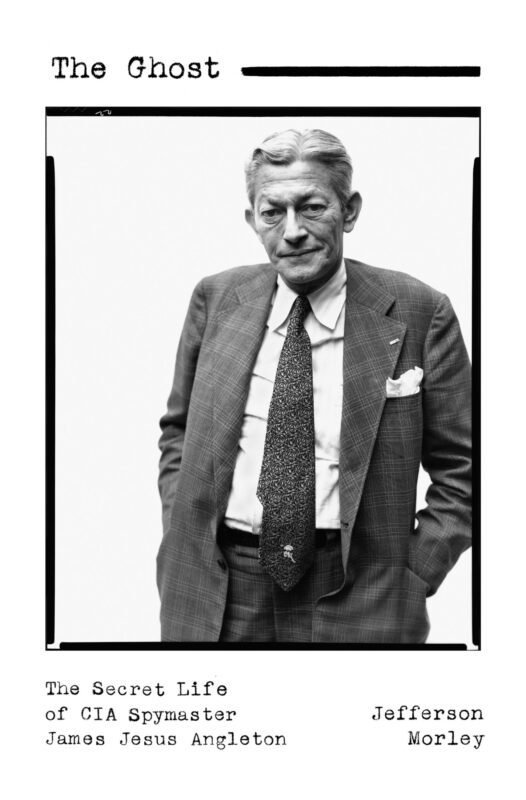
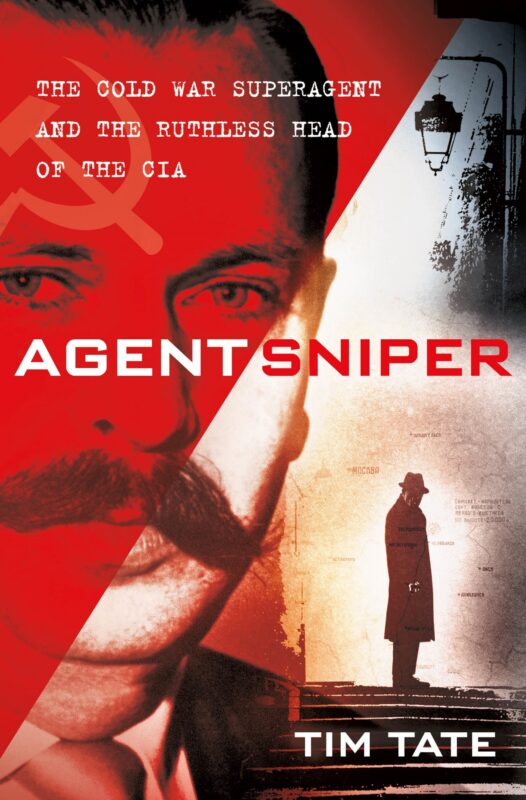
James Angleton stands at the center of The Ghost by Jefferson Morley, a biography that reframes twentieth-century American espionage through the life of a man who helped engineer its deepest intrigues. Angleton’s intellectual formation, rooted in poetry and aesthetic discipline, laid the foundation for a worldview in which ambiguity, coded language, and subtext shaped both thought and action. Morley traces Angleton’s early admiration for Ezra Pound, his New Criticism-inflected education at Yale, and his immersion into wartime counterintelligence to reveal the convergence of literary analysis and espionage methodology. Angleton’s approach to intelligence work reflects this synthesis—dense, analytical, opaque, and governed by a suspicion that concealed meanings drive visible events.
The origins of an aesthetic spycraft
Angleton's formative years in Italy and England, layered with elite schooling and a fascination with modernist poets, converged in his Yale years where he co-founded the literary magazine Furioso. His relationship with Ezra Pound shaped more than just editorial direction. Pound’s conspiratorial views on economics and history resonated with Angleton's latent belief in hidden systems of control. These early interactions laid the groundwork for a worldview that filtered intelligence through interpretation and double meanings. The influence extended to operational behavior. For Angleton, textual analysis became a cipher for reading human behavior and geopolitical events.
Wartime alliances and the birth of counterintelligence doctrine
The outbreak of World War II channeled Angleton into the Office of Strategic Services (OSS), where he met his enduring mentor Norman Pearson. Together, they mastered the doctrine of counterintelligence with guidance from British liaison Kim Philby. The operation of X-2, the OSS counterintelligence branch, trained Angleton in deception campaigns, double agents, and the intricacies of psychological warfare. Philby, whom Angleton trusted completely, taught him to structure disinformation that could destabilize enemy planning. These early lessons became doctrine. Angleton’s belief in the duplicity of appearances emerged directly from these operations.
The Rome station and political engineering
In postwar Rome, Angleton did not dismantle the fascist networks. He absorbed them. He collaborated with former fascist officers, Nazi war criminals, and Vatican intermediaries to construct an intelligence infrastructure aimed at defeating communism in Italy. His role in rescuing figures like Prince Junio Valerio Borghese and Eugen Dollmann reflects a deliberate strategy of retention, not justice. These relationships formed the basis of a covert alliance—American intelligence, Catholic anti-communists, and fascist remnants—united by fear of leftist ascendancy.
Angleton leveraged these alliances to shape Italy’s internal politics. By directing funds, intelligence, and strategic protection to anti-communist elements within the Christian Democratic Party and Vatican channels, he sought to stabilize a political order aligned with U.S. Cold War priorities. The trust he gained within the Vatican extended to relationships with figures like Monsignor Giovanni Battista Montini, the future Pope Paul VI. Intelligence became theology by other means: a belief system organized around the moral necessity of secrecy.
The logic of betrayal
Angleton’s foundational trauma emerged with the revelation that Kim Philby had served as a Soviet double agent. The betrayal devastated Angleton’s psyche and permanently altered his perception of institutional reliability. He responded by restructuring the CIA’s Counterintelligence Staff into an autonomous enclave, conducting internal surveillance and loyalty vetting with religious zeal. Philby’s duplicity became the template for all suspicion. Angleton no longer sought external threats alone. He assumed that betrayal emanated from within.
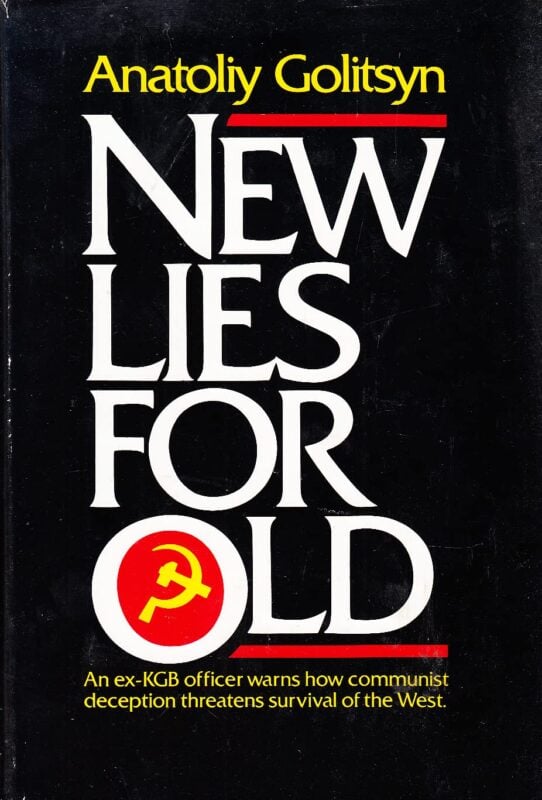
This conviction metastasized into a decades-long campaign of mole hunting, internal surveillance, and career destruction. He fixated on figures like Yuri Nosenko, a KGB defector whose authenticity he rejected. The result was a prolonged incarceration of Nosenko under conditions designed to break him. Angleton’s refusal to accept Nosenko’s legitimacy shaped U.S. counter-Soviet strategy based on phantom assumptions. Intelligence degraded into epistemological gridlock.
The CIA’s fourth branch and the deep state framework
Morley situates Angleton as a foundational architect of what legal scholar Michael Glennon calls “double government”—a post-World War II evolution in which intelligence and military bureaucracies operate as a de facto fourth branch of U.S. governance. Angleton did not simply participate in this transformation; he institutionalized it. His tenure as chief of Counterintelligence allowed him to operate with minimal oversight, answerable only to top-level CIA leadership. The structural opacity of Angleton’s domain foreshadowed the emergence of the deep state discourse decades later.
This apparatus conducted surveillance on domestic political movements, journalists, and even members of Congress. Programs like CHAOS targeted antiwar activists, while Angleton's operation against Israeli nuclear ambitions extended CIA authority beyond traditional jurisdiction. The justification always returned to the belief in unseen forces, hidden truths, and covert wars waged in the margins of visibility.
Decline and dismantling
By the early 1970s, revelations of CIA abuses and mounting congressional scrutiny eroded Angleton’s invulnerability. The exposure of domestic surveillance programs and the fallout from failed mole hunts forced the agency to reckon with the consequences of institutionalized paranoia. CIA Director William Colby removed Angleton in 1974. Though purged, Angleton left behind an architecture of distrust and internal fragmentation that outlived his departure.
His critics within the agency viewed him as obsessive, doctrinaire, and reckless. Yet the systems he built—layered vetting, compartmentalized knowledge, and adversarial defector processing—remained embedded in intelligence methodology. The man who interpreted intelligence through ambiguity had, by his exit, transformed intelligence into an instrument of recursive suspicion.
Legacy encoded in structure
Angleton’s post-retirement years were marked by reclusion and myth-making. He refused to disavow his judgments, even when disproven. His insistence that the Soviet Union had placed moles at the highest levels of U.S. intelligence remained a fixed belief. Former colleagues distanced themselves, but some later echoed his concerns when discussing Soviet infiltration strategies.
The story Morley tells implicates the reader in a larger inquiry: What happens when the methods of interpretation dominate the evidence they seek to explain? Angleton’s career shows how poetic ambiguity becomes operational dogma. His belief in covert meaning forged a counterintelligence empire that redefined the scope of secrecy in modern governance. The Ghost uncovers how literary education, institutional access, and existential dread combined to shape the most secretive corridors of American power. The structure he created remains, invisible and recursive, like the figure it housed.

About the Book
Updates from Morley:
- https://theintercept.com/2016/04/25/how-the-cia-writes-history/
- https://theintercept.com/2018/01/01/the-complex-legacy-of-cia-counterintelligence-chief-james-angleton/