A Man Called Intrepid: The Incredible True Story of the Master Spy Who Helped Win World War II
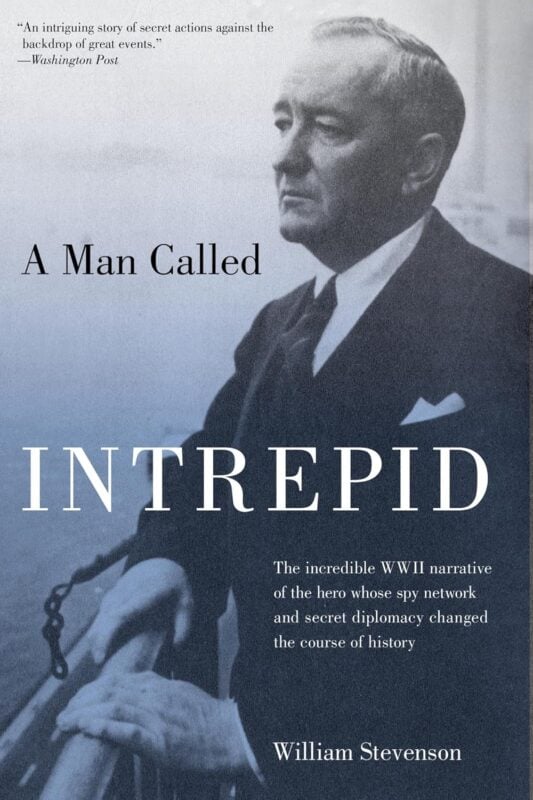
A Man Called Intrepid by William Stevenson reveals the hidden architecture of World War II’s most critical intelligence operations through the lens of Sir William Stephenson’s life and work. Stephenson, code-named INTREPID, orchestrated the British Security Coordination (BSC) and bridged the intelligence gap between Great Britain and the United States, laying the foundation for what became the Office of Strategic Services (OSS) and eventually the CIA. His influence extended through diplomacy, espionage, sabotage, and scientific innovation, defining a new kind of warfare predicated on secrecy, civilian courage, and technological edge.
The secret war before the public war
Years before the United States entered World War II, a hidden war unfolded across borders, bureaucracies, and ideologies. Franklin D. Roosevelt, recognizing the inevitability of conflict, authorized covert operations from within a neutral nation. With Winston Churchill’s backing, Stephenson operated out of New York’s Rockefeller Center under the veil of British Security Coordination. This organization funneled intelligence to Roosevelt, manipulated media narratives, neutralized Axis influence in Latin America, and trained American operatives in psychological warfare and sabotage. The BSC transformed civilian volunteers into operatives who acted without uniform or legal protections, bearing decisions that risked entire communities for the sake of freedom’s long-term survival.
INTREPID’s personal evolution and early war insights
Stephenson’s journey from a gas-injured foot soldier to a decorated fighter pilot set his trajectory toward intelligence leadership. He absorbed scientific principles with obsessive intensity, viewing wireless communication and cryptology as the future of modern warfare. After test flying dozens of aircraft and logging detailed reports on German aviation weaknesses, he attracted the attention of Admiral Reginald “Blinker” Hall, then chief of British Naval Intelligence. Hall recognized in Stephenson a rare synthesis of daring, discipline, and mathematical reasoning. This foundation in both combat and analytics informed the strategic frameworks Stephenson later applied in the clandestine war effort.
BSC as the engine of Allied intelligence collaboration
By 1940, as Hitler advanced through Europe and Britain stood alone, the need for a centralized intelligence apparatus transcended borders. Stephenson created the BSC with a dual function: counter Nazi propaganda and espionage in the Western Hemisphere and persuade the United States to align with Britain’s cause. Through direct channels to Roosevelt and through strategic manipulation of public opinion, the BSC executed black operations ranging from economic sabotage to the orchestration of coups. It coordinated signals intelligence, counterintelligence, and guerrilla training while shielding its operations from scrutiny by embedding within diplomatic channels.
Link to the creation of American intelligence
Stephenson’s guidance to William Donovan catalyzed the emergence of the OSS. Drawing from British intelligence models and BSC’s field-tested structure, Donovan’s agency gained its initial organizational logic, strategic priorities, and operational training from INTREPID’s network. This transference of methods established an American capacity for covert warfare built on foundations laid by Stephenson and Churchill. At a time when official American policy resisted entry into the war, Stephenson’s efforts gave Roosevelt tools to prepare without public commitment. His hand in this transition reveals the extent to which the war’s outcome depended on informal, high-trust relationships between democracies.
The ideological foundation of BSC
BSC agents operated without the protections of military code or uniform. Their recruitment emphasized civilian competence, moral clarity, and willingness to bear risks unknown to regular forces. Many volunteers came from academic, journalistic, or commercial backgrounds, untrained in warfare but guided by a fierce allegiance to democratic values. They devised encryption systems, developed resistance networks, and subverted enemy operations across continents. Their anonymity was not accidental but a deliberate strategy to preserve operational integrity. Their sacrifices, largely undocumented until Stevenson’s account, formed a parallel history of World War II defined by ingenuity and personal resolve.
Stephenson’s scientific and technological foresight
INTREPID’s work transcended tactical operations. He saw war’s future in technological supremacy—radar, encrypted communication, early computers. His pre-war involvement with innovators like Charles Steinmetz and Chaim Weizmann shaped his understanding of how science would govern the battlefield. He supported the extraction and protection of key scientists fleeing fascist regimes and funneled their research toward Allied capabilities. His identification of the German heavy water plant at Norsk Hydro, vital to Nazi atomic ambitions, led to one of the most consequential sabotage missions of the war. His belief in intelligence as a war-deciding weapon framed secrecy not as a tactic, but as a form of existential defense.
Strategic deception and psychological operations
BSC’s operations did not merely collect information. They constructed realities. Through forged documents, planted news stories, and staged incidents, Stephenson’s team reshaped the perceptions of both enemies and allies. These methods suppressed Nazi influence in Latin America and undermined Axis morale in occupied territories. One of the most pivotal acts was enabling ULTRA intelligence—decrypts of German Enigma communications—to flow into American hands while preserving its secrecy. Deception campaigns supported major operations, including the Normandy invasion. These actions required not only technical expertise, but a deep understanding of human belief, fear, and persuasion.
The postwar dismantling and moral reckoning
At war’s end, the BSC dissolved, and Stephenson returned to private life. He refused honors, held no public post, and remained silent for decades. The official secrecy surrounding BSC’s work endured long past the war. Its dismantling coincided with a global pivot to the Cold War, where intelligence again surged in significance. Stephenson’s choice to open the record through William Stevenson responded to new threats—bureaucratic corruption of intelligence, public ignorance of historical precedents, and ideological drift. He argued for oversight, but also defended the necessity of secrecy when wielded in defense of democratic survival.
Legacy of INTREPID and implications for today
The record of BSC and INTREPID’s leadership reshapes our understanding of World War II’s machinery. Victory did not hinge solely on tanks and battleships. The Allied cause depended on preemptive insight, operational subtlety, and unorthodox collaboration. Stephenson’s blueprint influenced not only the structure of Western intelligence but also the philosophical questions surrounding its legitimacy. How do democracies protect themselves without surrendering their values? Who ensures that the weapons of secrecy serve freedom rather than subvert it? Stephenson’s account, through Stevenson’s pen, insists on confronting those dilemmas as enduring questions, not resolved doctrines.
The strategic value of remembrance
A Man Called Intrepid stands as both a chronicle and a warning. Stephenson believed that the postwar ideal of peace had failed to acknowledge the permanent conditions of strategic rivalry. He viewed intelligence not as a relic of wartime, but as a continuous necessity. His story urges vigilance without hysteria, secrecy without lawlessness, and courage without spectacle. The agents he led left no monuments, yet they altered the course of nations. Their example affirms the possibility of civic resistance—voluntary, skilled, principled—against coercive power. Their legacy, preserved through deliberate disclosure, offers a model for defense rooted in intellect, sacrifice, and clarity of purpose.