Conspiracy of Fools: A True Story
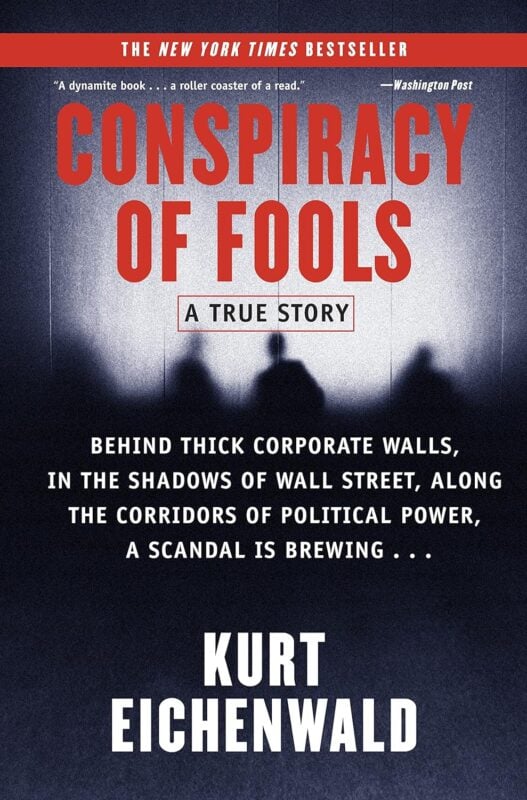
Conspiracy of Fools by Kurt Eichenwald exposes the intricate sequence of misjudgments, deception, and unchecked ambition that collapsed Enron Corporation. The book reconstructs the rise and implosion of a corporate giant whose inner workings remained opaque even to many insiders. Eichenwald crafts a gripping narrative using firsthand accounts and confidential documents, offering a comprehensive account of one of the most consequential corporate scandals in American history.
The Rise of an Illusion
In the 1980s, Ken Lay, a Missouri-born economist and energy executive, transformed a modest pipeline company into an empire rooted in deregulated energy markets. Lay’s ascent culminated in a merger between Houston Natural Gas and InterNorth, forming the foundation for Enron. At a glance, the company appeared to flourish under his leadership. The stock rose, market confidence surged, and Enron became synonymous with innovation and success.
Behind this image, a different architecture took shape. Lay installed a culture where executive optimism and aggressive growth targets outpaced operational grounding. Metrics mattered more than models. Financial instruments evolved into tools for obscuring failure. Lay fostered relationships in Washington and the media, cementing Enron’s identity as both political force and business innovator.
The Engineered Growth of an Empire
Jeffrey Skilling entered with an audacious plan to remake Enron as a market-maker for energy commodities. He introduced “mark-to-market” accounting, enabling the company to book estimated future profits as current income. The method, while permissible under certain accounting frameworks, allowed Enron to mask volatility and inflate earnings.
Skilling’s model required constant deal flow to sustain its projections. Enron responded by expanding rapidly into broadband, water, and international ventures. Andrew Fastow, as chief financial officer, created a network of off-balance-sheet entities. These structures—including LJM, Chewco, and the Raptors—served dual roles: insulating Enron’s balance sheet from loss exposure while enriching their managers.
These vehicles posed clear conflicts. Fastow ran LJM while negotiating deals on behalf of Enron. The company’s board granted him waivers. External auditors at Arthur Andersen approved the arrangements, accepting dubious justifications for entities that obscured liabilities and overstated earnings.
Signals of Structural Decay
Internal controls deteriorated. Risk assessment flagged issues, but Skilling and Lay dismissed dissent. Analysts and employees raising concerns found themselves marginalized. Sherron Watkins, a vice president, wrote a memo to Lay questioning the integrity of Fastow’s partnerships. Her warning triggered meetings but no corrective action.
Stock performance remained robust. Executives sold millions in personal shares while encouraging employees to hold theirs. Meanwhile, cash flow weakened. The business relied increasingly on credit markets to stay afloat. As doubts mounted among analysts and journalists, Enron became the subject of investigative reporting that challenged its narrative.
A Tipping Point and a Vacuum
In August 2001, Skilling resigned abruptly. Citing personal reasons, he departed just as pressure intensified. Lay reassumed the CEO role but faced a company spiraling toward insolvency. Banks questioned Fastow’s conflicts. Debt markets demanded higher premiums. Trading partners grew wary. The financial structure, once shielded by complex derivatives and arcane accounting, began to unravel.
On October 24, 2001, Lay confronted the inevitable. Fastow informed him that lenders refused to extend credit while he remained CFO. Within hours, the board removed Fastow and installed Jeff McMahon in his place. Internal assessments revealed the extent of off-balance-sheet obligations. Revolving credit lines—Enron’s financial fallback—dwindled as banks distanced themselves.
That same week, Skilling, isolated in Miami, spiraled into emotional collapse. He realized that Enron’s entire foundation—his creation—was collapsing. The market, silent until then, now declared its verdict.
Disintegration in Real Time
Executives convened war rooms to secure liquidity. Whalley, Enron’s president, ordered the drawdown of all credit lines. Analysts downgraded the stock. Ratings agencies slashed Enron’s credit. In weeks, the company lost access to operational capital. Employee retirement accounts—tied to Enron stock—evaporated. Vendors refused shipment without prepayment.
The final unraveling occurred with Dynegy’s aborted merger. Hoping to stabilize Enron, Dynegy proposed a bailout, backed by Chevron. But after due diligence, Dynegy withdrew. Bankruptcy followed. On December 2, 2001, Enron filed for Chapter 11 protection, marking the largest corporate bankruptcy in U.S. history at the time.
The Aftershocks and the Reckoning
Enron’s collapse triggered widespread investigations. The Department of Justice formed the Enron Task Force. Congressional committees launched hearings. Whistleblowers testified. Executives faced indictments. Andrew Fastow pleaded guilty and cooperated. Skilling and Lay were prosecuted for fraud and conspiracy. Lay died before sentencing. Skilling served over a decade in prison.
Arthur Andersen, Enron’s auditor, shredded documents and faced obstruction charges. Though later overturned by the Supreme Court, the conviction crippled the firm, leading to its dissolution. The scandal forced a reckoning within the accounting industry and spurred corporate governance reforms.
Congress passed the Sarbanes-Oxley Act in 2002, establishing stricter auditing oversight, executive accountability, and enhanced disclosure requirements. The law redefined the relationship between corporations and the public, aiming to restore trust in capital markets.
The Human Cost and Cultural Impact
Thousands lost their jobs, savings, and healthcare. Employees who had invested retirement funds in Enron stock found their nest eggs worthless. Pensioners dependent on Enron’s valuation faced sudden destitution. The ripple extended beyond Houston. Global investors, contractors, and communities tied to Enron’s projects suffered abrupt discontinuity.
The scandal altered public perception of corporate ethics. It challenged assumptions about executive behavior and market self-regulation. Business schools reevaluated curricula. Investors scrutinized earnings reports with new skepticism. Institutions emphasized compliance and internal auditing.
A System Designed to Fail
Enron’s failure was not the result of a hidden villain. The system itself incentivized deception. Performance-based compensation, weak oversight, and market worship rewarded short-term wins over sustainable practice. Bankers structured deals that met Enron’s needs without questioning underlying risk. Lawyers provided cover for transactions that strained legal credibility. Analysts accepted opaque explanations. The board, informed yet acquiescent, deferred to leadership.
Fastow did not act in isolation. His methods reflected expectations. Executives equated success with complexity. Simplicity signaled stagnation. Financial engineering became a competitive strategy. Each transaction built on the last, increasing systemic fragility.
The Cultural Code of Collapse
Ambition shaped every decision. Lay believed in deregulation as a moral and economic imperative. Skilling saw markets as rational adjudicators of value. Fastow treated finance as architecture. Their visions converged into a machine fueled by perception and protected by confidence.
Confidence turned brittle. Market doubt transformed rumor into reality. Stock prices collapsed faster than governance could respond. Confidence, once Enron’s currency, evaporated without trust.
Enron, once the archetype of innovation, became a cautionary monument. Its executives, celebrated for their brilliance, became symbols of excess. Its accounting, hailed as visionary, became the blueprint for obfuscation. The story of Enron, told through the lens of Conspiracy of Fools, captures a moment when belief displaced inquiry, and aspiration outran judgment.
In the end, the most durable lesson lies not in Enron’s methods, but in its mindset. The company succeeded by convincing the world it had discovered a new economic logic. It failed when that illusion required continual reinvention. Structure without scrutiny breeds collapse. Systems built on image dissolve under inspection. Enron imploded not from the weight of secrets, but from the absence of substance behind them.