Crossfire: The Plot That Killed Kennedy
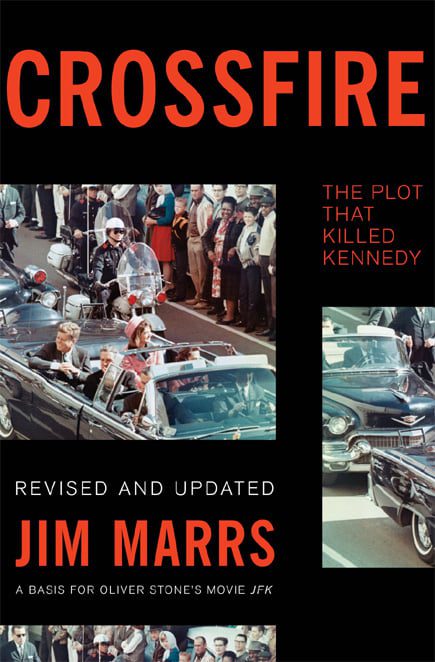
Crossfire: The Plot That Killed Kennedy by Jim Marrs unravels the intricate web of evidence, motives, and power that shaped one of America’s most consequential assassinations. The book launches into the heart of Dallas, 1963, where political tension and ideological conflict had transformed the city into a stage for world-changing events. Marrs establishes Dallas as a nexus of power, archconservatism, and rising influence, describing its rise from a pioneer outpost to a dominant hub of finance, oil, and covert intrigue. These social and political currents frame the setting for John F. Kennedy’s fateful trip, where the intersection of ambition, fear, and historical momentum set the stage for assassination.
Kennedy’s America: Collision of Power and Idealism
Kennedy entered the presidency as the youngest man elected to the office, imbued with the optimism of a new era. He symbolized the transition into twentieth-century politics, propelled by charisma, wartime heroism, and a privileged background. His administration prioritized civil rights, international diplomacy, and a vision for peace, focusing increasingly on broad historical questions over the routine demands of politics. Kennedy’s growing willingness to challenge entrenched power—addressing tax privileges, negotiating with communist adversaries, reining in the military and intelligence establishment—provoked deep unease among the nation’s most powerful cliques. This friction deepened as the 1964 election approached, and Kennedy’s visit to Texas formed part of a calculated campaign to secure political support, bridge party divisions, and present a united front.
Dealey Plaza: The Scene of History
Dealey Plaza emerges as both a geographical and symbolic crossroads. Marrs reconstructs the presidential motorcade’s passage through Dallas, cataloging the meticulous preparations, the complex route, and the ominous warnings that shadowed Kennedy’s arrival. Newspaper coverage mapped the journey in detail, yet the route through Dealey Plaza, with its zigzag path and limited visibility, violated established Secret Service protocols and exposed the president to extraordinary risk. The crowds that gathered along the streets mirrored Texas’s political volatility—outwardly enthusiastic, yet underscored by pockets of hostility and orchestrated dissent. Kennedy’s approach to the plaza, the final moments of calm, and the sudden eruption of gunfire set in motion an irreversible historical trajectory.
The Convergence of Conspiracies
Marrs synthesizes decades of evidence, testimony, and official records to reveal a multifaceted plot against Kennedy. The book identifies a convergence of organized crime, disaffected intelligence operatives, anti-Castro Cuban exiles, and right-wing extremists, unified by intersecting motives and logistical cooperation. The Mafia resented Kennedy’s crackdown on organized crime, particularly through his brother Robert Kennedy’s Justice Department. Anti-Castro Cubans blamed the administration for the Bay of Pigs fiasco and perceived Kennedy’s outreach to the Soviet Union as a betrayal. Within intelligence circles, frustration mounted over Kennedy’s efforts to limit CIA operations and assert civilian oversight. Right-wing business leaders and oil magnates, alarmed by threats to their financial interests and traditional power, joined the matrix of opposition. Marrs argues that this coalition generated the resources, planning, and influence required to orchestrate both the attack and the subsequent manipulation of evidence.
The Assassination: Evidence and Testimony
Marrs scrutinizes the moment of assassination, tracking bullet trajectories, eyewitness testimony, and forensic anomalies. The Zapruder film, now infamous for its unflinching documentation, depicts Kennedy’s body driven backward—visual evidence that sparked widespread skepticism regarding the official account. Witnesses described shots from multiple directions, smoke on the grassy knoll, and the presence of suspicious individuals with ties to law enforcement and covert networks. The Warren Commission’s assertion that Lee Harvey Oswald acted alone faces methodical challenge in Marrs’s narrative. The book presents physical evidence and conflicting eyewitness accounts that reveal inconsistencies, unanswered questions, and patterns of official misdirection.
The Role of Lee Harvey Oswald
Marrs excavates the biography of Lee Harvey Oswald, detailing his movements, associations, and the labyrinthine trail of his life as a Marine, Soviet defector, and political agitator. Oswald’s connections to intelligence operations, dubious acquaintances, and unexplained access suggest manipulation by unseen actors. Marrs explores Oswald’s claims of innocence, his repeated assertions that he served as a “patsy,” and the opaque circumstances of his death at the hands of Jack Ruby. By tracing Oswald’s documented history and examining the contradictions in official reports, the book constructs a portrait of a man swept into currents larger than himself—simultaneously suspect and scapegoat within a broader conspiracy.
Aftermath: Cover-up and Suppression
The narrative advances beyond the shooting, detailing the frantic activity in Dallas, the rushed investigation, and the orchestrated suppression of key evidence. Marrs describes how authorities immediately seized control of the scene, restricted access, and mishandled or lost critical materials, including photographs, bullet fragments, and autopsy documents. The book catalogs the actions of the Warren Commission, FBI, and Secret Service, highlighting witness intimidation, conflicting testimony, and deliberate alteration of the official narrative. Marrs names high-ranking officials and financial elites who used their power to shape public understanding, orchestrate the release or suppression of information, and protect themselves from scrutiny.
Media and the Machinery of Consensus
Corporate-controlled mass media plays a decisive role in Marrs’s account. He asserts that leading newspapers and broadcasters, rather than pursuing the full range of evidence, echoed official pronouncements and marginalized dissent. Books, lectures, and witnesses who challenged the lone gunman theory encountered ridicule, censorship, and professional reprisals. Marrs credits the persistence of independent researchers and journalists for exposing suppressed facts, developing alternative theories, and maintaining public skepticism. The narrative links media complicity with a broader crisis of trust, as the gulf widened between official statements and the findings of objective study.
Mysterious Deaths and Continuing Obstruction
A striking pattern of suspicious deaths follows the assassination, as witnesses, investigators, and persons with relevant knowledge perish under violent or unexplained circumstances. Marrs documents these cases, noting the statistically improbable frequency with which individuals connected to the case met untimely ends. The book ties these deaths to ongoing efforts at concealment, arguing that obstruction did not cease with the Warren Commission but extended across decades. Government agencies, facing new inquiries and declassified records, repeatedly resisted meaningful investigation, reinforcing the atmosphere of suspicion and cynicism.
Legacy of Distrust: American History Transformed
Marrs positions the Kennedy assassination as a pivotal turning point in American history. The loss of faith in government, ignited on November 22, 1963, shaped subsequent decades of American politics and culture. Disillusionment deepened in the wake of Vietnam, Watergate, Waco, and the unanswered questions surrounding major acts of violence and cover-up. The event became a template for future skepticism, as citizens began to interrogate official narratives and demand transparency. Marrs contends that the consequences extend beyond the assassination itself, affecting the American psyche and the nation’s understanding of power, accountability, and justice.
Seeking Justice and Truth
The author closes with a call to action. Understanding the full truth of Kennedy’s death, Marrs argues, serves not only the memory of the president but the ongoing project of American democracy. Justice involves exposing both those who executed the attack and those who engineered the cover-up—those who killed the nation’s confidence as well as its leader. By synthesizing decades of research, first-hand interviews, and declassified records, Marrs urges readers to confront uncomfortable facts and re-examine assumptions about authority and history.
Implications for Today
The book’s analysis of coup-like dynamics within American institutions speaks directly to ongoing debates over transparency, media responsibility, and the integrity of democratic processes. Marrs’s work demonstrates how state power, corporate influence, and clandestine networks can converge to produce outcomes that shape the trajectory of a nation. The persistence of unanswered questions compels renewed investigation, rigorous skepticism, and civic vigilance. Marrs situates the quest for truth about Kennedy’s assassination within a larger struggle for the soul and direction of the United States.
Research Methods and Author’s Credentials
Marrs builds his case through journalistic rigor, direct access to witnesses, and a lifetime spent in the political and social milieu of Texas. He draws from interviews with law enforcement, Kennedy family members, and key figures both celebrated and overlooked. His experience as an investigative reporter and university lecturer on the subject lends authority to his synthesis. The breadth of sources, from government documents to personal testimony, equips the narrative with depth, specificity, and critical perspective.
Conclusion: Convergence and Consequence
The architecture of conspiracy in Crossfire is neither monolithic nor haphazard; it manifests as a convergence of interests, actions, and opportunities that fused in Dallas in 1963. Marrs asserts the necessity of understanding these forces, not as distant echoes, but as structural realities with enduring impact. The Kennedy assassination, he claims, remains both a national trauma and an unresolved case study in the exercise of power. As new generations revisit the evidence and weigh its implications, Marrs’s account endures as a benchmark for serious inquiry into the mechanisms of American history.