Handbook of Hypnotic Suggestions and Metaphors
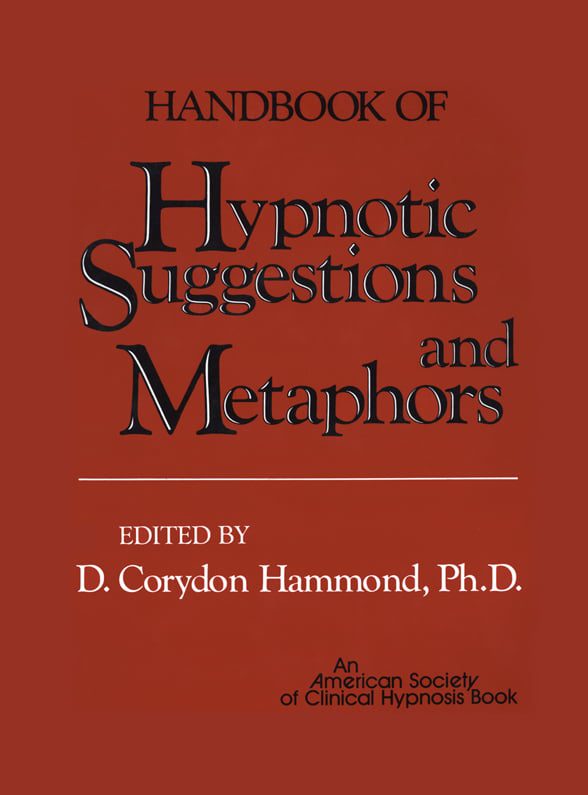
Handbook of Hypnotic Suggestions and Metaphors by D. Corydon Hammond provides a direct conduit between advanced hypnotherapeutic training and the practical demands of clinical intervention. Structured to reflect the complexity and diversity of therapeutic practice, this reference compiles thousands of real-world hypnotic scripts and metaphoric constructs used by clinicians across multiple disciplines. The book does not theorize hypnosis. It articulates it through the precise language of clinical sessions, offering practitioners a dynamic repository for therapeutic application.
The Architecture of Therapeutic Language
Clinical hypnosis succeeds when it bridges inner perception and external transformation. The practitioner’s words serve as both trigger and guide. This text supplies the structural forms—direct suggestion, permissive phrasing, metaphor, affect induction, cognitive reframing—engineered to catalyze specific outcomes. It offers scripts that speak directly to pain modulation, emotional stabilization, habit transformation, performance enhancement, and physiological control. Each module operates within a functional paradigm, tailored to real cases and adaptable across a spectrum of client needs.
This handbook documents how seasoned clinicians phrase suggestions to modulate anxiety, enhance ego strength, reframe trauma, and guide neurophysiological response. Hammond’s editorial vision integrates voices from across the hypnosis community, yielding a polyphonic map of clinical wisdom grounded in action. Suggestions are organized by condition, technique, and goal. Each segment flows from empirical indication to linguistic execution.
Integrative Hypnotherapy in Practice
Integrative hypnotherapy builds on a foundation of technical eclecticism. Hammond emphasizes that practitioners should not align with a single doctrine but instead cultivate a functional fluency across hypnotic modalities. The book models this philosophy by collating contributions from over 100 hypnotherapists with distinct theoretical orientations. Ericksonian approaches sit beside direct suggestion strategies, rational-emotive adaptations, and somatic-emotive bridging techniques.
The book sequences its content to reflect therapeutic goals rather than theoretical abstractions. Early chapters examine core principles for formulating hypnotic and posthypnotic suggestions, including rapport-building, positive expectancy, strategic repetition, dominant effect, and the structuring of internal motivation. Each principle aligns with a pragmatic example, converting concept into implementable action.
Applications in Medical and Psychological Domains
The body interprets suggestion as instruction. Hypnosis modulates sensory processing, immune response, and autonomic regulation. The book devotes entire chapters to managing pain, preparing patients for surgery, reducing the impact of chemotherapy, treating dermatological conditions, and regulating immune activity. These chapters combine suggestion structures with metaphor and imagery techniques designed to trigger physiological adaptation.
For pain, scripts address both acute and chronic presentations. Contributors offer metaphors of transformation, dissociation, and protective adaptation. The techniques range from “sympathetic ear” reframing to progressive anesthesia and recall of pain-free states. Surgical preparation modules include temperature control, rapid induction, and healing enhancement scripts.
Psychological conditions receive similarly targeted attention. Anxiety and phobic responses are approached through immersive imagery, indirect reframing, and stress-reduction trances. Ego-strengthening suggestions promote self-efficacy through layered affirmations, developmental metaphors, and abstract constructs of personal change. The handbook includes specialized modules for PTSD, multiple personality disorder, depression, suicidality, and severe character pathology, integrating insight, containment, and restructuring techniques.
Constructing Motivation through Metaphor
Metaphor bypasses conscious resistance. It reorganizes perception by engaging the symbolic logic of the unconscious. Hammond’s compilation privileges metaphor as a central instrument of change. Scripts use natural imagery, developmental archetypes, and cognitive inversion to transform entrenched patterns. A metaphor of callous formation recontextualizes chronic pain. An “ugly duckling” metaphor rebuilds self-image. The “Jazz Band” metaphor recasts dysfunctional family dynamics.
Each metaphor functions as a change vector, anchoring therapeutic goals in the client’s sensory, emotional, and narrative frameworks. Suggestions for habit disorders—nail-biting, trichotillomania, bruxism—invoke metaphoric substitution, reframing the compulsion as a misguided adaptation rather than a moral failure. Addiction scripts pair cognitive rationales with emotionally evocative metaphors that seed aversive shifts and reorient desire.
Children’s hypnosis is grounded in metaphor and fantasy. Scripts for enuresis, behavioral problems, and learning disorders use age-appropriate images—enchanted cottages, ocean waves, magical helpers—to recast problems as solvable journeys. These narratives mirror developmental stages, allowing children to engage change as play and transformation.
Temporal Techniques and Identity Modulation
Hypnosis compresses or expands subjective time. The handbook explores this temporal plasticity through age regression, age progression, and time distortion. Regression scripts guide patients back to formative experiences for resolution or resource recovery. Age progression constructs future identities through goal imagery and mental rehearsal, embedding new competencies as lived potentials.
These techniques also support identity integration and trauma resolution. For multiple personality presentations, the text includes fusion rituals, ego-strengthening frameworks, and internal organizational metaphors such as the “corporate headquarters of the mind.” The scripts frame integration as both structural alignment and emotional coherence.
Time distortion techniques extend trance flexibility. Patients are trained to experience therapeutic gains more rapidly or to stretch positive affect states. The temporal reorientation modules link cognition and experience, equipping practitioners to shape subjective time in service of healing.
Performance Enhancement and Cognitive Expansion
Suggestion enhances concentration, memory, and learning. The academic and athletic performance chapters feature scripts for study motivation, test anxiety, reading speed, foreign language acquisition, and mathematical focus. Techniques include “alert trance” strategies that merge heightened concentration with calm, as well as memory bank metaphors that encode information retrieval in vivid narrative structures.
Athletic scripts incorporate sensory detail, self-image rehearsal, and goal-directed metaphor. Techniques address endurance, team coordination, and cognitive-aesthetic synchronization. The hypnotic suggestions activate physiological readiness while embedding psychological resilience.
In the realm of sexual functioning and relational challenges, the text presents scripts that normalize anxiety, enhance fantasy, modulate physical response, and restructure interpersonal expectations. Suggestions for orgasmic dysfunction, spectatoring, and emotional inhibition combine direct instruction with symbolic resolution.
Ethical Alignment and Clinical Rigor
Hypnosis amplifies intent. The therapist’s ethical clarity must shape the intervention. Hammond foregrounds that practitioners must only use hypnosis within the scope of their licensure and training. The book’s utility depends on prior expertise in psychological assessment, case conceptualization, and therapeutic alliance.
Suggestions cannot substitute for clinical judgment. Hammond includes guidance for aligning hypnotic language with patient readiness, therapeutic context, and structural goals. The American Society of Clinical Hypnosis, to which royalties from this book are donated, offers further training and certification. This institutional support reinforces the book’s position as a clinical tool, not a standalone solution.
Each suggestion module includes contextual indicators—target symptom, patient profile, therapeutic stance—that anchor the script in its intended use. Hammond’s annotations guide adaptation, encouraging practitioners to modify wording to fit their voice, client temperament, and situational dynamics.
Convergence of Technique and Intuition
Hypnosis engages unconscious processing. The clinician’s language interfaces with neurobiological patterns, internal logic, and stored experiences. This handbook structures that interface, rendering intuition actionable through practiced scripts and structured variation. It cultivates procedural fluency through immersion in technique.
Hammond recognizes that transformation requires both structure and responsiveness. The handbook does not direct. It activates. Each suggestion is a model of practice in motion, a snapshot of intervention that invites reinterpretation. Practitioners become authors of their own therapeutic language, supported by a repository that reflects the field’s deepest practical insights.
Handbook of Hypnotic Suggestions and Metaphors stands as a clinical engine for those fluent in hypnosis and ready to expand their therapeutic impact. Its scale and specificity convert decades of experience into a living archive of transformational language.


About the Book