How to Lie with Statistics
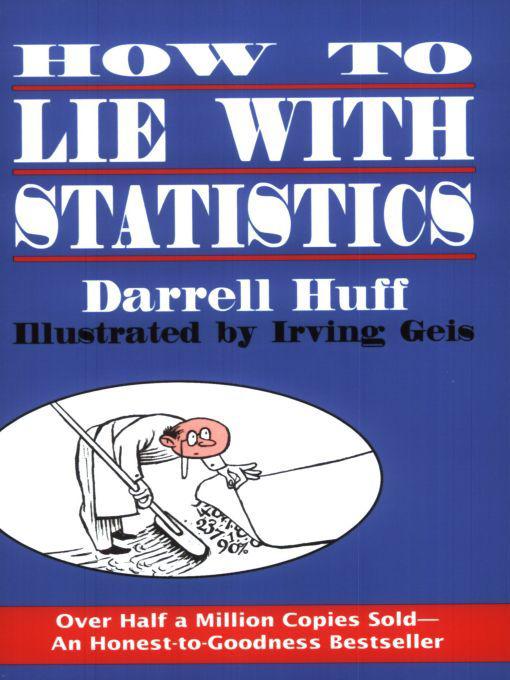
Darrell Huff’s 1954 exposé How to Lie with Statistics delivers a sharp investigation of statistical manipulation, revealing how data presentation often prioritizes persuasion over truth. Huff dissects familiar tools—graphs, averages, surveys—and exposes their potential for distortion when wielded without methodological rigor or ethical intent. With accessible language and incisive anecdotes, he transforms what appears to be objective truth into a landscape of strategic deception.
The Construct of Average: Shape Determines Meaning
Averages conceal more than they reveal. Huff distinguishes three types—mean, median, and mode—demonstrating how selecting one over the others can tilt perception. The mean exaggerates upward when outliers exist, particularly in skewed distributions like income. Median masks economic concentration by placing focus on the midpoint rather than total spread. Mode simplifies to the most frequent, often irrelevant in complex contexts. When a real estate agent claims the average neighborhood income is $15,000, and later argues it's $3,500 to oppose a tax raise, he exploits these distinctions. Both numbers are statistically sound but convey opposing economic realities. Meaning depends not on the number alone but on the shape and distribution of the data it emerges from.
Bias at the Source: Sample Selection Constructs the Truth
Sampling design defines statistical truth. Huff exposes the illusion of representativeness in surveys derived from convenience, visibility, or response bias. The Yale Class of 1924 income survey reported an average income of $25,111—a figure built from voluntary responses, omitting those unreachable or unresponsive. Who replied? Likely the prosperous, accessible, and proud. Who vanished? The underemployed, transient, and ashamed. The average reflected a subset, not a population. Huff emphasizes that sample bias is often invisible, built into data pipelines and disguised by statistical polish. Properly random samples are rare and expensive. Stratified random sampling, while more economical, introduces human judgment, which compounds existing bias through demographic assumptions and observational error.
Visual Persuasion: Graphs Manipulate Through Framing
Graphs imply authority. Huff dismantles the visual rhetoric behind them, where vertical exaggeration, truncated baselines, or disproportionate scaling turn modest trends into dramatic visuals. A ten percent increase in national income becomes a surge when the graph omits the zero baseline. Reducing the range on the Y-axis multiplies visual impact without altering the data. Advertisers and corporations harness this tactic to convey progress or justify pricing, raising visual stakes while grounding nothing in reality. A statistical graph appears objective but functions as performance, not reporting. The eye processes shape faster than text, and deception flows through that primacy.
Picture Power: Iconography Inflates Scale
Pictorial charts go beyond distortion to reengineering reality. Huff illustrates how visual metaphors—moneybags, smokestacks, stick figures—inflate differences geometrically. Doubling the height and width of a symbol representing income or output multiplies area and, by inference, value. Readers see exponential differences where linear changes exist. A ten percent capacity increase in steel production becomes a towering icon of growth. Volume replaces value. When representations shift from abstract bars to objects with depth, the implied ratio multiplies—two to one becomes eight to one. These illustrations bypass statistical reasoning entirely. The picture doesn't lie; it seduces.
Omission as Strategy: The Significance That Vanishes
Missing context creates illusion. Huff introduces the concept of statistical significance, explaining that chance variations become persuasive narratives when significance is left unstated. A toothpaste ad claiming a 23% reduction in cavities often bases its claim on a dozen users—a group too small for reliability. Without a stated confidence level or sample size, the claim stands without scrutiny. Readers see precision where randomness thrives. Huff urges attention to the “little figure that is not there”—the standard error, the margin of deviation, the confidence interval. These reveal whether a claim rests on signal or noise. Absence of this information doesn’t render statistics false—it renders them unknowable.
Causality Illusions: Sequence Doesn’t Confirm Source
Temporal succession does not prove causation. Huff exposes the common fallacy of “post hoc, ergo propter hoc”—assuming that one event causes another because it precedes it. A rise in ice cream sales and drowning incidents in summer does not confirm that consumption causes drowning. Temperature causes both. Advertisers, political advocates, and even scientists manipulate this error by structuring correlations to imply causation. When results follow interventions, observers leap to causal conclusions without isolating variables or testing confounders. Huff calls this the “semiattached figure”—using related, but not causally linked, data to support a claim. The result appears validated by association while remaining logically unproven.
Trivial Differences as Triumph: Much Ado Over Increments
Statistical differences often mask negligible changes. Huff critiques how tiny, statistically real shifts are magnified into competitive advantages. In the 1940s, Reader’s Digest published nicotine test results showing nearly identical chemical content among cigarette brands. One brand ranked last. Another exploited this ranking to launch an advertising campaign claiming superior health benefits. The margin was trivial, the implication vast. Huff reveals how statistical insignificance becomes marketing capital. The illusion of superiority emerges not from data but from interpretation. Numbers say what you let them say when context is stripped and emphasis misplaced.
Assumptions Disguised as Norms: Range Creates Reality
Averages set expectations, but ranges define reality. Huff critiques how statistical norms shape public planning, psychological benchmarks, and commercial design without accounting for variation. Two-bedroom houses dominate suburban architecture, justified by the “average” family size of 3.6. But that average masks a wide range of family sizes, leaving the majority underserved. Parents panic when developmental norms suggest their child is late to walk or speak, unaware that half will fall outside that timeline. Huff targets the confusion between descriptive norms and prescriptive ideals. Without deviation ranges, readers infer deficiency from normal variation.
Credentials vs. Method: Authority Doesn’t Validate Findings
Certifications, endorsements, and institutional prestige distract from methodological flaws. Huff cautions that labeling a lab as “independent” or a report as “certified” does not ensure statistical rigor. Deception thrives under the veneer of credibility. A tooth powder citing laboratory approval may base its claims on six cases. Pharmaceutical discoveries may emerge from trials too small to reveal efficacy. “Independent” becomes a signal of trust even when evidence lacks scale or control. Huff insists that readers bypass symbolic authority and interrogate structure—sample size, testing procedure, and statistical reliability matter more than the title on the report.
Interpretive Resistance: Cultivating Statistical Self-Defense
Huff concludes by urging active reading. Interpretation requires skepticism, not cynicism. He proposes five questions that anchor statistical literacy: Who says so? How do they know? What’s missing? Did someone change the subject? Does it make sense? These questions build resistance. They train readers to interrogate claims, trace data lineage, and evaluate internal logic. Huff does not teach statistics; he teaches vigilance. The tools of deception are simple, their power lies in reader inattention. By learning to recognize patterns of distortion—biased samples, selective averages, missing ranges, visual exaggeration—individuals defend themselves against manufactured truths.
Darrell Huff’s enduring work reorients statistics from authority to inquiry. It teaches readers to view every number as an argument and every chart as a proposal. Statistical literacy, in Huff’s view, is not about calculation. It is about confrontation. When numbers serve persuasion, only informed readers ensure accountability. Huff arms them with skepticism, not fear. Statistics become a language, and understanding that language turns manipulation into transparency.


About the Book