Ian Fleming
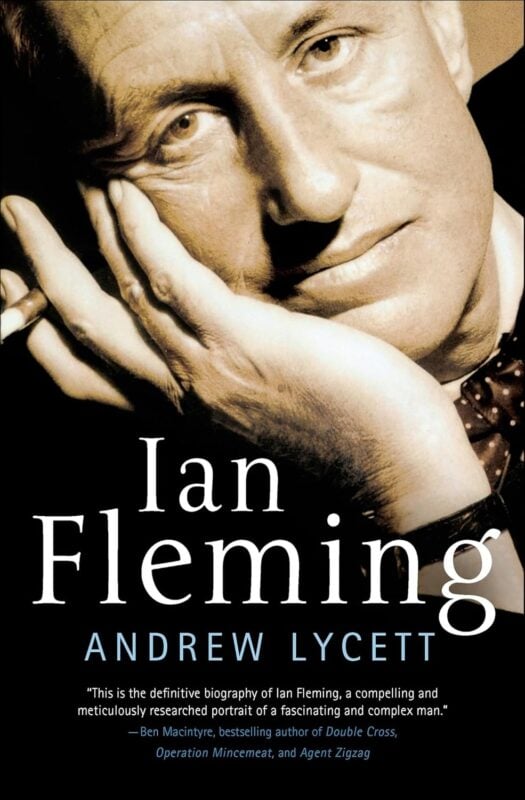
Ian Fleming by Andrew Lycett examines the life and legacy of the creator of James Bond, tracking his evolution from privileged childhood through war, love, and literary innovation. Lycett grounds Fleming’s journey in the unique collision of Scottish stoicism and English flamboyance that shaped his personality, choices, and artistic output.
Origins of Privilege and Expectation
Ian Fleming entered the world in 1908, born into an established family whose fortunes traced to the industrial ingenuity of his grandfather, Robert Fleming. Robert pioneered investment trusts, moving the family from Dundee’s poor quarters to the palatial Joyce Grove estate in Oxfordshire. As the family’s wealth and social status expanded, so did expectations for the next generation. Ian’s father, Valentine Fleming, typified Edwardian confidence: Oxford-educated, athletic, politically active, and a partner in the family banking empire. Valentine’s marriage to the vivacious Evelyn Rose, a solicitor’s daughter with a passion for art and extravagance, brought together two starkly divergent temperaments. Family life unfolded between the country paradise of Braziers Park and a fashionable London residence, Pitt House, where political connections flourished and Winston Churchill became a frequent guest.
The Impact of Loss and Legacy
The death of Valentine Fleming on the Western Front in 1917 imposed an early trauma that reverberated throughout Ian’s life. Churchill’s glowing obituary established Valentine as a paragon of decency and public spirit, raising a standard that shaped familial memory and maternal expectations. Evelyn responded by immersing herself in widowhood, dramatizing Valentine’s virtues and wielding his memory as a tool for discipline. Ian and his brothers learned to end their prayers with a plea to emulate their father. This domestic mythology exerted persistent pressure, with inheritance structures reinforcing Eve’s authority and heightening the family’s emotional complexity.
Early Education and Sibling Dynamics
Evelyn sent her sons to Durnford, a harsh preparatory school whose eccentric headmaster, Tom Pellatt, mixed pedagogical freedom with a culture of roughness and bullying. Ian joined his older brother Peter, whose physical frailty and intellectual gifts attracted special attention, provoking Ian’s competitive instincts and resentment. Ian gravitated toward pranksterism and solitary pursuits, finding pleasure in the natural world and the adventure fiction of Stevenson and Rider Haggard. Lycett establishes the central role of rivalry and escapism in Ian’s formative years, setting the stage for later patterns.
Eton and the Cultivation of Rebellion
At Eton, the most prestigious of English schools, Ian encountered institutional rigidity and the sadistic discipline of his housemaster, Sam Slater. Peter excelled as a scholar and school leader, while Ian struggled academically and turned to athletics for validation. His prowess in track and field events led to victories and recognition, culminating in consecutive Victor Ludorum titles despite injuries. Ian also pursued publishing ventures, orchestrating literary ephemerals like The Wyvern, which showcased his entrepreneurial flair and capacity to mobilize social networks. Lycett situates Ian’s Eton years as a crucible for both creativity and defiance, with friendships—especially with Ivar Bryce—fuelling experiences that later surfaced in Bond novels.
Experimentation and Early Failure
Following Eton, Ian attempted to find a vocation, first at Sandhurst, then as a would-be diplomat and, briefly, a stockbroker. Each stage revealed new talents and fresh obstacles. At Sandhurst, he rebelled against discipline; in the diplomatic corps, he failed the entrance examination; in finance, he earned the nickname “the world’s worst stockbroker.” Yet each disappointment triggered a search for alternatives and a further retreat into literary and romantic fantasy. Lycett traces how this cycle of experiment and escape seeded both Fleming’s dissatisfaction with conventional paths and his hunger for adventure.
Naval Intelligence and the Forging of Purpose
The outbreak of World War II catalyzed a profound transformation. Fleming joined naval intelligence, quickly distinguishing himself through operational creativity and strategic vision. He masterminded complex missions—such as Operation Golden Eye—and played a formative role in laying the groundwork for the Central Intelligence Agency. The war offered Fleming purpose, camaraderie, and access to secrets and techniques that would later animate the Bond stories. Lycett demonstrates how Fleming’s professional achievements emerged from both his imaginative energy and his drive to prove himself within a world of codes, danger, and masculine performance.
Romance and Turbulence
Fleming’s private life unfolded as a protracted drama of passion, frustration, and delayed gratification. He began courting Ann O’Neill in the late 1930s, launching a romance that survived the death of her first husband, intermittent affairs, and repeated refusals to marry until Ann’s second pregnancy. Their eventual marriage, shadowed by previous betrayals and persistent restlessness, became both a source of creative inspiration and emotional turmoil. Lycett delineates the complexities of their relationship, revealing Ann’s wit, intelligence, and volatility as central to both Fleming’s writing and his anxieties.
The Birth of James Bond
Fleming’s retreat into literary invention coincided with periods of personal stress. At Goldeneye, his cliff-top villa in Jamaica, he created James Bond, a character who distilled his obsessions with danger, glamour, and control. Fleming wrote the Bond novels as a ritual—each new book emerging during his annual winter stays in Jamaica, supported by the rhythms of golf and sun, and the presence of friends and lovers. Lycett details the origins and structure of the novels, highlighting their meticulous research, stylistic verve, and imaginative reach.
The Bond Phenomenon
The publication of Casino Royale in 1953 launched an extraordinary publishing history. The Bond novels grew in popularity, propelled by their vivid settings, unflinching violence, sexual frankness, and the cool professionalism of their protagonist. As film adaptations began with Dr. No in 1962, James Bond became a global cultural icon, shaping postwar fantasies of masculinity, technology, and geopolitics. Lycett situates Bond within the context of British decline and American ascendancy, tracing how Fleming’s own experiences and desires shaped the character’s methods, attitudes, and worldview.
Strains of Success and Search for Solace
The pressures of literary fame, relentless public attention, and deteriorating health converged as Fleming approached his final decade. The treadmill of annual Bond production exacerbated his anxieties. His marriage to Ann entered a period of crisis, leading both partners toward new emotional entanglements. At Goldeneye, Fleming began a relationship with Blanche Blackwell, a divorcee whose steady affection provided comfort and stability. Lycett describes how these years produced a mix of literary productivity, escapist withdrawal, and personal crisis. Golf and the natural beauty of Jamaica offered Fleming brief respites from his obligations and internal struggles.
Cultural Influence and Enduring Legacy
Andrew Lycett explores the deep cultural impact of Fleming’s work, mapping how Bond stories translated the author’s longings, traumas, and technical expertise into a popular mythology of espionage and power. The Bond franchise expanded across novels, films, and merchandise, generating debates about violence, gender, and geopolitics. Lycett assesses the ways in which Fleming’s background, war experiences, and psychological complexities became fused with postwar anxieties and aspirations. What drives a man to invent a world in which every threat can be mastered, every pleasure seized? Lycett answers through precise biography and sustained analysis.
Fleming’s Last Years and Posthumous Reputation
Health problems accelerated as Fleming neared the end of his life, culminating in heart attacks and a premature death at fifty-six. Ann’s emotional life took its own unpredictable turns, including her affair with Labour Party leader Hugh Gaitskell. Fleming’s later correspondence and friendships reveal a man both self-aware and trapped by the momentum of his own creation. After his death, family members managed his estate and literary rights, ensuring the continued relevance of his stories. Lycett’s account draws from new interviews, unpublished letters, and family archives, providing a comprehensive portrait of Fleming’s complexity.
The Artistry of Reinvention
Lycett emphasizes Fleming’s talent for self-presentation and narrative construction. Throughout his life, Fleming cast himself into multiple roles: athlete, poet, banker, intelligence officer, lover, and writer. He shaped how friends, family, and the public saw him, often concealing as much as he revealed. What motivates such self-fashioning? Lycett finds the answer in the interplay between external pressure and internal desire, between childhood wounds and the seductions of fantasy.
The Convergence of Life and Literature
The biography reveals how the boundaries between Fleming’s lived experience and creative work repeatedly blurred. Wartime memories, personal anxieties, and private obsessions became the material for stories that seduced millions. Bond’s world reflects the contradictions and tensions that defined Fleming’s own journey—between duty and desire, risk and security, performance and authenticity. Lycett shows how Fleming’s restless imagination and need for escape created not only a fictional hero, but also a mythic frame for twentieth-century masculinity and British identity.
Bond’s Place in Literary and Popular Culture
James Bond remains a living artifact of both literary ingenuity and cultural synthesis. Lycett tracks the franchise’s expansion, the recurring reinventions in print and film, and the persistent debates about the politics and ethics of Bond’s universe. Fleming’s methods—fastidious research, vivid description, and the integration of personal fantasy with public myth—continue to influence writers and filmmakers. Why do the Bond stories endure? The answer lies in the fusion of narrative momentum, psychological depth, and a protagonist whose contradictions mirror those of the age.
Fleming’s Story as Modern Parable
Lycett’s biography asserts that the story of Ian Fleming resonates far beyond the details of one man’s life. Fleming’s journey from privilege, through trauma and reinvention, to the creation of a cultural icon encapsulates key twentieth-century themes. The narrative unites personal history with social transformation, dramatizing how imagination and ambition reshape both individual destiny and collective fantasy.
In tracing Fleming’s path, Andrew Lycett delivers both a detailed chronicle and an implicit invitation to ask: what is the cost of living through one’s inventions, and how do the boundaries between reality and imagination produce new worlds? The life and work of Ian Fleming continue to provoke fascination because they embody the tension between aspiration and reality, the hunger for escape, and the enduring power of narrative to define—and transform—an era.