JFK-9/11: 50 Years of Deep State
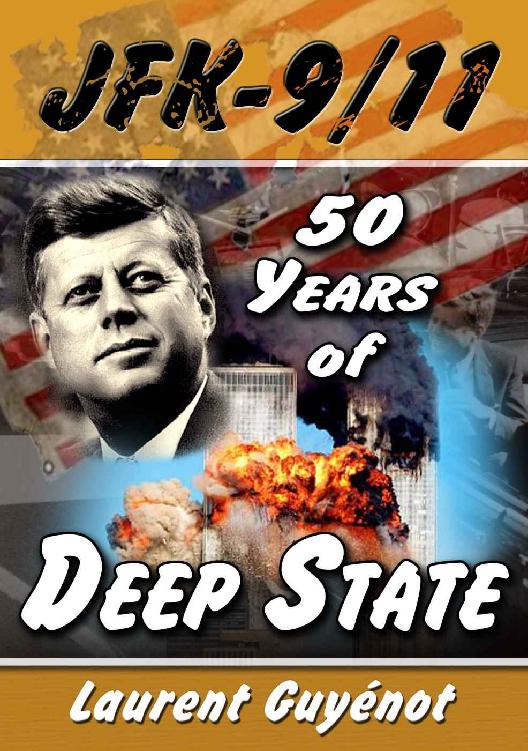
JFK-9/11: 50 Years of Deep State by Laurent Guyénot forges a singular thread through a half-century of American political history, mapping how clandestine forces sculpted both the assassination of John F. Kennedy and the events of September 11, 2001. The book synthesizes declassified evidence, insider accounts, and a granular reading of covert operations to chart the ascent of the “deep state” and its decisive interventions in shaping U.S. power, foreign policy, and public perception.
Origins of Deep History
Laurent Guyénot begins with the foundational premise that history as presented by official sources and mainstream historians often conceals the real engines of global events. The “deep state,” defined as a shifting constellation of intelligence operatives, military leaders, financiers, ideological zealots, and political insiders, acts through secrecy, manipulation, and networks of influence. The author relies on the analytical framework developed by political scientist Peter Dale Scott, emphasizing that deep politics is revealed through leaks, whistleblower testimony, and declassified documents, rather than public pronouncements.
Concealed Powers and the Architecture of the State
The formation of the National Security State in the aftermath of World War II marks a decisive shift in American governance. The National Security Act of 1947 consolidates military branches, creates the Central Intelligence Agency (CIA) and the National Security Council, and grants autonomy to clandestine operatives under the principle of “plausible deniability.” Under this new architecture, military and intelligence leaders operate behind closed doors, shielded from congressional oversight and public scrutiny. Economic interests entwine with military imperatives, with arms manufacturers and financiers leveraging global instability for profit and expansion.
False Flag Operations and Manufacturing Consent
The doctrine of false flag operations emerges as a central tool in the deep state’s arsenal. A state engineers, orchestrates, or permits violent acts and attributes responsibility to its designated enemies, galvanizing public support for war or policy shifts. Guyénot provides historical precedents—Japan’s staged sabotage in Manchuria, Nazi Germany’s Gleiwitz incident, and the Reichstag fire—and asserts that victorious powers bury their own covert actions. The author foregrounds the psychological and informational dimensions of these operations, referencing Edward Bernays’s seminal work on propaganda and the orchestration of mass consent.
Kennedy’s Presidency and the Strategic Threat of Peace
John F. Kennedy’s tenure threatens entrenched power structures within the CIA, Pentagon, and associated corporate interests. Kennedy pursues reconciliation with the Soviet Union and Cuba, resists escalation in Vietnam, and curtails the autonomy of covert operatives. These moves position him as an existential threat to clandestine actors whose influence depends on perpetual conflict and secrecy. The Bay of Pigs debacle, a failed CIA-backed invasion of Cuba, exposes the rift between presidential authority and intelligence autonomy. Kennedy refuses to commit U.S. military forces, recognizing the entrapment designed by covert planners, and subsequently fires CIA director Allen Dulles. The resentment within intelligence circles deepens, producing a climate of intrigue, resentment, and latent conspiracy.
The Assassination in Dallas: Execution and Cover-Up
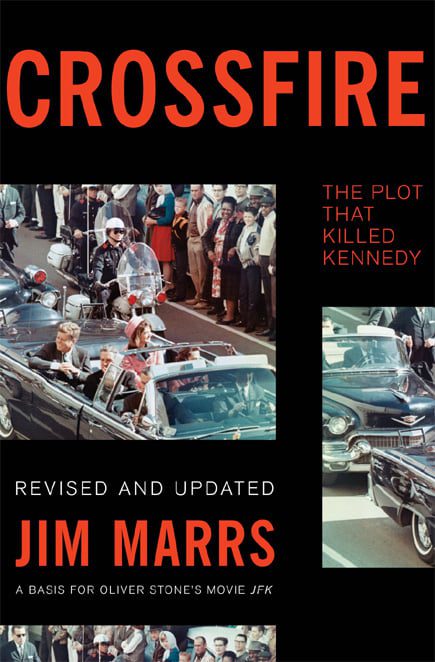
On November 22, 1963, the fatal shots that kill President Kennedy in Dallas initiate a rapid sequence of concealment, obfuscation, and manipulation. Eyewitness testimony contradicts the lone gunman narrative. Immediate intervention by Secret Service agents, the rapid removal of Kennedy’s body from Dallas, and the selection of an inexperienced military pathologist for the autopsy signal a coordinated effort to control the evidence. The Warren Commission, officially led by Chief Justice Earl Warren but steered by former CIA director Allen Dulles, frames Lee Harvey Oswald as the sole assassin. Media institutions, many tied to Operation Mockingbird, circulate the official story, marginalizing dissent as conspiracy theory.
Suppression, Fear, and the Culture of Silence
Witness intimidation, professional consequences, and threats suppress dissenting voices among medical staff, law enforcement, and Kennedy’s own confidants. The trauma of the assassination, reinforced by the climate of fear and the relentless messaging from government and media, shapes public opinion. Investigators, journalists, and officials who challenge the narrative encounter resistance, discrediting, and in some cases, violence. Yet, independent researchers persist, gradually assembling a body of evidence that erodes the credibility of the official version and builds a public consensus around the existence of a conspiracy.
Vice-Presidential Ambition and Structural Weakness
The rapid ascent of Lyndon B. Johnson to the presidency forms a pivotal axis in the narrative. Guyénot examines Johnson’s history of electoral fraud, criminal associations, and deep alliances with intelligence operatives. Johnson leverages his new authority to halt local investigations, suppress evidence, and advance the lone gunman theory, acting in concert with FBI chief J. Edgar Hoover. The vice presidency, structurally vague and unchecked, provides a latent mechanism for ambitious actors to seize power under crisis, circumventing electoral legitimacy.
Continuity, Corruption, and the Expansion of Power
The narrative advances through the tumult of the Vietnam War, the Watergate scandal, and the ascendance of figures such as Richard Nixon, George H. W. Bush, and Dick Cheney—each occupying strategic positions within the deep state’s architecture. Congressional investigations, such as the Church Committee and the House Select Committee on Assassinations, surface new evidence but rarely disrupt the entrenched networks of power. The military-industrial complex, warned against by Eisenhower, deepens its influence over policy and public spending, while the CIA expands its scope through coups, assassinations, and psychological operations abroad.
Propaganda, Disinformation, and the Manufacturing of Reality
Guyénot exposes how propaganda operations—Operation Mockingbird’s manipulation of journalists, the dissemination of disinformation, and the psychological operations against domestic targets—engineer consent and neutralize opposition. The author treats information as a weapon: those who control narrative shape the boundaries of public discourse, producing the reality in which decisions are made and policies justified. The deep state crafts stories that blend fact and fiction, transforming political violence and covert intervention into the fabric of the national narrative.
From Cold War to War on Terror
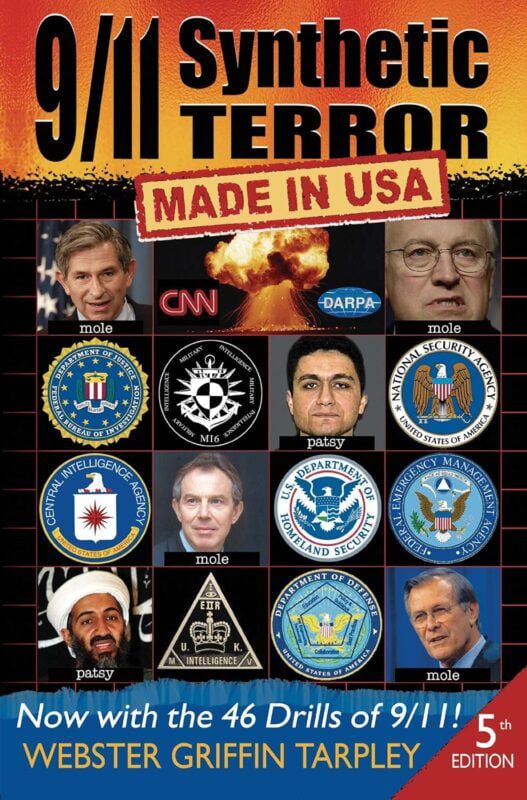
The collapse of the Soviet Union dissolves the rationale for the Cold War apparatus, but the infrastructure and networks of the deep state persist. The author argues that the transition to the “War on Terror” draws on the same mechanisms: manufactured threats, staged or permitted atrocities, and the rapid mobilization of public fear to enable war and surveillance. The events of September 11, 2001, serve as the capstone to this transformation. Structural, personnel, and operational continuities converge—intelligence failures, contradictory evidence, and the rapid framing of al-Qaeda as the sole perpetrator echo the patterns of 1963.
9/11 and the New Face of Deep Politics
Guyénot analyzes the 9/11 attacks through the framework established in his treatment of the Kennedy assassination. Key actors, including members of the Bush family, intelligence officials, and private contractors, bridge the temporal gap between events. The destruction of the World Trade Center and the assault on the Pentagon produce an unprecedented expansion of executive power, surveillance, and military intervention. The rapid emergence of the official narrative, the suppression of dissenting investigation, and the marginalization of alternative explanations follow the template established decades earlier.
Foreign Influence and Transnational Networks
The book alleges significant foreign influence, particularly through Mossad and pro-Israel lobbying efforts, in shaping U.S. foreign policy and enabling covert operations. Guyénot traces alliances, operational overlaps, and shared objectives among American, British, and Israeli intelligence networks. He argues that the logic of permanent conflict, manufactured crises, and regime change reflects a transnational deep state pursuing both material and ideological goals.
Consequences for Democracy and the Prospect of Reform
The accumulation of secret power, the normalization of disinformation, and the strategic use of violence transform the relationship between the public and the state. Democratic institutions, dependent on transparency, accountability, and informed consent, find themselves constrained and manipulated by invisible actors whose interests diverge from those of the populace. The cycle of deep events—acts of spectacular violence, official obfuscation, and public trauma—sustains a perpetual state of crisis, eroding civic trust and perpetuating conflict.
The Imperative of Deep History
Guyénot asserts that understanding the logic, methods, and actors of the deep state enables genuine political awareness and resistance. Deep history, rooted in evidence, critical investigation, and structural analysis, equips citizens and investigators to identify the markers of covert intervention. The book urges readers to recognize the continuity of patterns, the recurrence of operational signatures, and the persistence of specific networks across generations. Acknowledging these realities becomes the necessary first step in reclaiming the agency of democratic institutions and breaking the cycle of manipulation and violence.
Unveiling Patterns, Confronting Atrocity
JFK-9/11: 50 Years of Deep State accumulates evidence to demonstrate convergence, not coincidence. The assassination of Kennedy and the events of 9/11 arise from discernible motives, orchestrated by actors capable of secrecy and sustained by institutional cover. The repeated recourse to false flag attacks, media manipulation, and structural suppression of evidence underscores the operational logic of the deep state. The narrative insists: only through exposure, confrontation, and reform can the machinery of covert power be dismantled and democracy restored.
The work offers a call to action grounded in historical synthesis and forensic analysis. As long as hidden networks wield the instruments of violence, narrative, and control, the structural tension at the heart of the republic remains unresolved. Who acts in the name of national security, and who determines the meaning of security itself? By tracing the legacy of deep events across five decades, Guyénot compels the reader to consider how truth, power, and violence shape the fate of nations.