OᴾJB (Operation James Bond)
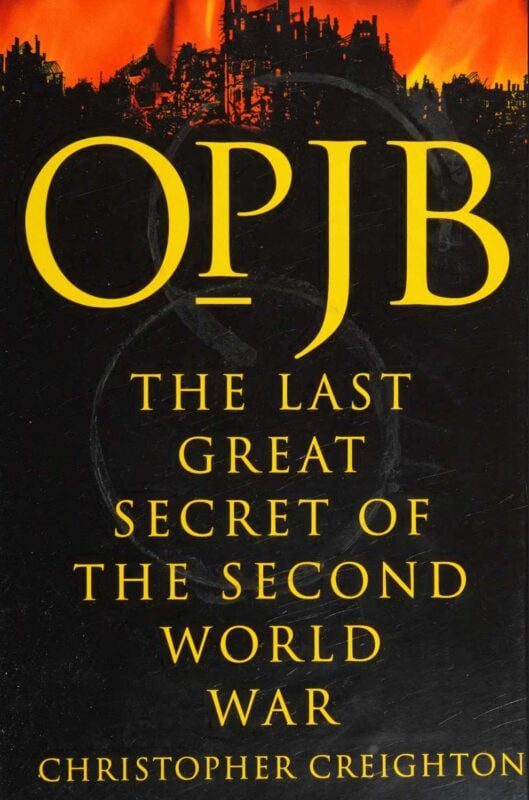
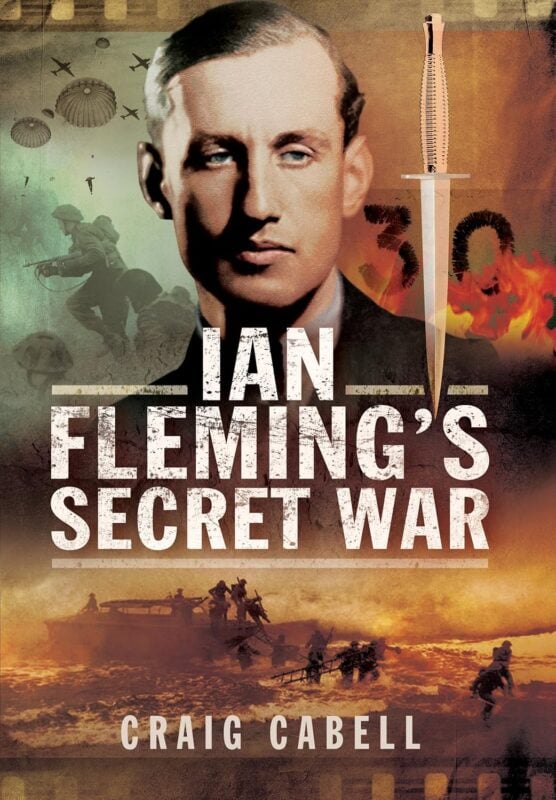
OᴾJB by Christopher Creighton alleges that British intelligence extracted Martin Bormann from Berlin in the final hours of the Second World War. This account positions the British Navy, under covert orders from Winston Churchill and with U.S. approval, at the heart of a mission to recover Nazi assets and neutralize a strategic post-war threat. Creighton claims that Ian Fleming—later the creator of James Bond—led the commando team alongside him, embedding real-world espionage operations into the literary imagination that followed.
The Alleged Extraction of Martin Bormann
In May 1945, as Berlin collapsed under Soviet assault, Creighton states that Bormann was smuggled from the ruins by a British team using the waterways of Berlin to reach the Elbe River. There, Allied forces received the extraction team. According to the narrative, Bormann was not merely a fugitive; he was a living archive of Nazi financial architecture. British intelligence, specifically the M Section led by Major Desmond Morton, targeted Bormann to gain access to vast sums hidden in Swiss banks.
This operation, known as Operation James Bond, was classified beyond the awareness of other Allied intelligence groups. Creighton asserts that Churchill and Roosevelt endorsed it. The team, composed of British commandos, female operatives from the Women's Royal Naval Service, and a U.S. Navy WAVE officer, used a combination of subterfuge, riverine maneuvering, and coded cover names drawn from Winnie-the-Pooh to execute the mission. They captured Bormann, interrogated him in England, and leveraged his knowledge to recover the majority of the Nazi war chest.
The Financial Motive Behind the Mission
Bormann had control over financial networks involving numbered Swiss accounts, bearer bonds, and gold reserves. These funds, Creighton asserts, constituted a vast reserve intended to rebuild fascist influence after the fall of the Reich. The operation aimed to retrieve this capital to prevent its misuse by Nazi sympathizers or Soviet infiltrators.
Churchill authorized the mission with strategic clarity: the funds were either recovered and redirected to stabilize post-war Europe or risked fueling a resurgence. Fleming, at the time an intelligence officer in the Royal Navy, was tasked with designing the logistical and operational structure. His later literary creations reflected the clandestine atmosphere and moral ambiguity of this mission.
Secrecy, Disguise, and the Use of Fictional Codenames
Participants adopted aliases from A.A. Milne’s children’s books to compartmentalize identities and maintain deniability. The team included “Christopher Robin” (Creighton), “Tigger” (Ian Fleming), and “Pooh” (Bormann). These names insulated them from conventional tracking methods and mocked the bureaucratic rigidity of enemy counterintelligence.
These code names also reinforced operational culture. Creighton emphasizes that their mission parameters required improvisation, personal loyalty, and strategic deception. Standard protocols could not apply in a mission involving deep insertion into enemy-held territory, unsanctioned detention of a war criminal, and covert financial negotiations.
Fleming’s Role as Field Commander
Fleming’s operational role centered on planning and coordination. He designed the deception frameworks, crafted the movement patterns along the waterways, and directed psychological operations during the interrogation phase. His firsthand experience during this mission laid the foundation for narrative structures he later adapted into the James Bond novels.
Creighton reports that Fleming’s letters confirm the operation’s inspiration for his literary work. Fleming allegedly told him that the character of James Bond was rooted in the mission’s fusion of danger, discipline, and ethical compromise.
The Hidden Costs and Survivor Protection
Creighton claims that of the original team, fourteen operatives died during the extraction. Survivors faced threats from both Nazi loyalists (Odessa) and Soviet agencies (KGB). For this reason, Creighton used pseudonyms and delayed publication until after Churchill, Mountbatten, and Fleming had died. He states that thirty-three members of the team remained alive at the time of writing, their identities still shielded due to continued risks.
He emphasizes that women played a decisive role in the mission’s success. Operational Wrens from Britain and one American WAVE officer participated in the extraction, handling navigation, deception, and field command responsibilities under fire. These roles anticipated policy changes in the 1990s that formally recognized women in frontline combat positions.
Bormann’s Interrogation and the Historical Record
The interrogation of Bormann, according to Creighton, produced an 800-page report signed by Bormann and his interrogators. This document, if it exists, would constitute one of the most significant records of Nazi internal dynamics. Creighton claims it contains detailed descriptions of the Third Reich’s political structure, financial systems, and Bormann’s role in manipulating Hitler’s decisions.
He notes that this report remains classified and inaccessible to most historians. However, he claims to have viewed it under strict security protocols. Its contents, he suggests, confirm that Bormann orchestrated much of the Nazi regime’s administrative function and was uniquely positioned to facilitate its long-term financial strategies.
Political Authorization and the Limits of Disclosure
Churchill’s 1954 letter to Creighton granted conditional permission to release the story posthumously, affirming the mission’s existence and encouraging Creighton to protect the reputations of those who acted honorably under wartime pressures. The letter’s tone signals Churchill’s awareness of the operation’s legal and ethical ambiguities, as well as his belief in the long-term justice of its outcomes.
King George VI and President Roosevelt reportedly approved the mission, indicating bilateral alignment between British and American strategic objectives. The secrecy surrounding the operation was so tight that even the British Secret Intelligence Service and MI5 were kept unaware.
Disinformation, Disbelief, and the Fragmented Historical Trail
Creighton acknowledges that Operation JB’s documentary trail contradicts the official narrative surrounding Bormann’s fate. According to post-war records, Bormann died near the Weidendamm Bridge in Berlin. In 1973, a German court declared him officially dead. Forensic evidence, including alleged skeletal remains, later supported this conclusion.
Creighton counters that these remains were planted, the records forged, and the timeline manipulated to protect geopolitical interests. He argues that disinformation served post-war power alignments and concealed intelligence assets whose exposure would compromise strategic equilibrium during the Cold War.
He attributes these discrepancies to deliberate archival manipulation. Historians and intelligence officials, he claims, adjusted or suppressed records to create a version of history that eliminated inconvenient truths. The operation’s clandestine nature, combined with institutional incentives to deny its existence, generated an opaque historical field resistant to verification.
Operational Ethics and the Boundary of Obedience
Creighton frames the mission as a moral paradox. By extracting a top Nazi and shielding him from Nuremberg, the team enabled justice through financial recovery. He insists their orders did not include political judgment—only operational execution. The intelligence apparatus subordinated legal norms to strategic imperatives.
This argument asserts that war’s moral framework demands action that peace cannot tolerate. The narrative poses a sharp question: Does the recovery of stolen capital outweigh the need to prosecute those responsible for theft and murder?
Legacy, Secrecy, and the Rewriting of History
Operation JB’s claimed success rests on financial data that cannot be independently confirmed. The book reports that 95% of Nazi wealth was recovered and returned to rightful owners. If accurate, the operation reshaped post-war European economic stability by removing billions from the hands of hostile actors.
The alleged link between this mission and the James Bond novels introduces an interpretive lens through which fiction and espionage intersect. The operation becomes a cultural event, seeding narratives that outlived their historical origin.
Creighton calls for recognition, not only of Bormann’s fate but also of the operatives who risked their lives for objectives never acknowledged. His account asserts that their service prevented the resurrection of a fascist financial network and rechanneled stolen assets into a fragile world seeking balance.