Operation Red Rock: Special Operations Team Ordered Killed by the President
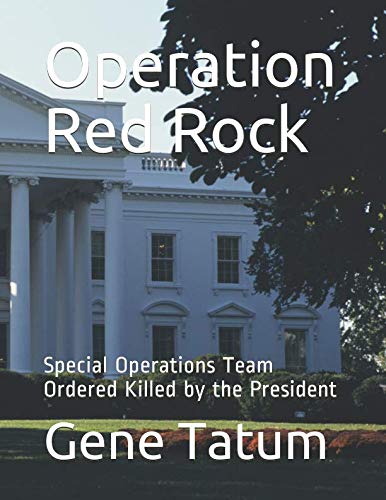
Operation Red Rock: Special Operations Team Ordered Killed by the President by D.G. "Chip" Tatum unveils the internal mechanics and personal experiences of a clandestine mission set against the turbulent backdrop of the Vietnam War’s final years. The narrative orbits around the assembly, deployment, and shocking aftermath of an elite team, exposing state-sanctioned violence, the machinations of high command, and the psychology of operatives thrust into morally treacherous situations.
The Vietnam Crucible: Domestic Pressure and Presidential Anxiety
Anti-war protests erupted outside the White House, reverberating through the American political system. President Richard Nixon confronted relentless criticism as body counts mounted and domestic unrest threatened the viability of his administration. Inside the Oval Office, Nixon—supported by General Alexander Haig and Dr. Henry Kissinger—searched for strategies that could simultaneously quell unrest at home and deliver an exit from Southeast Asia that would preserve U.S. credibility. Nixon demanded results. Kissinger outlined the need for a Southeast Asian coalition capable of launching both defensive and offensive actions, and announced his intent to coordinate with allies in Bangkok. The calculus of power demanded action before disillusionment consumed the nation.
Task Force Alpha and the Genesis of Operation Red Rock
Task Force Alpha at Nakhon Phanom, Thailand, emerged as the nerve center for an operation that would blur the boundaries between military necessity and political expediency. Intelligence, coordination, and specialized training concentrated at this remote outpost. Planners selected eight Army Green Berets, three Navy SEALs, and two CIA operatives for a mission whose parameters involved realigning the political priorities of Southeast Asian allies—by persuasion, coercion, or force. Four weeks of intensive cross-service training forged a team conditioned for operations outside conventional theaters and legal oversight. As the team assembled, the objective sharpened: manipulate the regional balance and deliver results that standard military campaigns could not achieve.
The Making of a Combat Controller
D.G. "Chip" Tatum’s arrival as an Air Force combat controller underscored the mission’s demand for technical versatility. Assigned as a radio operator aboard Forward Air Control aircraft, Tatum navigated the complexities of communication, reconnaissance, and survival in a war zone. Early mishaps and barracks camaraderie formed the psychological landscape for those asked to risk everything in support of objectives shrouded in secrecy. Tatum’s initiation through technical school, survival training, parachuting, and escape and evasion courses reflected a larger process: the creation of multi-skilled operatives who could bridge service cultures and respond to unpredictable dangers in real time.
Reconnaissance and the Anatomy of Covert Operations
Flying low over Cambodian and Laotian terrain, Tatum and his pilot Mac executed reconnaissance runs forbidden by official policy but mandated by the shadow war’s realities. Task Force Alpha required photographs, video, and close visual confirmation of targets—often bringing the aircraft within small-arms range. The pressure of the mission intensified as fire from North Vietnamese anti-aircraft guns shattered the illusion of safety. On a pivotal flight, hostile fire killed Mac, leaving Tatum to fly and land the crippled plane alone. This act of survival encapsulated the lethal risks baked into covert operations, the fragility of human plans, and the arbitrary nature of heroism. The mission’s urgency stemmed from intelligence suggesting that regional actors—enemy and ally alike—shifted allegiances and resources with each move by U.S. forces.
The Politics of Plausible Deniability
As the team moved closer to deployment, layers of compartmentalization shielded the true purpose from all but a handful of decision-makers. Kissinger’s direct involvement illustrated the mission’s political stakes. American leaders required deniability; operational details flowed through ambiguous channels. The assembled operatives learned that their task involved destabilizing unfriendly regimes, extracting sensitive information, and, if required, eliminating threats that extended beyond battlefield combatants. The calculus favored political outcomes over individual lives. How do clandestine actions shape historical narratives when no record exists outside a classified vault?
The Mission Unfolds: Insertion, Action, and Sudden Loss
Operation Red Rock’s ground phase began with a covert air insertion into Cambodia. The team, drawing on its composite training, navigated jungle terrain, hostile forces, and the omnipresent threat of betrayal. Communication discipline, physical endurance, and adaptability defined the team’s operational tempo. Each step deeper into hostile territory elevated the risk that any encounter could escalate beyond control. The narrative details unexpected firefights, harrowing extractions, and the emergence of uncertainty regarding the mission’s ultimate intent. Tatum’s account of a rescue mission—where he parachuted onto a medevac pad and became a minor hero—demonstrates the volatile interface between planned action and improvisation.
Betrayal and the Calculus of Elimination
The most chilling element of Operation Red Rock arises from Tatum’s discovery that the mission’s highest-level planners intended for the team’s elimination. Secrecy demanded sacrifice. Orders from the top prioritized the preservation of classified knowledge over the survival of those sent to carry out the state’s will. Tatum’s reflections on the discovery generate a cascade of questions: Who determines when a life becomes a liability? What logic sustains a system that demands absolute loyalty but offers conditional protection? The account identifies specific mechanisms—operational silence, ambiguous after-action reports, and the normalization of lethal secrecy—as structural features of covert war.
Personal Cost and the Price of Obedience
Tatum’s memoir probes the internal cost to operatives asked to balance obedience with survival instincts. The camaraderie formed through shared danger often contended with isolation imposed by compartmentalization. Psychological scars accumulated: the loss of friends, the burden of knowledge, and the realization that political imperatives trump personal bonds. When the state assigns an objective without clarifying the stakes or the limits, operators absorb consequences that reverberate long after the mission’s official end. How do survivors reconcile their role in events engineered to remain hidden? Tatum’s return to base, promotion, and subsequent involvement in further clandestine actions reveal the perpetuation of this psychological cycle.
The Aftermath: Reflection and Historical Consequence
Operation Red Rock did not resolve the Vietnam conflict, but it sharpened the methods by which states pursue advantage in shadow theaters. The story’s aftermath exposes the persistence of unresolved trauma, the moral ambiguity at the core of secret war, and the need for public reckoning with actions conducted in the nation’s name. Tatum’s narrative—anchored in specificity, direct testimony, and technical detail—invites readers to consider the cumulative effect of decisions made under pressure. What legacy does a nation inherit when expediency, secrecy, and betrayal define the historical record?
SEO Keywords, Longtail Phrases, and Information Density
Operation Red Rock: Special Operations Team Ordered Killed by the President positions itself within the larger body of Vietnam War literature by illuminating secret operations, elite military teams, and the highest levels of government decision-making. The book’s content provides an authoritative resource for searches related to covert Vietnam missions, Task Force Alpha, Green Beret and Navy SEAL operations, presidential wartime authority, Henry Kissinger’s clandestine role, and the fate of black ops teams in Southeast Asia. Through detailed recounting of mission planning, training, aerial reconnaissance, combat, and the psychological cost of covert warfare, readers gain access to information that grounds keyword searches in narrative substance.
Readers seeking "Vietnam covert operations," "Nixon secret war strategies," "Green Beret and SEAL missions Cambodia," "CIA paramilitary Vietnam," "presidential orders special forces," and "Operation Red Rock true story" will find specific, first-person accounts anchoring the subject matter. The structure, timeline, and emotional landscape of the book also serve longtail keyword queries: "What was Operation Red Rock?" "Who ordered the killing of a special ops team in Vietnam?" "How did Task Force Alpha conduct cross-border missions?" "Chip Tatum autobiography Vietnam War black ops" and "Henry Kissinger secret orders Cambodia." The content engages with questions surrounding executive power, covert war ethics, the cost of secrecy, and the technical evolution of U.S. special operations forces.
Convergence of Action and Consequence
The operational and personal trajectories described in Operation Red Rock converge upon a single, inescapable reality: the tools of power, once unleashed, resist containment. Teams trained for deniable action act as both the instrument and potential liability of those who wield command. As the Vietnam War’s shadow campaigns recede into the historical distance, Tatum’s account persists as a structurally integrated narrative—one that grounds search engine relevance in narrative density, and reveals the layered relationship between clandestine missions and the shaping of public memory.
What does it mean to be selected for a mission where survival jeopardizes the state’s interest? How do individuals act, adapt, and endure when secrecy becomes a weapon? Operation Red Rock: Special Operations Team Ordered Killed by the President answers with a story that unifies the technical, psychological, and political dimensions of covert action into a singular account of war’s hidden cost.