Public Opinion
Public Opinion by Walter Lippmann redefines the foundations of democratic theory and media influence, identifying the machinery through which individuals construct reality and act within complex societies. Lippmann dissects how the interplay of perception, communication, and organized power shapes the shared images that govern collective action. His diagnosis of public opinion as a function of mediated images and stereotypes exposes the architecture of modern decision-making.
The Pictures in Our Heads
People act on the basis of the pictures they carry in their heads, which means political, social, and economic behavior grows from representations rather than unfiltered reality. Lippmann opens with vivid historical episodes: the inhabitants of an isolated island in 1914, unaware of the true state of war in Europe, live in accordance with an obsolete picture of the world. The speed, accuracy, and framing of information determine how people imagine distant events. The gap between direct environment and perceived environment generates tension in both private judgment and collective will.
The pseudo-environment, a world of images and assumptions, arises because the real environment overwhelms the capacities of perception, memory, and attention. This cognitive gap produces social fictions—maps, models, and stories that function as guides for behavior. The consequences of this mediated experience appear most vividly in moments of crisis, when entire populations organize around symbolic figures or slogans, experiencing events through highly charged collective imagery.
Stereotypes and the Formation of Opinion
People use stereotypes as the scaffolding of cognition. These mental shortcuts structure the vast complexity of modern life into manageable patterns, making decision possible. Stereotypes serve as mechanisms of defense and adaptation, allowing individuals to respond quickly when confronted with uncertainty or novelty. They also enable mass communication, providing a shared vocabulary through which diverse populations process news and form judgments.
The creation of a common will hinges on the shared use of these stereotypes. Leaders, communicators, and institutions channel collective sentiment through images that resonate, evoke loyalty, or define threats. Hero-worship and demonization, as Lippmann demonstrates through examples of wartime France, rely on the public’s readiness to concentrate emotional energy on simplified symbols—Joffre as savior, the Kaiser as villain. These patterns do not arise by accident; they reflect the need for action in situations where facts remain distant or ambiguous.
Censorship, Privacy, and Barriers to Fact
Lippmann exposes the layers of mediation that obstruct direct access to facts. Censorship, whether explicit or tacit, filters the information available for public consumption. In wartime, military authorities curate news to sustain morale and shape perception, editing communiqués with narrative intent. Privacy norms determine which aspects of social and economic life remain hidden from scrutiny, shifting the boundaries of what the public can know.
He catalogs the gradations of access: confidential government meetings, economic statistics, corporate profits, and diplomatic negotiations all illustrate how institutions manage the flow of information. Propaganda only succeeds when these barriers exist, making it possible to design and project a pseudo-environment for strategic purposes. Lippmann examines how the machinery of censorship and privacy transforms public opinion from an organic process into an object of deliberate management.
The Machinery of Communication
Information does not circulate freely or evenly. Economic status, social networks, geography, and technology condition who receives news, how quickly, and in what form. Lippmann narrates the extraordinary mobilization of communication during World War I—propaganda campaigns, public speeches, posters, and mass media—all engineered to forge unity and conviction in a heterogeneous nation. These efforts reveal the structural obstacles to reaching “the whole public” even under the pressure of crisis.
Channels of communication—print, word of mouth, government bulletins—carry messages along paths shaped by habit, interest, and authority. The effort required to saturate public consciousness with a unified narrative signals the fragmentation of audience and the friction of social boundaries. The pace of information flows, the density of interpersonal contact, and the technical means of distribution all influence the rhythm of opinion formation.
Interest, Group Life, and the Enlistment of Belief
Lippmann identifies self-interest as a pivotal force in public life. Individuals interpret news and events in relation to their interests, fears, and ambitions. Political parties, social classes, and organizations crystallize group opinion by aligning shared images with group needs. The transfer of interest—the process by which a private concern becomes a public cause—propels ideas from the margins into the center of collective action.
He interrogates the logic by which opinions harden into group will, illustrating how symbols and slogans provide a focus for diffuse feeling. The “enlistment of interest” operates through rituals, stories, and campaigns, welding scattered sentiments into a force capable of demanding or resisting change. Leaders emerge not by their private virtue alone but through their capacity to embody the needs and dreams of followers.
Democratic Theory and the Problem of Representation
Lippmann’s critique of democratic theory rests on the assertion that self-government presupposes access to facts and the capacity to form reasoned opinion. The complexity of modern society, coupled with barriers to direct knowledge, undermines this assumption. The image of an informed, rational electorate acting as the sovereign agent of political will dissolves under the scrutiny of media effects and the dynamics of opinion leadership.
He reconfigures representation, arguing for the necessity of independent, expert organizations devoted to gathering, analyzing, and interpreting the unseen facts behind public affairs. These organs of “organized intelligence” bridge the chasm between event and perception, allowing both leaders and citizens to deliberate and act in light of realities that would otherwise remain obscure or misunderstood. The sustainability of representative government depends on the integrity and effectiveness of this informational infrastructure.
The Press: Nature, Limits, and Influence
Lippmann addresses the press as both a transmitter and a constructor of public opinion. Newspapers select, condense, and dramatize events, producing narratives that shape the public’s sense of reality. The economic logic of journalism—deadlines, circulation, competition for attention—conditions the format and substance of news. Reporters and editors make decisions about inclusion, emphasis, and omission that establish the contours of the public’s pseudo-environment.
The press amplifies existing biases and interests. Its institutional pressures and dependency on sources often entangle journalism with official narratives, commercial interests, and partisan conflict. The expectation that newspapers will correct democratic deficits by informing the public places on the press a burden that its structure cannot sustain. Lippmann contends that without organized intelligence feeding accurate information into the news process, the press will mirror and intensify the confusion of public opinion.
Propaganda and the Manufacture of Consent
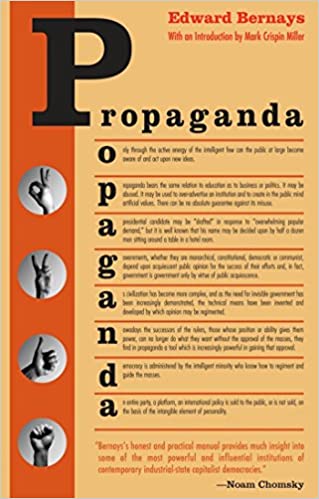
The process by which opinion becomes mass will involves intentional campaigns to define the terms of debate and set the agenda for action. Propaganda exploits the mechanisms of stereotype and the gaps in communication, constructing realities that serve strategic ends. The power to manufacture consent resides with those who control access to facts and possess the skill to craft images that move populations.
Lippmann details how governments, corporations, and interest groups stage-manage news and events to produce desired effects. The creation and repetition of slogans, the circulation of persuasive statistics, and the strategic framing of conflicts guide public feeling and mobilize collective behavior. The interplay of propaganda and the limitations of direct experience mean that large-scale consent often rests on an engineered foundation.
Public Opinion as Dynamic Process
The structure of public opinion reveals ongoing movement rather than fixed stability. Crises, technological shifts, and leadership changes disrupt existing stereotypes and introduce new images. Consensus fragments into group conflict; unity under pressure gives way to pluralism and dissent in moments of relative security. Lippmann explores how symbolic bonds loosen after wars, leaving populations searching for new identities and affiliations.
The dynamic nature of opinion reflects the interplay between the persistence of stereotype and the pressure of unfolding events. Shifts in communication technology, changes in group structure, and transformations in economic or political context all reshape the content and structure of public images. The process of adjustment, learning, and accommodation shapes the possibilities of collective action and reform.
The Task of Organized Intelligence
The health of modern democracy demands structures capable of turning scattered facts into reliable public knowledge. Lippmann envisions expert agencies that function as intermediaries, conducting research, interpreting complex realities, and presenting findings in accessible forms. These organizations support decision-makers and citizens alike, furnishing a foundation for deliberation grounded in fact.
Such agencies operate as the scaffolding of public intelligence, enabling populations to navigate a world too vast and intricate for unmediated understanding. Their credibility, independence, and methodological rigor become decisive in the struggle to align collective action with the realities that confront society. The challenge of modern government lies in sustaining this infrastructure amidst the pressures of partisanship, sensationalism, and economic constraint.
The Enduring Legacy of Public Opinion
Lippmann’s analysis remains an anchor point for understanding media, democracy, and collective behavior. His insights into the construction of pseudo-environments, the functioning of stereotypes, and the mechanisms of propaganda anticipate the challenges of the digital era. Contemporary debates about fake news, echo chambers, algorithmic feeds, and information warfare echo his diagnosis.
The questions Lippmann posed about the formation, manipulation, and consequences of public opinion drive inquiry into the relationship between knowledge and power. His insistence on the need for organized intelligence and the limitations of unaided reason in mass society remains prescient. The struggle to build informed, reflective, and effective public judgment continues to define the boundaries of democratic possibility.


About the Book