Satans High Priest

Satan's High Priest by Judith Spencer investigates the psychological construction and ritual practice of a man who led a multigenerational satanic cult in the southeastern United States. Spencer introduces Joseph Warren as both a family man and a cult leader, a duality sustained through deception, social standing, and ritual precision. The book unpacks how Warren’s ascent to power followed occult protocols, culminating in acts of orchestrated violence intended to fuse spiritual authority with fear-driven control.
The Making of a Cult Leader
Joseph Warren grew up in a household governed by strict rules and theocratic hierarchy. His father, the cult’s high priest, passed on more than just a business and a family name—he modeled a structure where obedience, secrecy, and power determined a boy’s future. As a child, Warren experienced deliberate torture and ritual humiliation, framed as preparation for his spiritual ascension. These formative experiences shaped his internal logic: submission guarantees survival, mastery requires domination, and pain signals initiation.
The cult defined power as the ability to manipulate belief through spectacle and discipline. Warren internalized this philosophy. By twenty-seven, he seized control during a ritual that demanded the ultimate test—a child sacrifice executed through psychological coercion and ceremonial precision. The group accepted his authority, not through formal vote or confession, but through the unbroken momentum of the ritual. Authority manifested in enactment, not decree.
Ritual as System of Control
Spencer presents ritual not as symbolic performance but as literal enforcement of doctrine. Every gesture in the ceremony—incantations, geometry, planetary alignments—serves a purpose beyond aesthetics. These elements encode systems of obedience. Participants understand that mistakes in ritual execution trigger punishment, whether through interpersonal violence or perceived supernatural retaliation.
Warren does not command loyalty through charisma. He manufactures reverence by structuring fear, demanding precision, and delivering ecstasy through forbidden excess. Sex, drugs, and violence become tools for dissociation and submission. The rituals are designed to fragment consciousness. Survivors recall feeling both present and absent, compelled yet detached, immersed yet foreign to their own actions. These psychological states, induced by ritual, anchor loyalty to Warren’s leadership.
Family as a Site of Indoctrination
The cult’s architecture extends into the domestic. Warren’s own children undergo selective grooming based on perceived utility. Those deemed too sensitive are excluded. Others are conditioned into roles of priestess or victim through rehearsed abuse, layered with praise and threats. His wife, Patrice, embodies psychological denial. She participates without acknowledgment, her dissociative state enabling complicity through selective attention and emotional distancing.
This dual existence—domestic normalcy overlaying ritual horror—mirrors the broader community dynamic. Warren and his followers live within towns where they run businesses, attend church, and perform civic duties. The cult operates parallel to the public sphere, protected by its own invisibility and the social capital of its members. Survivors describe the confusion of growing up between two realities, a confusion intentionally maintained by the cult to prevent rebellion or exposure.
The Psychology of Evil
Spencer rejects caricatures of satanism rooted in myth or sensationalism. She builds her portrait of Warren through survivor testimony, clinical observation, and investigative records. Evil, in her framework, is actionable, deliberate, and human. Warren does not hallucinate demons. He constructs a belief system where Satan functions as metaphor for will to power, and every act of cruelty serves to reinforce that ideology.
The psychological traits that enable Warren’s leadership—narcissism, sadism, strategic empathy—coalesce around a central need for control. He reads vulnerability as opportunity. He calculates every ritual as both theatrical event and psychological test. When participants hesitate, he improvises terror to regain momentum. His power depends not on belief in Satan, but on belief in him as Satan’s embodiment.
Witness and Testimony
The heart of the book lies in the voices of survivors. Warren’s daughter recounts a childhood built on contradiction. She remembers calling him both Daddy and Father, depending on whether she was in the kitchen or at the altar. Dissociation insulated her from unbearable memories, but left her with symptoms—perfectionism, emotional flatness, identity confusion—that ultimately pushed her into therapy.
Other survivors echo her trajectory. One bears a physical scar, a ritual carving administered by Warren during her adolescence. Another, daughter of Warren’s successor, details her indoctrination and eventual resistance. These testimonies create a pattern of trauma that reveals the cult’s intergenerational structure. Victims grow into roles of enforcer or silent partner, their resistance shaped by fear, guilt, or strategic withdrawal.
The Role of Secrecy
Secrecy sustains the cult’s longevity. Warren teaches members that exposure invites destruction, not just from external authorities, but from the supernatural forces they believe they command. This fear isolates members even from each other. Disclosure becomes betrayal. Survivors learn to compartmentalize experience, a skill that allows them to operate in society without detection.
Spencer emphasizes how secrecy erodes the boundary between victim and participant. Children raised in the cult accept its rules before they acquire the cognitive tools to evaluate them. By the time awareness dawns, the cost of resistance feels insurmountable. This architecture of silence extends to the wider community. Law enforcement, neighbors, even extended family see nothing because the cult leaves no visible disruption—only children who misbehave, families who keep to themselves, men who are pillars of the community.
Historical Anchoring
The narrative situates Warren’s reign during and after World War II, a time of social upheaval and institutional reorganization. The cult’s activities, while archaic in form, flourish under the radar of modernizing society. The postwar years grant anonymity through urban expansion, bureaucratic complexity, and cultural denial. Spencer uses court records, property deeds, and church registries to place events with geographical and chronological specificity, grounding the extraordinary within the ordinary.
She draws parallels to the Paul Ingram case, where a law enforcement officer confessed to ritual abuse under investigation. The comparison underlines how ritual abuse exists at the intersection of legal ambiguity, memory distortion, and systemic oversight. Spencer does not speculate about numbers or prevalence. She focuses on mechanism: how one man builds an empire of fear and loyalty through method, not mysticism.
Therapeutic Implications
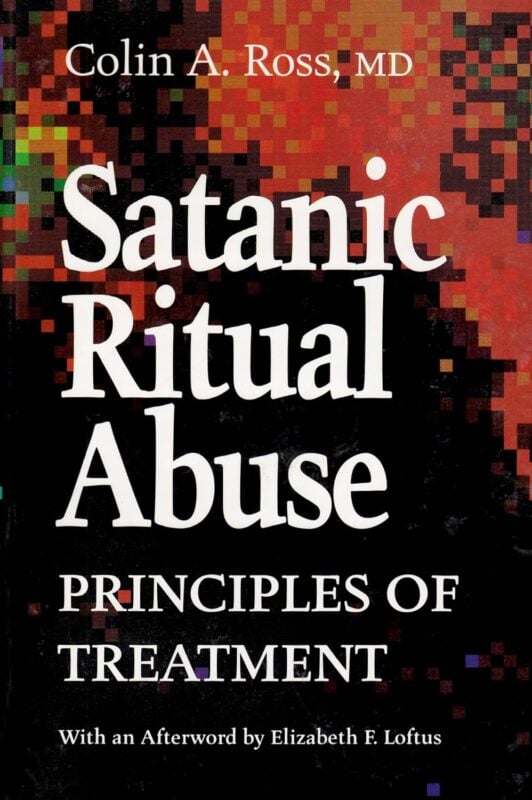
Spencer writes with clarity aimed at professionals working with trauma survivors. Her descriptions avoid voyeurism and emphasize psychological consequence over graphic detail. She frames ritual abuse as a subset of complex trauma, characterized by chronic violations of bodily autonomy, identity fragmentation, and memory suppression. Survivors often present with dissociative identity disorder, somatic symptoms, or mood instability—conditions poorly understood without contextual knowledge of ritualized abuse.
She calls for therapeutic strategies that integrate narrative reconstruction with somatic grounding, emphasizing the survivor’s right to interpret memory without coercion. She critiques approaches that demand “proof” before belief, arguing that insistence on external validation replicates the invalidation survivors faced during abuse.
Toward Recognition and Accountability
The book ends with a challenge: understand how evil embeds itself in social structures. Warren’s story is not an anomaly. It demonstrates how rituals, when combined with control over perception, can normalize acts of extreme cruelty. The mechanisms he uses—fear, spectacle, dissociation—operate wherever power meets denial.
Spencer urges readers to look beyond the shocking and examine the strategic. Ritual abuse thrives when people treat trauma as implausible, when they pathologize disclosure, and when they underestimate the psychological precision of abusers. The cult’s power came not from its secrecy alone, but from society’s refusal to ask what it means when a child cannot remember their childhood.
Satan's High Priest offers no comfort, no resolution, only clarity: evil builds itself through method, sustains itself through belief, and exposes itself only when survivors speak and listeners refuse to look away.

About the Book