SPEAKING OUT!: My Life under and Escape from Satanic Ritual Abuse

Speaking Out! My Life Under and Escape From Satanic Ritual Abuse by Chantal Frei documents a harrowing personal journey through a clandestine system of organized trauma. Frei, raised within a family that presented a religious façade, exposes the existence of a hidden world governed by systematic ritual abuse, psychological conditioning, and elite protection.
A Life Engineered for Silence
Frei’s early life operated under two separate regimes: a surface of ordinary Swiss village life and a covert ritualistic environment. Her father served as both church elder and cult perpetrator. Her mother, selected for traits linked to dissociative identity disorder, supported this double life, knowingly or unknowingly. Frei recounts how drugs and psychological manipulation shaped her childhood. Her memories were not recovered through hypnosis or suggestion but returned over time as trauma fragmented and slowly reintegrated.
Constructing a Child for Cultic Roles
The network that enveloped Frei’s life was not local or amateur. It functioned with military precision, trafficking children across countries, administering specific training for assigned roles, and embedding agents in institutions. Frei describes being selected and conditioned to become a “Mother of Darkness,” a role in the Illuminati hierarchy. From a young age, she endured and inflicted ritual violence, trained in submission, obedience, and psychological fragmentation. The goal was not solely to victimize but to reproduce the system within new agents.
Mind Control as Doctrine
Frei outlines a detailed breakdown of dissociative identity disorder (DID), showing how trauma-based mind control fragments consciousness. Through this fragmentation, perpetrators create alter personalities to fulfill roles while shielding the core identity. Cult handlers exploit this dissociation to conceal operational control and maintain absolute dominance. Frei emphasizes that this is a learned and engineered psychological outcome, not merely a consequence of random abuse. Programming techniques include symbolic reward systems, color-coded triggers, and trauma bonds, often reinforced through rites involving sexual violence, isolation, and indoctrination.
Religious Cover and Ideological Camouflage
The structure disguises itself beneath layers of ideology—religious, esoteric, and scientific. Frei's abusers invoked Satanic rituals, called spirits, and engaged in mock religious rites. These rituals reinforced hierarchy and served as psychological imprinting, tethering obedience to symbolic rituals. Institutions like churches and schools concealed these crimes under respectability. Perpetrators used their public status to discredit victims, banking on societal unwillingness to confront such atrocities. Survivors, when they speak, encounter disbelief, medical dismissal, or character assassination.
Hidden Networks and Global Infrastructure
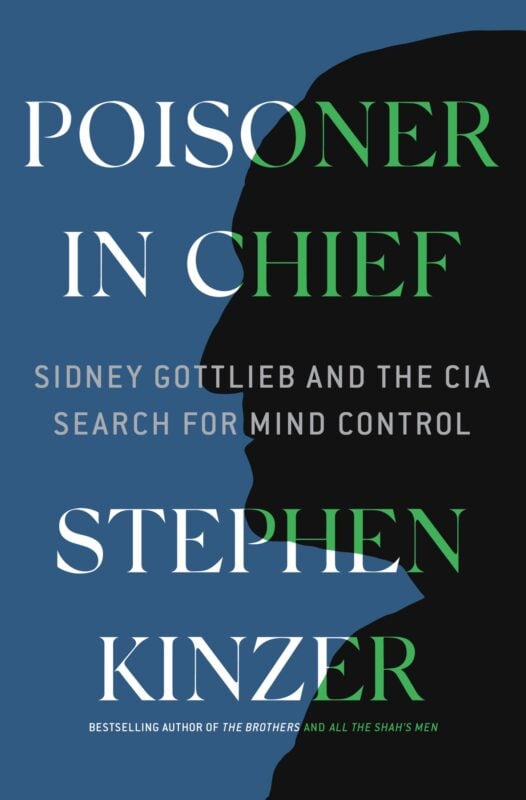
Frei’s narrative intersects with testimonies from other survivors who identify a consistent pattern: organized child trafficking, high-level political and aristocratic involvement, and a shared lexicon of symbols and practices. She mentions events at known sites such as Château des Amerois and the Sagrada Família, which she links to Illuminati selection rituals. While names are redacted for legal protection, cross-referenced reports from other survivors and whistleblowers suggest a global infrastructure designed to remain invisible. The use of government-grade mind control technologies like MK-Ultra demonstrates the institutional support behind these systems.
Resistance Within the System
Despite early indoctrination and heavy conditioning, Frei developed a fragmented but resilient internal resistance. She credits her eventual awakening to divine intervention. After a suicide attempt and supernatural experience involving an angelic visitation, she began to recover language, regain memory, and piece together her past. The command she received—to speak—became both a spiritual directive and a therapeutic imperative. Her recovery hinged on reclaiming voice, dissolving internal programming, and disobeying the silence that once protected the system.
Healing as Counterforce
Frei’s process of healing required breaking psychological contracts and exposing inner structures of control. Therapy helped her identify and integrate dissociated parts. Forgiveness, in her view, did not absolve the crimes but dismantled their psychological hold. She positions God’s love as a polarity that includes the freedom to do evil, and thus, the path to healing requires choice, faith, and personal agency. Speaking out became a central mechanism of resistance and reclamation. Her book serves as both evidence and defiance.
Institutional Failure and Collective Denial
Frei documents extensive institutional failures. Law enforcement investigations yielded no convictions due to “lack of evidence,” despite multiple credible witnesses. Medical professionals overlooked signs, spiritual authorities ignored confessions, and social systems failed to identify the network’s reach. Public silence and cultural disbelief enabled perpetrators to operate openly under social camouflage. Frei highlights how trauma amnesia, public skepticism, and systemic complicity intersect to reinforce the cult’s impunity.
Training Victims into Perpetrators
Frei’s training involved being forced to perform abuse on other children, creating a cycle of perpetration under coercion. This aspect was central to the cult’s strategy: train children to dissociate through participation in violence, thereby grooming them for future operational roles. This process forged internal allegiance to the system through guilt, trauma bonds, and psychological entrapment. Frei’s testimony confronts the psychological reality that victims can be forced to participate in acts that ensure their silence through internalized shame.
Calls to Action and Ethical Imperatives
Frei’s work challenges bystanders to examine uncomfortable realities. Her account refutes the myth of isolated perversion. Instead, it points to an organized, ideologically motivated, and strategically shielded network. She urges professionals—therapists, clergy, law enforcement, educators—to break complicity by disbelief. The ethical imperative lies in witnessing, believing, and intervening. Her story is a rare survivor’s map through the interior of a global system few dare to confront. Speaking becomes an act of war against systemic evil.
Spiritual Warfare and Transdimensional Forces
The book explores metaphysical dimensions of Frei’s experience. She describes out-of-body episodes, demonic manifestations, and the invocation of entities during rituals. These are not metaphorical but operational components within the cult's system. Frei reports firsthand encounters with non-human intelligences summoned through ritual practices. These experiences parallel reports from other survivors and practitioners in dissociation therapy. The book argues for a cosmology where spiritual realities exert real, tactical influence on physical outcomes.
Courage as Infrastructure for Survival
Speaking is not merely expression; it is infrastructure. For Frei, language rebuilt fractured internal landscapes. Voice integrated splintered ego-states. Testimony forged relational ties where programming bred isolation. Writing this book involved legal protections, therapeutic preparation, and spiritual warfare. Frei placed records with lawyers and notaries in anticipation of retaliation. Each sentence marks an act of calculated rebellion against a structure that depends on secrecy.
Illuminati as Structural Reality
Frei connects her experience to a broader Illuminati hierarchy. She aligns roles, colors, symbols, and programming levels with corroborated survivor reports. She identifies specific markers—such as amethyst and diamond jewelry—as signifiers of rank. Ritual locations, attire, behavioral scripts, and memory erasure methods match intelligence program tactics, suggesting continuity between cultic systems and state experiments like MK-Ultra. She positions the Illuminati not as myth but as an operating system with ideological intent and personnel training protocols.
Public Memory and Protective Forgetting
Frei identifies the mechanism of cultural disbelief as an active form of protection for perpetrators. Society benefits psychologically from denying these realities because acknowledgment demands action. Her book destabilizes that protective forgetting, forcing readers to reevaluate concepts of sanity, evil, and justice. The stories remain hidden because society demands a coherent, orderly narrative where such horrors have no place. Frei tears open that narrative to show the architecture of systemic violation.
A Structure Built on Secrecy Can Collapse Through Speech
Chantal Frei’s account reclaims authorship over a life engineered for voicelessness. The book discloses systems designed for silence and survival mechanisms rooted in divine trust. By testifying, she invalidates the architecture of secrecy and reassigns power to speech. Speaking does not reverse the past but repurposes it. Her voice breaks open the operational logic of trauma-based control and reveals the soul’s capacity to choose against domination.

About the Book