Suffer the Child
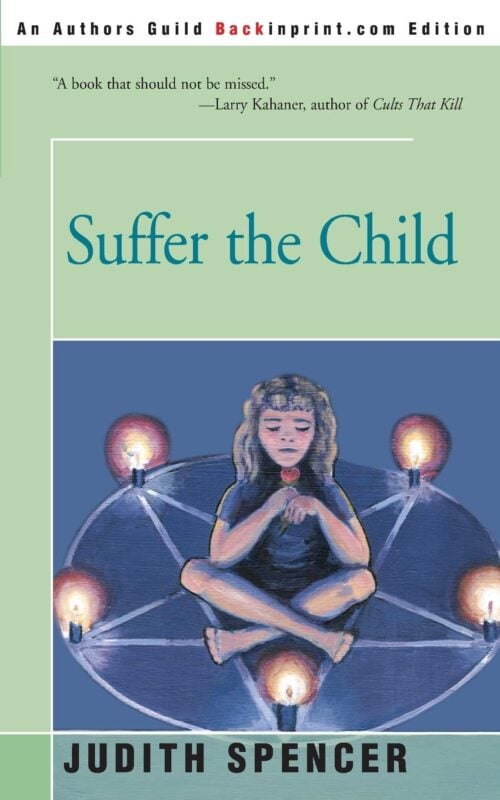
Suffer the Child by Judith Spencer chronicles the harrowing journey of Jenny Walters Harris, a woman who developed over four hundred personalities to survive severe childhood abuse within a satanic cult. This groundbreaking narrative, rooted in five years of meticulous research, unveils the psychological mechanisms of multiple personality disorder (MPD), now known as dissociative identity disorder (DID), and its ties to ritualistic trauma. Spencer, a pediatric nurse and writer, draws on extensive therapy records, including session notes, audiotapes, videotapes, and Jenny’s journal, to craft a vivid account of survival and healing. The book stands as a beacon for understanding the profound impact of child abuse and the resilience required to reclaim a fractured self.
A Child’s Fractured Reality
Jenny’s story begins in a rural southeastern U.S. community, where her childhood unfolded under the shadow of a satanic cult. From age two, her mother, Gladys Faye, immersed her in rituals involving physical, sexual, and emotional abuse. These experiences, too overwhelming for a young mind, triggered dissociation—a process where Jenny created alter personalities to endure the trauma. Sandy, a bold child who embraced the cult’s teachings, and Selena, a rebellious teenager impervious to physical pain, emerged as key alters, each handling specific aspects of the abuse. Why did Jenny’s mind fragment so extensively? The relentless cruelty, including forced participation in animal sacrifices and sexual rituals, demanded a coping mechanism that allowed her to escape unbearable realities while preserving her core self.
The cult’s ceremonies, described with chilling detail, reveal a systematic effort to bind Jenny to its ideology. At five, she witnessed animal killings and drank blood to seal her silence. By ten, she endured a mock marriage to Satan, reinforcing her perceived destiny as a future high priestess. Spencer documents these events through Jenny’s recovered memories, corroborated by physical evidence like scars and writings on the walls of her childhood home. The narrative captures the cult’s paradoxical nature—inflicting terror while offering a warped sense of belonging. This duality trapped Jenny, as her mother’s approval, a fleeting promise, hinged on her compliance.
The Mechanics of Dissociation
Dissociation enabled Jenny to delegate traumatic experiences to her alters, preserving her sanity. Spencer explains this process as a form of self-hypnosis, where Jenny’s consciousness split to create distinct identities with unique roles. For instance, Kayla, a five-year-old alter, held the core of Jenny’s pain, while Mind served as an inner-self-helper, shielding her from overwhelming memories. Over four hundred personalities emerged, each with specific functions—some to play, others to protect, and many to endure the cult’s horrors. How could a child’s mind sustain such complexity? Spencer’s access to therapy records reveals the polyfragmented nature of Jenny’s system, a testament to the intensity and duration of her abuse.
The book traces the psychological toll of this fragmentation. As Jenny grew, her alters became more autonomous, competing for control and complicating her ability to maintain a cohesive identity. This internal chaos led to periods of amnesia, particularly during her teenage years, when two years of her life vanished into a haze of dissociation. Spencer’s narrative underscores the adaptive brilliance of MPD, allowing Jenny to survive, but also its cost—her inability to live fully in the present without retreating to her “crystal world,” a metaphor for her dissociated state.
The Path to Healing
Jenny’s journey toward integration began in 1983, when therapists Rachel and Karl Alexander confirmed her MPD diagnosis. Lacking local expertise, they relied on emerging research and conferences, such as the International Society for the Study of Multiple Personality and Dissociation, to guide their treatment. Spencer, present during marathon therapy sessions, documents their innovative approach, which aimed to help Jenny control her daily life and eventually unify her personalities. The process involved confronting suppressed memories, often triggered by physical locations like the abandoned house where Jenny’s childhood writings—pleas for help and lists of alters—remained etched on the walls.
Therapy revealed the depth of Jenny’s trauma. Memories of rituals at Fontana Dam and Bridal Veil Falls surfaced, each tied to specific alters like Sandy, who sought approval within the cult, and Selena, who bore the physical pain. Why did these memories remain buried for so long? The cult’s sanctions against disclosure, reinforced by threats and drugs, silenced Jenny’s alters until therapy provided a safe space. Spencer’s role as a supportive observer, combined with her nursing background, enriched the therapeutic process, offering Jenny a trusted ally outside the clinical setting.
Confronting the Cult’s Legacy
The narrative delves into the cult’s lasting emotional hold. Despite escaping physically, Jenny struggled with its psychological grip, drawn back at age twenty-one by the promise of power and belonging. Her alters, particularly Sandy, embodied this conflict, oscillating between devotion to the cult and rebellion against its atrocities. A pivotal moment came when Jenny refused to sacrifice her own child, leading to a breakdown and hospitalization. This act of defiance, though costly, marked a turning point, severing her physical ties to the cult after a hysterectomy rendered her “useless” to their rituals.
Spencer highlights the cult’s deliberate conditioning, using Christian symbolism to manipulate followers. Rituals mirrored church calendars, with Easter sacrifices celebrating death over life. This perversion of faith deepened Jenny’s internal conflict, as she clung to Christian beliefs despite her alters’ involvement in satanic practices. How could she reconcile these opposing identities? Therapy focused on validating her experiences, allowing her to acknowledge the cult’s reality without succumbing to its ideology.
Hospitalization and Setbacks
In 1987, Jenny entered the Dissociative Disorders Unit at Rush-Presbyterian-St. Luke’s Medical Center for a month-long evaluation. The unit, a pioneer in treating MPD, offered a safe environment where Jenny and Selena interacted with other survivors. Spencer notes the validation Jenny found in meeting others with similar experiences, reducing her shame and isolation. However, the hospitalization also triggered regression, with child alters like Kayla and Kecia resurfacing, increasing fragmentation. Why did this regression occur? The hospital’s acceptance of her multiplicity may have reinforced dissociative patterns, allowing Jenny to retreat rather than confront her pain.
The psychological evaluation confirmed severe trauma and suggested an underlying schizophrenic disorder, a common misdiagnosis for MPD at the time. Dr. Bennett Braun, the unit’s director, recommended strengthening adult personalities to enhance daily functioning. Despite setbacks, the experience provided critical corroboration of Jenny’s cult memories, bolstering her therapists’ efforts. Spencer’s narrative captures the tension between progress and regression, illustrating the complexity of treating MPD in a hospital setting.
Jenny’s Voice and Legacy
The book concludes with reflections from Jenny and Selena, offering raw insights into their ongoing struggle for integration. Jenny speaks of her fear and confusion, yearning for a world where children’s pain is heard. Selena grapples with her identity, resisting the loss of her autonomy to become part of a unified self. Their voices underscore the book’s central question: Can a fractured self find wholeness? Spencer affirms Jenny’s courage in breaking her silence, using her story to advocate for abused children and challenge societal denial of ritual abuse.
Suffer the Child stands as a seminal work, the first to link satanic abuse with MPD. Its detailed portrayal of Jenny’s therapy, supported by extensive documentation, offers a roadmap for understanding dissociative disorders. Spencer’s unflinching prose exposes the horrors of cult abuse while celebrating Jenny’s resilience. The book serves as both a cautionary tale and a call to action, urging readers to listen to children and recognize the hidden scars of trauma. Through Jenny’s journey, Spencer illuminates the path from fragmentation to potential wholeness, offering hope for survivors and guidance for those who support them.

About the Book