The Bormann Brotherhood
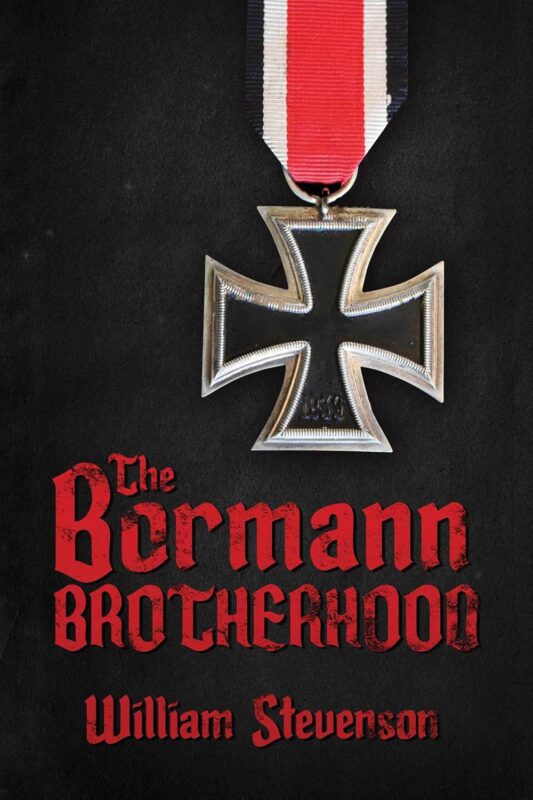
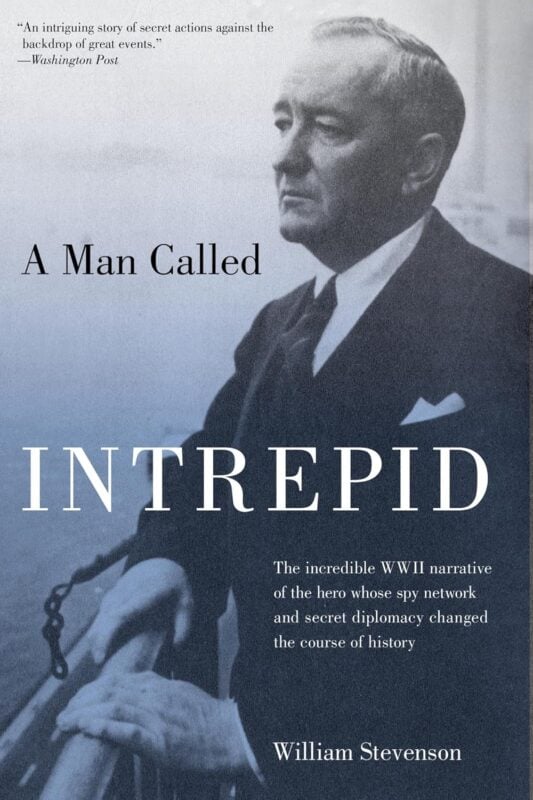
The Bormann Brotherhood by William Stevenson exposes the shadow empire built by Hitler’s closest aide, Martin Bormann, and traces the Nazi network that persisted through secret alliances, espionage channels, and corporate veils long after the Third Reich’s fall. Through direct interviews, declassified archives, and intelligence leads, Stevenson reconstructs the machinery that allowed Nazi operatives to escape justice, launder wealth, and infiltrate Cold War power structures.
Bormann’s Escape and the Ghost Trail
Martin Bormann disappeared from Hitler’s Berlin bunker in 1945. Stevenson reopens this enigma with fresh testimony from military witnesses and intelligence agents who encountered him in postwar Europe. He narrates the account of British counterintelligence operative Ronald Gray, who claimed to have shot Bormann in Flensburg and watched his body sink into a fjord. Gray's report, corroborated by location details and German logistics, aligned with the broader mystery: Bormann reappeared in multiple continents for decades after his declared death.
How did this fugitive command such reach? Stevenson dissects the apparatus that shielded Bormann: forged documents, Vatican escape routes, safe houses in Latin America, and the coordination of Die Spinne—the “Spider” network spun from ODESSA’s foundation. Each route served a precise function: extraction, laundering, communication, and integration into political life.
From Reich to Global Network
Bormann did not just flee. He executed a plan that transformed dispersed Nazi operatives into a global financial syndicate. Stevenson documents how over 750 companies, registered in neutral countries, channeled looted wartime assets into postwar ventures. Argentina, Paraguay, and Brazil became operational hubs for German expatriates with wartime records and peacetime capital.
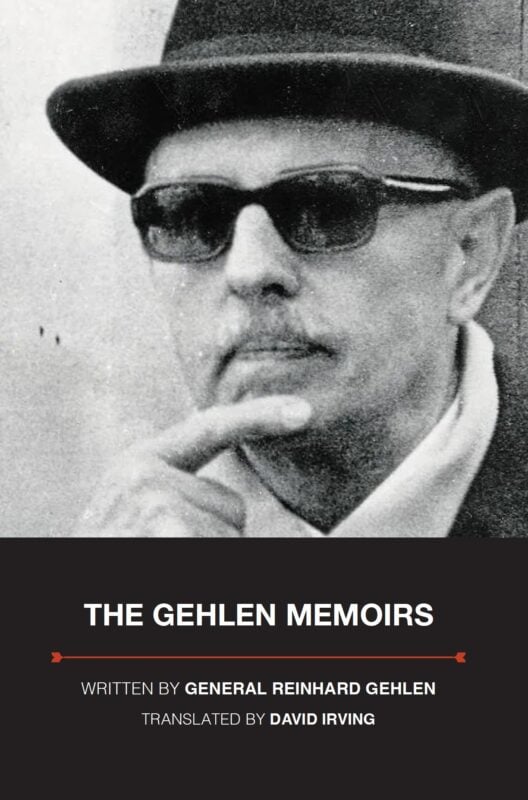
Stevenson identifies collaborators in military intelligence and banking sectors who facilitated these transitions. Reinhard Gehlen, Hitler’s former eastern intelligence chief, became a Cold War linchpin for the CIA. This transition was not incidental. Gehlen brought with him entire intelligence archives, personnel, and ideological continuity, which the U.S. absorbed into its anti-Soviet strategy.
Nazism did not dissolve—it mutated. Bormann’s influence forged links between fascist exiles and Western intelligence communities. Stevenson maps this continuity through documented meetings, declassified memos, and firsthand accounts of former agents who saw Bormann’s emissaries negotiating deals under diplomatic immunity.
The Role of the Church and Espionage Crosscurrents
Stevenson probes the Vatican’s channels—particularly the ratlines operated by sympathetic clergy—which offered Bormann and his circle a reliable path from Europe to Latin America. These clerical networks, under Cardinal Hudal’s oversight, issued forged Red Cross documents and facilitated cross-border movement under religious asylum claims.
Parallel to this ecclesiastical complicity ran the geopolitical currents of Soviet and Western espionage. Bormann’s trail cuts through Soviet misinformation, Western disinformation, and the operational ambiguity exploited by double agents like Kim Philby and Richard Sorge. By threading these actors into the Bormann narrative, Stevenson demonstrates that secrecy was not merely protective; it was instrumental.
The myth of Bormann’s death in Berlin collapses under forensic anomalies. In 1998, DNA testing of a skeleton found in Berlin produced a match—but Hugh Thomas’s forensic analysis pointed to red clay in the skull, native to Paraguay. Stevenson presents this contradiction as part of a pattern: staged deaths, recycled identities, and delayed documentation serving political goals.
The Nazi Legacy in Postwar Institutions
Stevenson traces how former Nazis integrated into the military, political, and judicial apparatus of postwar West Germany. Of the generals active in 1970, 176 had served under Hitler. Trials of war criminals were delayed or obstructed through legal maneuvering and bureaucratic inertia. The Ludwigsburg Office, established to investigate Nazi crimes, lacked prosecutorial authority and often employed former party members.
In Latin America, Stevenson follows Nazi expatriates turned advisors, engineers, and arms brokers. Otto Skorzeny trained security forces in Egypt. Kurt Tank built fighter planes in India. These were not isolated actors but nodal points in Bormann’s design: embed competence in developing regimes and sell influence under nationalist pretexts.
Why did Western powers tolerate these operatives? Stevenson answers through declassified intelligence protocols, showing that geopolitical utility overruled moral accountability. The Cold War’s strategic urgency displaced World War II’s ethical imperatives. As long as Bormann’s men served anti-communist goals, their past remained unexamined.
Psychological Dimensions of Bormann’s Power
Stevenson explores Bormann’s personality through former associates and analysts. Bormann possessed a photographic memory, relentless energy, and a unique ability to exploit proximity to power. He controlled Hitler’s access, monitored his communications, and directed the party’s internal finances with absolute authority.
Witnesses describe his physicality as ox-like: heavy shoulders, short neck, aggressive posture. These were not superficial traits but expressions of a calculated presence. Bormann positioned himself as the custodian of continuity, loyal not to individuals but to the regime’s ideological architecture. His escape, Stevenson argues, preserved this architecture under a new set of disguises.
The Fourth Reich in Shadow
What did Bormann envision beyond survival? Stevenson uncovers a thousand-page manifesto, “Notes for the Future,” smuggled out of Berlin. Its contents projected a long-term strategy: establish economic dominance, infiltrate international banking, weaponize industrial assets, and manipulate ideological tensions to keep old loyalties intact under new regimes.
Stevenson presents financial records, property transfers, and intelligence dispatches that outline this framework. The brotherhood did not rely on nationalist sentiment but on operational discipline. They embedded themselves where states were fragile, laws were porous, and capital bought silence.
Implications for Cold War History
The Bormann Brotherhood destabilizes the clean narratives of postwar justice and democratic renewal. Stevenson’s research suggests that the West’s fight against communism empowered remnants of fascism. Former SS officers worked alongside NATO consultants. High-ranking Nazis advised military juntas. Intelligence agencies dismissed evidence when it conflicted with operational convenience.
The CIA tracked Bormann-related bank accounts into the 1980s without public disclosure. The FBI investigated his movement through Paraguay and Argentina without issuing arrests. Stevenson attributes this silence to a strategic calculus: revealing the brotherhood would compromise allies, expose complicity, and undermine Western credibility.
Resistance and Documentation
Despite institutional inertia, individuals resisted. Beate Klarsfeld tracked down war criminals and exposed judicial complicity. Sir William Stephenson and General William Donovan preserved OSS records showing early awareness of Bormann’s escape. The Wiener Library, Amnesty International, and postwar archives from East Germany filled gaps left by Western reticence.
Stevenson built his case on these fragments. He interviewed Hjalmar Schacht, Otto John, and others once close to the Nazi core. Their recollections, triangulated with documents, shaped a narrative where Bormann’s escape was only the beginning of a larger system’s survival.
Enduring Influence and Modern Parallels
The question arises: what survives of the brotherhood today? Stevenson’s analysis does not rest on sensationalism but on systems. The patterns he documents—financial secrecy, intelligence immunity, ideological laundering—persist in global networks that blur the line between state and shadow.
Bormann’s model integrated business, ideology, and espionage. It provided continuity through collapse, allowed operational pivots through regime changes, and preserved loyalty through shared silence. These features, Stevenson shows, outlived their architect.
The Bormann Brotherhood posits that Bormann’s greatest achievement was conceptual: demonstrating that totalitarian infrastructure could survive military defeat, rebrand itself through pragmatism, and thrive in geopolitical ambiguity. Through rigor and relentless inquiry, Stevenson transforms a fugitive’s tale into a case study in modern power’s adaptability.