The Culture Code: An Ingenious Way To Understand Why People Around The World Live And Buy As They Do
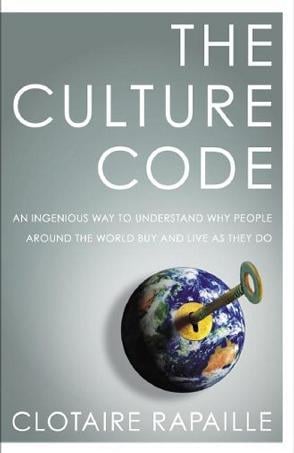
The Culture Code by Clotaire Rapaille deciphers the unconscious frameworks that shape how people think, buy, and behave within distinct cultures. Drawing from his work with corporations like Chrysler, Nestlé, and Ritz-Carlton, Rapaille unveils how early emotional imprints define consumer responses across nations. He proposes that these imprints form the Culture Code—a deep, often unspoken language of symbols and meanings.
Imprinting, Emotion, and the Formation of Codes
Culture begins in childhood, shaped by intense emotional experiences that embed foundational associations. Rapaille demonstrates how these associations govern behavior throughout life. When American children experience toilet training, they unconsciously tie toilet paper to the concept of independence. For Ritz-Carlton, recognizing this unlocked a new approach to hospitality—transforming hotel bathrooms into personal sanctuaries of autonomy and privacy.
To decode such unconscious imprints, Rapaille guides participants through deep relaxation to access the brain's reptilian core—the seat of instinct, memory, and emotion. Through this method, he reveals that cultural meaning emerges not from rational statements but from the emotional residue of lived experience.
The Code for Cars: Identity and Liberation
American identity manifests vividly in the way people relate to cars. Rapaille’s research for Chrysler uncovered that cars are not transportation devices—they are symbols of personal freedom, sensuality, and self-expression. The Jeep Wrangler, for Americans, evokes the open range and the archetype of the cowboy’s horse. When Chrysler tried to soften the Wrangler into a generic SUV, they ignored the Code. Once Rapaille identified HORSE as the underlying metaphor, Chrysler reinforced the vehicle's ruggedness, and sales surged.
In France and Germany, however, the Jeep’s meaning transformed. The same vehicle evoked liberation from war and tyranny, not wilderness. Rapaille named the Code LIBERATOR for European markets. Chrysler embraced this narrative, aligning its campaigns to cultural memory rather than technical attributes, and doubled its success.
Cultural Adolescence and the American Psyche
Rapaille characterizes American culture as adolescent—energetic, idealistic, and emotionally volatile. This adolescence drives obsession with reinvention, resistance to authority, fascination with extremes, and pursuit of immediate gratification. Americans revere youthfulness, reward nonconformity, and normalize eccentricity. Public figures who embody these traits—Tom Cruise, Mike Tyson, Venus Williams—gain admiration not for maturity but for unapologetic intensity.
This adolescent structure affects how Americans perceive leadership, decision-making, and cultural exports. It explains why romantic ideals persist in media, despite widespread cynicism about lasting love. American culture celebrates the possibility of transformation, even after failure. Rapaille sees this structure embedded in products, politics, and personal relationships.
Why People Lie in Focus Groups
People say what they think researchers want to hear. Rapaille exposes the failure of conventional market research: it asks conscious minds for unconscious answers. When asked why they buy cars, participants cite safety or mileage. These are rationalizations. The real drivers—freedom, desire, pride—emerge only when bypassing the cortex and accessing deeper memory through sensory recall and storytelling.
Rapaille insists on discarding surface language. He listens instead for structural patterns. In Chrysler’s case, buyers didn’t crave utility—they craved a signature. The PT Cruiser succeeded because it embraced bold design, evoking nostalgia, distinction, and sensuality.
Structure Over Content in Human Meaning
The message lives in structure, not content. A sports car and a minivan can both serve as vessels for freedom, provided the emotional structure aligns. Rapaille draws from structural anthropology, treating cultural meaning as a system of relationships, not isolated facts. A melody persists regardless of the instrument—it’s the intervals, not the notes, that carry the song.
From this view, culture operates as a reference system. Words like “sun” and “moon” encode gendered associations that differ radically. In French, “sun” is masculine and “moon” feminine, aligning men with brilliance and women with reflectivity. In German, these associations reverse. Children absorb these nuances early, shaping lifelong gender expectations.
Selling Coffee to a Nation of Tea Drinkers
When Nestlé asked Rapaille to improve coffee sales in Japan, he found no cultural imprint for the drink. Unlike tea, which carried centuries of meaning, coffee was a blank slate. To seed emotional connections, Nestlé began marketing coffee-flavored desserts to children. These early experiences created a generational imprint. Two decades later, coffee became a fixture in Japanese life.
The key insight: people cannot crave what they have never emotionally encountered. Culture codes must be installed before they can be activated. Marketers must enter at the point of imprint, not persuasion.
Toilet Paper, Champagne, and the Symbols of Self
Codes apply to the mundane as much as the monumental. Americans associate toilet paper with independence; French associate cheese with life. Pasteurization, then, feels like an attack on cultural vitality. Americans refrigerate cheese like a corpse; the French nurture it at room temperature.
Champagne carries similar divergence. French children experience its flavor in celebratory rituals, imprinting joy and taste. American children encounter alcohol later, often in contexts of rebellion or intoxication. These entry points define future behavior. For one, champagne is refinement; for the other, it is escape.
Love, Seduction, and the Myth of Mr. Right
In exploring American attitudes toward love, Rapaille discovered a pattern of initial idealism followed by disillusionment. From an early age, Americans associate love with maternal care, emotional safety, and approval. As they mature, they encounter confusion, betrayal, and unmet expectations. The unconscious result is a code of FALSE EXPECTATION.
Americans search for romantic fulfillment shaped by media fantasies. They seek total emotional rescue—a return to childhood security. The result is chronic disappointment. Rapaille contrasts this with the French pursuit of pleasure, the Italian embrace of playfulness, and the Japanese alignment of marriage with duty rather than desire.
Codes Vary, Imprints Persist
Culture defines the timing and nature of imprints. Rapaille explains that imprinting typically occurs before age seven, during a period dominated by emotional learning. Most people grow up immersed in a single cultural language, absorbing meanings through repetition and ritual. These meanings resist change, even under global pressures.
In food safety, for example, Americans prioritize hygiene and regulation. The French prioritize flavor, accepting risk as a trade-off. These are not rational choices—they are structural imprints rooted in early emotional learning. The mind doesn’t reevaluate them; it lives through them.
From Personal Insight to Global Application
Over thirty years, Rapaille has decoded hundreds of products, ideas, and cultural behaviors. His method blends psychoanalysis, cultural anthropology, and marketing strategy. He teaches companies to stop asking what people want and start asking what people remember. Imprints are emotional fossils. Digging for them reveals the true map of consumer behavior.
He shows that every product—cars, coffee, toilet paper—embodies a cultural narrative. These narratives differ across borders. Success depends on matching the message to the memory, the product to the imprint, the campaign to the code.
Understanding Through the Cultural Unconscious
The Culture Code presents a third unconscious—distinct from Freud’s personal unconscious or Jung’s collective unconscious. It lives in the space between the individual and the society, in the shared memory of symbols and sensations. This unconscious governs the logic of everyday decisions and global trends.
When businesses tap into this code, they gain a tool for deep alignment. When individuals grasp it, they gain clarity about their own desires. Cultural codes explain behavior at scale. They unlock motivations that standard psychology misses.
What does a car say about a nation’s identity? Why do people reject one product and adopt another without explanation? What emotional memory does a brand activate? These questions do not fade—they direct the structure of culture. The answers lie in the code.