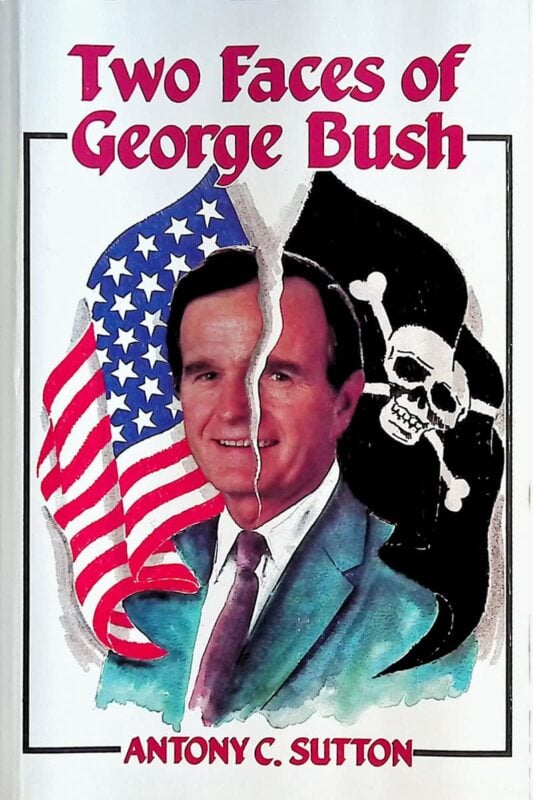
The Two Faces of George Bush by Antony C. Sutton investigates the hidden networks, secret allegiances, and establishment ties underpinning the public and private life of George Herbert Walker Bush. Sutton traces the path of a man whose ascent to the highest levels of American power reveals the architecture of influence and privilege sustaining America’s political and economic elite. This work draws on detailed historical records, membership lists, financial relationships, and overlooked episodes to map the intersection of family legacy, corporate power, intelligence operations, and secret society rituals.
The Architecture of Image: Constructing the Official Biography
George Herbert Walker Bush occupies a place of unique prominence in late twentieth-century American history. Sutton presents the official White House narrative in its full detail, cataloging the meticulously curated sequence of milestones: Bush emerges as a decorated Navy pilot, a Yale Phi Beta Kappa, a successful oil entrepreneur, a dedicated family man, a skilled statesman, and a seasoned intelligence leader. From the perspective of his official biographers, Bush exemplifies the American meritocratic ideal—marked by self-sacrifice, achievement, and public service. The sequence of positions—Congressman, UN Ambassador, Party Chairman, envoy to China, CIA Director, Vice President—maps a trajectory of increasing trust and national responsibility.
But who shapes these narratives? Sutton examines the production of Bush’s image as a deliberate act of public relations. He details how staged appearances, commemorations, and press coverage amplify selected virtues. Military exploits, for example, are elevated to the realm of national myth: a single combat incident, magnified through speeches and media events, generates an enduring “war hero” motif. Through rhetorical inquiry, Sutton asks how this curated version persists, who benefits from its amplification, and what lies beneath the surface of official storytelling.
Networks of Power: The Bush Family and the Eastern Establishment
Sutton details the Bush family’s origins within the upper echelons of the American elite, focusing on Prescott Bush—Yale graduate, Skull & Bones member, Wall Street banker, and U.S. Senator. Prescott’s ascent, interconnected with the Harriman family and the Skull & Bones fraternity, builds a network whose influence stretches from finance and industry to intelligence and government. Membership in Skull & Bones functions as both a social adhesive and a conduit for elite recruitment. Sutton enumerates the business partners, corporate directorships, and family intermarriages consolidating power across generations.
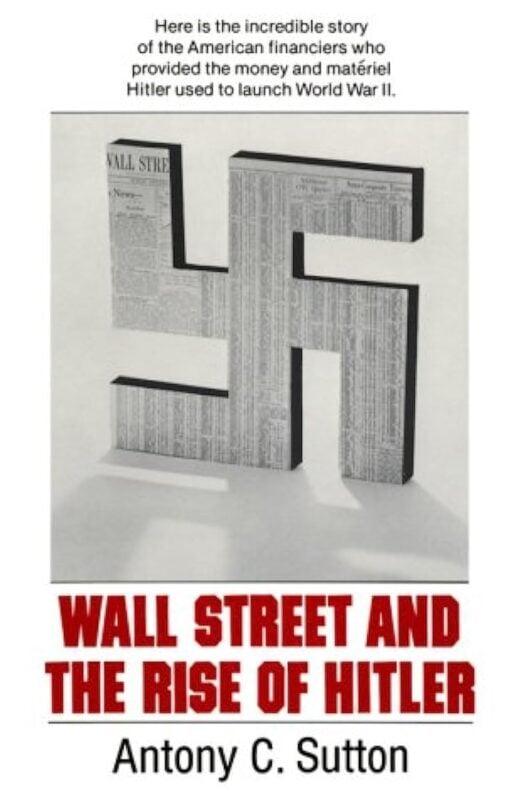
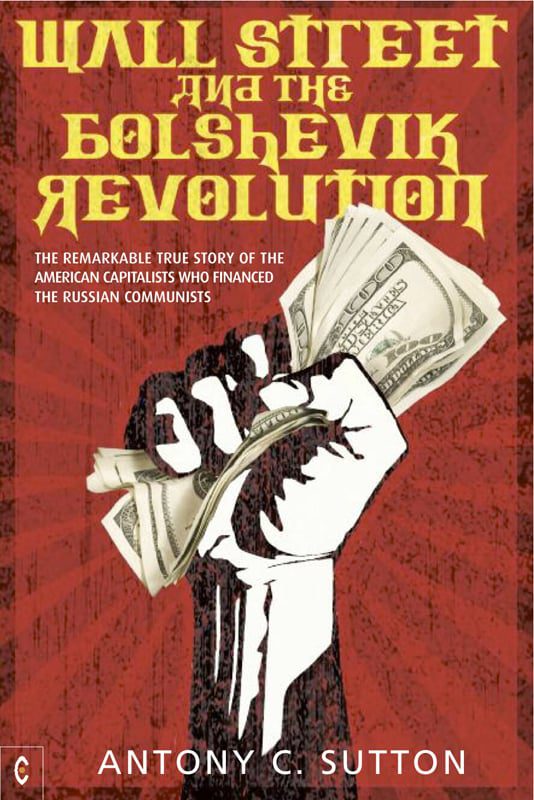
Prescott Bush’s affiliations extend beyond business into the orchestration of major twentieth-century political events. Through Brown Brothers Harriman, Dresser Industries, and other firms, Sutton tracks the flow of capital and industrial technology into both the Soviet Union and Nazi Germany. Boardroom alliances, banking operations, and legal partnerships reveal a complex, often hidden, machinery shaping geopolitical outcomes. Family marriages, such as George Bush’s union with Barbara Pierce, intertwine the Bushes with other publishing and corporate dynasties, reinforcing the structural integrity of the elite establishment.
Skull & Bones: The Engine of Secrecy and Selection
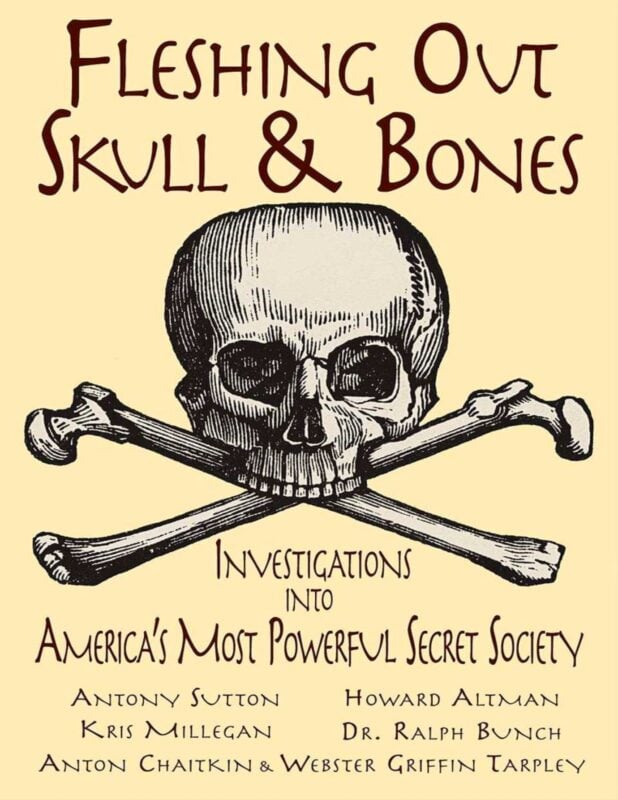
At the heart of Sutton’s analysis stands Skull & Bones—a secret society at Yale University whose members pledge lifelong secrecy and mutual support. George H.W. Bush’s 1948 initiation links him to a multi-generational fraternity encompassing future statesmen, bankers, corporate executives, and intelligence operatives. Sutton presents direct excerpts from the secret membership lists, demonstrating the density of establishment figures within its ranks.
He questions the nature of the oath binding members: How does a secret allegiance influence public office? What mechanisms preserve group loyalty and facilitate the distribution of opportunity? Sutton observes how leadership positions in both major political parties and key government committees often reside with Skull & Bones initiates or their immediate relatives. The process of club selection ensures that each year’s members, handpicked by the preceding cell, perpetuate a tightly controlled succession of influence. The group’s mystique, rituals, and clandestine communications provide a foundation for elite solidarity extending well beyond the boundaries of Yale.
Oil, Capital, and Patronage: The Business Foundations
George Bush’s business career, as Sutton documents, originates in the Texas oil industry—specifically through roles in Dresser Industries and the founding of Zapata Petroleum and Zapata Off-Shore. The text explores the role of family capital and establishment banking in facilitating Bush’s rise as an oil entrepreneur. Zapata’s development, mergers, and international contracts position Bush within a select circle of oil executives whose fortunes rely on both technological innovation and access to global markets.
The naming of Zapata, curiously drawn from a Mexican revolutionary, hints at an underlying narrative of power, strategy, and calculated branding. Sutton analyzes the alliances with oilmen such as H.L. Liedtke, the transference of privileged information during official diplomatic trips, and the subsequent business advantages—such as the unprecedented damages award to Pennzoil, a company linked to Bush’s network. Bush’s interventions in oil pricing—such as his 1986 visit to the Middle East to encourage higher crude prices—demonstrate the alignment of political action and economic interest.
Political Ascent: The Fast Track and the Role of Patronage
Bush’s political journey follows a pattern in which setbacks trigger the intervention of establishment patrons. After losing Senate races, Sutton shows how Bush’s allies arrange for his continued elevation through appointed positions—UN Ambassador, Party Chairman, Chief of Mission to China, and ultimately Director of Central Intelligence. Family connections, campaign financing, and corporate ties accelerate his rise, circumventing the usual risks of political life. Sutton cites sources within the Republican establishment and contemporary journalists who note the rapidity and artificiality of Bush’s advancement, raising the question of who orchestrates these moves and for what purpose.
Bush’s voting record as Congressman reveals his pragmatic orientation: he supports policies based on expediency, shifting alliances, and the requirements of the moment. Sutton catalogues key legislative votes—on gun control, foreign aid, education, and fiscal policy—that illustrate a pattern of adaptation rather than fixed principle. The narrative tension intensifies as the analysis moves to Bush’s involvement in foreign policy, the development of U.S.-China relations, and intelligence leadership, tracing the convergence of secrecy, elite networking, and global strategy.
Media, Perception, and the Management of Narrative
Sutton devotes extended analysis to the mechanisms by which Bush’s public image is constructed and maintained. He identifies the centrality of public relations professionals in selecting and disseminating stories, controlling access, and managing potentially damaging revelations. Through the orchestration of military anniversaries, appearances with vintage aircraft, and family-centered press moments, Bush’s handlers generate a steady stream of positive coverage. Sutton foregrounds episodes in which the manipulation of narrative becomes especially transparent—such as the staging of “war hero” events and the strategic release of personal milestones.
What enables this level of media management? Sutton’s answer points to the integration of establishment interests across media, finance, and government. When controversy arises—such as in the case of the E.F. Hutton “check kiting” scandal involving Bush’s brother-in-law—the network of family, influence, and legal maneuvering insulates its members from serious consequences. Sutton suggests that the absence of prosecutions or in-depth reporting in these cases reflects the reach of establishment protection.
Allegiances, Interests, and Hidden Connections
The book delves into the connections—sometimes overt, sometimes suggested—linking Bush’s network to controversial or illicit activities. Sutton examines coded language, press references, and social relationships implicating associates in drug smuggling or financial manipulation. He draws attention to ambiguous phrases and inside jokes—such as the interpretation of “set up the hoops” in a Doonesbury cartoon—raising the possibility of hidden communications or signals among insiders.
How do these networks sustain their cohesion? Sutton explores the mutual dependencies of power, secrecy, and shared interest. The convergence of oil wealth, intelligence experience, secret society allegiance, and corporate directorships creates a matrix in which protection, opportunity, and coordinated action reinforce one another. These structures operate not only in the realm of economic advantage but also in the management of information, appointment to public office, and the shaping of national policy.
Establishment Power and Its Consequences
Sutton’s synthesis points to the long-term costs of concentrated elite power. The alignment of interests among Wall Street bankers, oil executives, intelligence officials, and political families produces a form of governance structured for the perpetuation of privilege. Policies—whether in foreign aid, trade, or national defense—reflect the priorities of this network. As Sutton analyzes the evidence, he sees the pattern of elite continuity extending across wars, economic crises, and political realignments.
This elite, Sutton asserts, exhibits distinct characteristics: self-perpetuation through intermarriage and selective recruitment, control over the means of information production, ability to influence both domestic and foreign policy, and an aptitude for managing dissent through narrative and appointment. The inability of establishment figures to adopt the posture of the “common man” signals a disjuncture between rulers and ruled, evident in body language, speech patterns, and campaign style.
The Question of Suitability: Who Governs?
The narrative arc converges on the central question: What qualities define a candidate for national leadership? Sutton’s assessment measures Bush’s record, networks, and behavioral patterns against the demands of the presidency. The analysis suggests that Bush emerges less as an autonomous agent and more as a conduit for elite interests—a “two-faced” figure whose public persona serves as the visible tip of a vast, interconnected power structure.
In focusing on the architecture of Bush’s ascent, Sutton raises foundational questions about democracy, legitimacy, and the function of hidden networks in American life. The biography does not present Bush’s actions as isolated or exceptional; rather, they manifest the operational logic of establishment power as it perpetuates itself through decades of change. The exposure of these connections, Sutton implies, constitutes an essential step toward understanding how power is acquired, exercised, and concealed.
Legacy and Structural Implications
As the book concludes, the analysis broadens to encompass the consequences of establishment governance for American society. The perpetuation of privilege through secret societies, financial alliances, and orchestrated narratives shapes both the policies and the limits of the political system. Sutton’s research illuminates the mechanisms by which power endures and adapts, suggesting that the story of George Bush serves as a template for analyzing broader patterns of continuity, adaptation, and control among America’s ruling elite.
The question remains: What structures—visible and invisible—determine the direction of a nation’s political and economic life? Sutton offers his account as both a diagnosis and a provocation, inviting deeper investigation into the convergence of family, business, secrecy, and statecraft at the summit of American power.