A Nation Betrayed: Secret Cold War Experiments Performed on our Children and Other Innocent People

A Nation Betrayed by Carol Rutz documents secret Cold War experiments conducted on American children and other vulnerable populations through the lens of her own lived experience as a survivor of CIA mind control programs. The book draws from declassified government documents, personal testimony, and FOIA-obtained materials to detail how U.S. intelligence agencies implemented psychological, biological, and chemical experiments under covert programs such as MKULTRA and ARTICHOKE.
Cold War Ideology and the Importation of Nazi Science
As World War II concluded, the U.S. government prioritized intellectual acquisition from the defeated Axis powers. Project Paperclip, approved by President Truman, facilitated the immigration of hundreds of Nazi scientists to work in military and intelligence sectors. Many of these scientists, some directly involved in human experimentation during the war, found employment at institutions like the Air Force’s School of Aviation Medicine and Edgewood Arsenal. Their integration into American defense efforts aligned with a broader goal to surpass Soviet advances in psychological warfare and biological research. The ideological justification placed national security above human rights, enabling a convergence of Nazi methods and Cold War imperatives.
MKULTRA and the Evolution of Behavioral Control
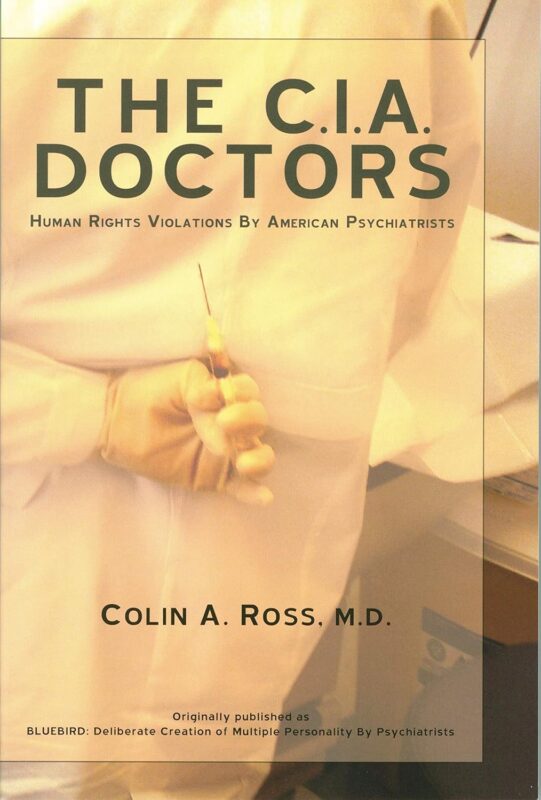
The CIA launched MKULTRA in 1953 under Allen Dulles to explore behavioral modification techniques. The program emerged from earlier operations, including BLUEBIRD and ARTICHOKE, which used hypnosis, drugs, and psychological conditioning to manipulate human cognition and memory. Funded with black-budget resources, MKULTRA included 149 subprojects spanning universities, hospitals, prisons, and research foundations. The central aim was operational control—developing mechanisms to create couriers, assassins, or agents who could act on command with no conscious awareness or recall. The program relied on secrecy, compartmentalization, and destruction of evidence. Richard Helms, former CIA director, ordered all records destroyed upon his retirement, a decision that obstructed full public reckoning.
The Use of Children as Experimental Subjects
Rutz recounts her own abduction into the program at age four. Her grandfather, under legal pressure for child pornography activities, brokered her to CIA contractors in exchange for immunity. The agency identified dissociative children as ideal experimental subjects due to their capacity to compartmentalize trauma. Techniques included electroshock, sensory deprivation, hallucinogens, and repeated abuse. Under intense psychological manipulation, Rutz developed multiple personalities—“alters”—each designed to carry out specific tasks or absorb trauma. The program’s architects sought to create obedient operatives who could withstand torture, deliver intelligence, or perform high-risk actions without emotional collapse or memory retention.
Psychological Fragmentation and Operant Conditioning
Dissociation served as the program’s core mechanism. Children were subjected to staged executions, simulated drowning, sexual violence, and unpredictable reward-punishment sequences. These methods fractured identity structures, enabling handlers to implant commands and control behaviors through post-hypnotic suggestion. Electroconvulsive therapy intensified susceptibility. Conditioning protocols included symbolic and ritualistic elements such as the use of masks, animal imagery, or altered nursery rhymes, reinforcing compliance through fear and confusion. The aim extended beyond obedience. Programmers sought emotional erasure—creating operative personalities with no access to the pain held by core selves.
Parallel Programs in Radiation, Chemical, and Biological Testing
The book also outlines concurrent experimentation on other vulnerable populations. Between 1940 and 1974, government agencies conducted radiation experiments on impoverished patients, mentally disabled children, and military personnel. Subjects were often unaware of their participation. At Fernald School in Massachusetts, institutionalized boys were fed radioactive oatmeal under the pretense of nutritional studies. In Nevada, soldiers stood within miles of nuclear test blasts to gauge exposure thresholds. LSD testing occurred at hospitals and colleges, with some subjects experiencing psychotic breaks. The Army’s Chemical Corps dispersed infected mosquitoes over civilian populations in Savannah and Avon Park to study disease vectors, targeting minority communities with no informed consent.
Obfuscation, Denial, and Official Silence
The institutional machinery behind these programs relied on layered secrecy. Funding passed through front organizations like the Human Ecology Fund. Researchers operated under pseudonyms. Legal cover came from national security exemptions. Survivors’ testimonies were often dismissed as delusions, aided by intentional obfuscation within medical and legal records. Even when information surfaced—such as the 1995 Advisory Committee on Human Radiation Experiments’ findings—no criminal prosecutions followed. The court decision in CIA v. Sims upheld the agency’s right to withhold names of contractors and institutions involved, citing national security.
Validation Through Declassified Documents
Rutz uncovered validation of her memories through over 18,000 pages of declassified materials obtained via FOIA. One document referenced experimental studies on children and psychotics using hypnosis, electric shock, and punishment-reward systems to induce dissociative states. The CIA’s own descriptions confirmed attempts to create programmable individuals capable of carrying out acts under post-hypnotic suggestion. Other files discussed the search for ESP-sensitive subjects, confirming the agency’s interest in psychic phenomena and remote viewing. These disclosures substantiated the existence of covert projects once dismissed as conspiracy theory.
Institutional Complicity and Medical Ethics
Hospitals, universities, and private clinics played pivotal roles. Research institutions, including Columbia University, New York State Psychiatric Institute, and McGill University, received government contracts. Psychiatrists such as Ewen Cameron used patients in Montreal for depatterning experiments involving massive doses of electroshock and sensory isolation. These techniques, exported to American facilities, aimed to wipe existing personalities and imprint new identities. Medical professionals often justified participation through Cold War urgency or framed abuse as therapeutic innovation. Oversight mechanisms failed or functioned as formalities, ensuring legal and ethical breaches remained unchallenged.
Personal Trauma, Fragmented Memory, and Long-Term Recovery
Rutz describes memory recovery as nonlinear and disorienting. Traumatic amnesia protected her from conscious recall during childhood but collapsed in adulthood through flashbacks, emotional surges, and body memories. Therapeutic breakthroughs emerged through abreaction—vivid reliving of events. Drawing, journaling, and expressive arts allowed re-integration of dissociated parts. The healing process required piecing together fragments of events witnessed by different alters. Validation came not only from documents but from connecting physical symptoms, emotional triggers, and thematic patterns with archival records and other survivor testimonies.
Call for Accountability and Declassification
The book closes with a demand for justice. Rutz joins advocates urging full declassification of mind control and radiation experiment records. She calls for an independent commission to investigate abuses, compensate victims, and prevent recurrence. Ethical research must anchor itself in transparency and consent. The call extends beyond documentation to restoration—restoring the humanity of those violated by institutions entrusted with protection. Survivors must reclaim their narratives from classified archives, fragmented memories, and institutional denial. What remains at stake is the integrity of national conscience and the boundaries of state power over the human mind.