A Terrible Mistake: The Murder of Frank Olson and the CIA’s Secret Cold War Experiments

A Terrible Mistake: The Murder of Frank Olson and the CIA’s Secret Cold War Experiments by H.P. Albarelli Jr. unearths the events surrounding the mysterious death of Dr. Frank Olson, a U.S. Army biochemist at Camp Detrick, whose fatal plunge from a New York City hotel window in 1953 catalyzed one of the most significant government cover-ups of the Cold War era. Albarelli navigates a landscape where science, secrecy, and statecraft intertwine, revealing the institutional logic that directed clandestine programs and set the course for modern debates about bioethics, human rights, and the limits of executive power.
The Death of Frank Olson and Its Historical Context
In November 1953, Frank Olson fell from the tenth floor of the Statler Hotel, leaving behind a fractured family and igniting decades of suspicion. The official explanation—suicide prompted by a depressive episode—quickly lost credibility as evidence mounted of Olson’s involvement in covert government research on biological warfare and mind control. His death occurred mere days after CIA operatives secretly administered LSD to him, launching a chain of events that exposed the existence of illegal experiments on unwitting Americans. The incident set legal, ethical, and political precedents that continue to shape discourse on state secrecy and the rights of citizens.
The Structure of Secrecy: Institutional Mechanisms and Cover-Ups
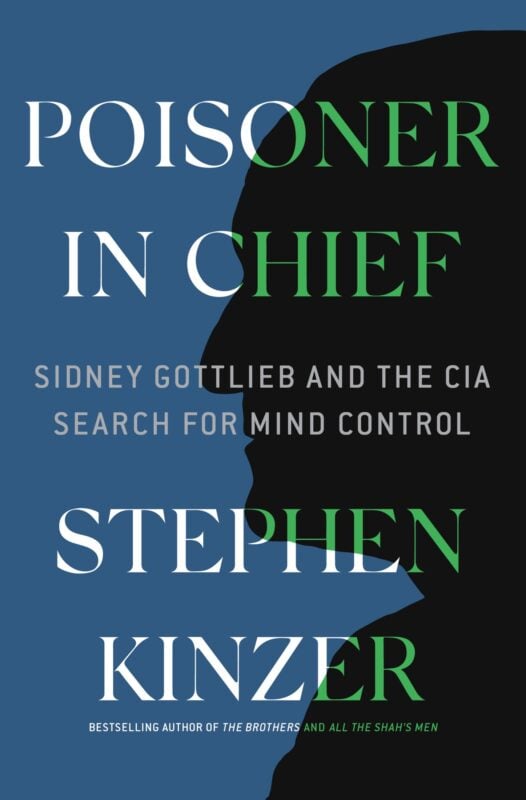
Albarelli’s investigation maps the interlocking bureaucratic networks that enabled the concealment of Olson’s death. The CIA’s Technical Services Staff, led by Dr. Sidney Gottlieb, orchestrated the administration of psychoactive substances under projects like MKULTRA, ARTICHOKE, and BLUEBIRD. Agency memos and correspondence between top officials—cited verbatim throughout the text—establish a pattern of prioritizing operational secrecy over transparency or accountability. The book chronicles how agency heads, including Richard Helms and Allen Dulles, weighed the operational value of unwitting experimentation against mounting public scrutiny, opting to preserve clandestine capabilities by suppressing internal dissent and external inquiry.
Biological Warfare, Psychological Operations, and State Power
Olson specialized in aerosolized delivery systems for biological agents. His research linked him to Cold War programs that weaponized disease and psychological distress, with test sites stretching from Camp Detrick to remote American towns and foreign theaters of war. The book documents operations in which the Army and CIA released biological agents in public spaces to test dispersion, infecting unsuspecting populations. These activities relied on strict compartmentalization, with knowledge distributed hierarchically among agency personnel to minimize leaks. Olson’s growing discomfort with the consequences of his work and his exposure to classified projects placed him in conflict with institutional imperatives, intensifying surveillance and ultimately making him a liability to be managed.
Human Experimentation: Ethics, Consent, and Collateral Damage
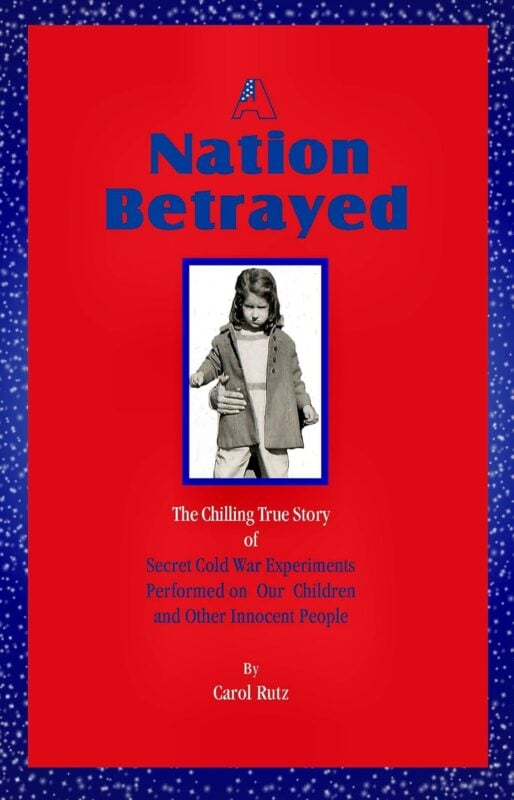
The Cold War generated a policy climate in which the perceived demands of national security trumped ethical considerations. Agency memoranda and declassified reports, as quoted by Albarelli, reveal a mindset in which the manipulation of human subjects—through drugs, hypnosis, and psychological pressure—served as legitimate tools of warfare and intelligence-gathering. The narrative catalogs dozens of cases where prisoners, hospital patients, and even children became test subjects for chemical and psychological experiments. The Nuremberg Code, drafted after World War II to prevent unethical research, failed to restrain domestic actors convinced of existential threats from the Soviet bloc.
The Deep Creek Lake Conference and the Chain of Events
Olson attended a retreat at Deep Creek Lake, Maryland, where CIA operatives dosed him with LSD without consent. Witnesses described his immediate distress and subsequent personality changes. Over the following days, agency handlers shuffled Olson between psychiatrists and monitored him under the guise of “help,” restricting contact with his family. Albarelli reconstructs this period using declassified timelines and family testimony, establishing that the intelligence community exerted continuous control over Olson’s movements, communication, and ultimately, his fate. His reported confession to his wife—“I’ve made a terrible mistake”—echoes as an indictment of the larger machinery that compelled compliance and suppressed dissent.
The Role of Cheney, Rumsfeld, and the Ford Administration
The Olson case resurfaced in the mid-1970s when Congressional committees and investigative journalists pressed for answers on CIA mind control programs. Internal White House memos, drafted by Dick Cheney and Donald Rumsfeld, recommended minimizing official acknowledgment and offering Olson’s family a carefully worded expression of regret, thereby limiting legal exposure while protecting classified information. These documents, quoted directly in the text, illustrate the intersection of legal strategy and executive authority, mapping how high-level political actors weighed the risks of disclosure against institutional loyalty and the potential for systemic scandal.
Connecting the Dots: Patterns of Experimentation, Murder, and Impunity
Albarelli’s research extends beyond Olson, cataloging related deaths, attempted assassinations, and cover-ups involving intelligence personnel, scientists, and civilians. The book’s structure layers case histories, linking the fate of textile workers infected with anthrax, psychiatric patients subjected to chemical interrogation, and foreign nationals ensnared in black operations. The author employs timelines and firsthand testimony to demonstrate how individual tragedies converge within a deliberate policy framework, maintained by the logic of Cold War realpolitik and institutional self-preservation.
Media, Culture, and the Codification of Conspiracy
The story of Frank Olson has permeated American culture, inspiring novels, films, punk music, and televised investigations. References to the case appear in works by William S. Burroughs, Norman Mailer, and in popular cinema, signaling the transformation of Olson’s death from a specific tragedy to a symbol of governmental overreach and existential paranoia. Albarelli argues that this proliferation—though illuminating—can breed cynicism and fatalism, muting calls for accountability by framing the narrative as a recurring, insoluble mystery. The convergence of media attention and official obfuscation codifies the event within a national lexicon of conspiracy, shaping public consciousness and policy debate.
Family Struggle, Legal Battle, and the Search for Truth
Eric and Nils Olson, Frank’s sons, became central figures in the decades-long struggle to unearth the truth. They pursued exhumation, forensic analysis, and legal redress, confronting institutional resistance and bureaucratic delay at each stage. Albarelli recounts their efforts to compel congressional hearings, press inquiries, and prosecutorial action, highlighting the systemic barriers facing individuals who challenge classified state action. The text details the exhumation process, forensic findings that contradicted the suicide narrative, and subsequent investigative dead ends imposed by claims of national security.
Implications for Modern Policy: Torture, Secrecy, and the National Security State
The Olson affair, as positioned by Albarelli, forms a direct antecedent to contemporary debates over torture, extraordinary rendition, and executive secrecy. The decision-making frameworks articulated in internal memos, the operational latitude granted to covert units, and the deployment of psychological techniques against perceived threats established a template replicated in later decades. The book juxtaposes historical events with more recent abuses at sites like Abu Ghraib, tracing lines of institutional continuity. Policy makers and the public confront the legacy of Cold War experimentation in the ongoing negotiation between liberty and security.
Testimony, Documentation, and the Authority of Evidence
A Terrible Mistake draws on over 100,000 pages of government documents, personal interviews, and declassified files. Albarelli rigorously verifies sources, cross-referencing testimony with archival material to build a structurally sound narrative. The inclusion of direct quotes, timelines, and documentary photographs grounds the analysis in verifiable fact, challenging readers to evaluate claims against the weight of the evidence. The author’s methodological transparency and the sheer volume of sourced material elevate the work as a definitive record.
Convergence of Coincidence, Pattern, and Historical Memory
Albarelli weaves his own experience as an investigator into the narrative, recounting serendipitous encounters and chance connections that propelled the research forward. He describes meetings with key witnesses, the intersection of family histories, and the emergence of patterns that transcend individual intent. These sequences of coincidence function not as narrative ornamentation but as signals of underlying structural forces—the convergence of policy, personal agency, and historical momentum. The text positions these convergences as integral to understanding both the specific event of Olson’s death and the broader logic of clandestine governance.
Redefining Conspiracy: Law, Practice, and Public Meaning
The book reframes “conspiracy” as a legal and operational category, rather than a rhetorical device. Drawing from statutory definitions, Albarelli identifies the precise actions and agreements that meet the legal threshold for conspiracy within the U.S. Code. The Olson case, as documented, satisfies these criteria through the deliberate, coordinated conduct of multiple government actors. This assertion grounds the narrative in legal reality, challenging readers to reconsider the boundaries between official secrecy, criminality, and policy discretion.
Ethical Reckoning and the Limits of National Security
A Terrible Mistake presents a stark ethical challenge to policy makers, researchers, and citizens. The text asserts that the pursuit of security, when decoupled from ethical constraint, breeds structural abuses that persist across generations. The Olson case demonstrates how institutional logic can subordinate individual welfare and public accountability to abstract, state-defined objectives. Albarelli contends that true security requires the consistent defense of principle, even in the face of external threat, and that the historical record of Cold War experimentation serves as both a warning and a call to vigilance.
Ongoing Relevance and the Demands of Remembrance
The resonance of the Olson case persists in contemporary debate, shaping legislation, executive oversight, and the broader discourse on human rights. The book’s narrative closure does not resolve the case as a discrete historical event; rather, it embeds Olson’s death within an ongoing dialogue about the proper limits of state power and the imperatives of public scrutiny. The convergence of personal tragedy, bureaucratic inertia, and historical pattern underscores the need for continual examination, legal reform, and ethical clarity.
Frank Olson’s legacy, as captured in Albarelli’s comprehensive account, compels readers to interrogate the boundaries between science, secrecy, and state violence. The persistent structural logic that underpins clandestine experimentation remains subject to public challenge, legal redress, and historical memory. The book affirms that the pursuit of truth, even against entrenched institutional power, forms the bedrock of democratic society.