The CIA Doctors: Human Rights Violations by American Psychiatrists
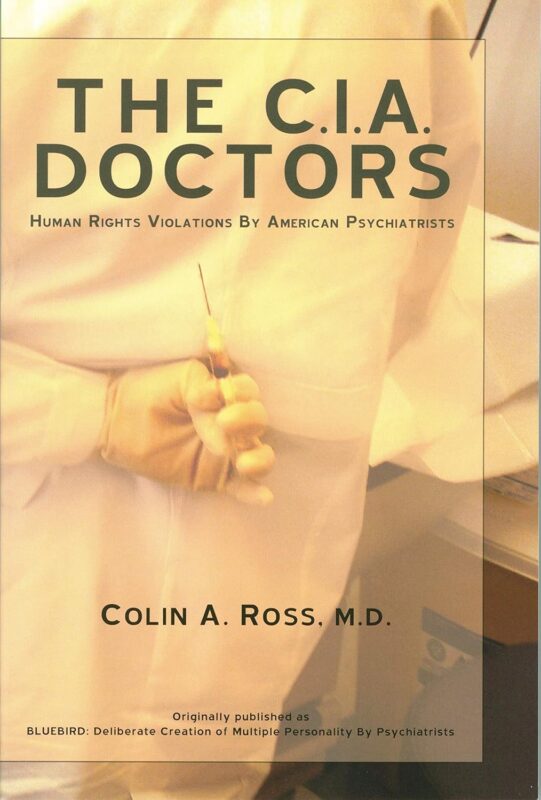
The CIA Doctors: Human Rights Violations by American Psychiatrists by Colin A. Ross investigates the systematic involvement of American psychiatrists in CIA and military mind control experiments that targeted vulnerable populations through coercive and often brutal techniques.
Importing Criminal Minds through Project PAPERCLIP
The roots of post-war American mind control research grew from a deliberate integration of Nazi scientific talent. Project PAPERCLIP brought over more than a thousand German scientists, engineers, and doctors, bypassing immigration standards despite documented war crimes. Among them were medical professionals who had participated in lethal human experiments under the Nazi regime. Their expertise in torture, interrogation, and psychological manipulation became foundational for U.S. mind control initiatives.
The U.S. government concealed the backgrounds of these recruits to exploit their knowledge in psychological warfare. These individuals worked in military, aerospace, and intelligence agencies, laying groundwork for domestic psychological experimentation. The scientific knowledge extracted from death camps was redirected into Cold War strategies aimed at controlling behavior, memory, and identity.
The Template of Institutional Betrayal: Tuskegee Syphilis Study
Before covert psychiatry-based mind control took form, the Tuskegee Syphilis Study created a model for institutional betrayal of medical ethics. Over four decades, U.S. health agencies observed the progression of untreated syphilis in hundreds of Black men without their informed consent. Even after penicillin became a proven cure, the study deliberately withheld treatment, resulting in widespread suffering and intergenerational transmission.
This experiment demonstrated the capacity of medical professionals to ignore fundamental ethical mandates when supported by bureaucratic rationalizations. The publication of its findings in respected journals, along with decades of silence from academic medicine, revealed the extent to which institutions could normalize harm under the guise of research.
The Radiation Experiments and Expanding the Scope of Abuse
From the 1940s to the 1970s, hundreds of unwitting Americans were subjected to radiation exposure in experiments funded by the Department of Defense and other agencies. Pregnant women, children, and mentally disabled patients received radioactive isotopes without disclosure or consent. The data sought to measure radiation effects for military readiness, but the implementation bypassed medical oversight.
The same doctors who conducted these studies often participated in parallel research on mind control. Institutions like Harvard, MIT, and Johns Hopkins administered both radiation and psychological manipulation. The structural overlap between programs reflects a strategic fusion of physical and psychological experimentation on marginalized groups.
From Hypnosis to Dissociation: The Mechanics of Mind Fragmentation
CIA projects BLUEBIRD and ARTICHOKE began formal mind control experimentation. Approved by Director Roscoe Hillenkoetter in 1950, these programs explored hypnosis, sensory deprivation, electroshock, drug-induced amnesia, and personality splitting. The goal: to create individuals with compartmentalized identities who could perform actions under hypnosis and retain no conscious memory.
These experiments escalated under MKULTRA, which included over 150 subprojects and involved major universities, prisons, hospitals, and military facilities. Some subprojects targeted children. Others implanted brain electrodes or tested hallucinogens on psychiatric patients. The declared objective was to control behavior, extract confessions, and engineer operatives with alternate identities—operatives who could kill, courier secrets, or perform complex tasks without conscious awareness.
Institutional Convergence and Psychiatric Complicity
Leading psychiatrists, university departments, and medical journals enabled these programs. Their involvement extended beyond individual rogue actors. Past presidents of the American Psychiatric Association and directors of major psychiatric institutions received CIA funding. Many doctors involved received professional accolades and obituary honors in psychiatric journals without mention of their classified research.
These psychiatrists framed their work as scientific advancement. However, their methods and outcomes often mirrored those of Nazi physicians whose crimes were condemned at Nuremberg. By institutionalizing these practices under Cold War imperatives, American psychiatry internalized a regime of coercion masked as innovation.
The Targeting of Vulnerable Individuals
Experimental subjects included prisoners, the mentally ill, children, and racial minorities. These populations lacked agency and were often unaware of the nature of the procedures imposed on them. Techniques included forced drugging, prolonged isolation, and induced dissociation through hypnosis and trauma. Some patients developed iatrogenic multiple personality disorder—splits in identity created by medical professionals for operational purposes.
The selection of subjects aligned with military goals. Prisons and psychiatric hospitals served as recruitment pools. The illusion of therapy cloaked acts of psychological warfare. Subjects were conditioned to forget abuse, adopt alternate personalities, or respond to specific triggers without resistance.
The Manchurian Candidate: From Fiction to Protocol
The book argues that the concept of the Manchurian Candidate—a person programmed to commit acts without conscious awareness—was not speculative fiction but operational reality. CIA documents from ARTICHOKE and MKULTRA describe hypnotic couriers and false memory implants. Subjects were taught to forget identities, switch roles under coded triggers, and perform controlled actions without post-event recall.
These experiments demonstrated that it was possible to build artificial personas insulated from the subject’s core identity. The programmed individual could pass lie detector tests and maintain consistency under surveillance. This capability represented a breakthrough in psychological operations and raised profound questions about autonomy, memory, and identity.
Cover-Ups, Disinformation, and the Persistence of Silence
Although much of the documentation was declassified in the 1970s, no comprehensive accountability followed. Congressional hearings like the Church Committee acknowledged the existence of mind control experiments but avoided scrutinizing the psychiatric network. Most of the doctors named in these programs faced no legal consequences.
Medical institutions distanced themselves from the legacy. Universities redacted affiliations. Academic journals ignored calls to re-examine published research that stemmed from unethical experiments. The psychiatric community maintained silence, shielding its senior figures from investigation. The profession chose reputation over responsibility.
Ongoing Programs and Legacy of Experimentation
Ross contends that modern programs continue under different classifications and through new technological platforms. Non-lethal weapons development, neural implants, and digital surveillance represent evolutions of Cold War mind control frameworks. The pattern of using science for coercive behavior modification persists in military and intelligence contexts.
Efforts to secure ethical oversight remain fragmented. Institutional inertia and state secrecy reinforce denial. Without systemic acknowledgment, the conditions that enabled abuse remain embedded within the structures of psychiatry and national security research.
Ethical Imperatives and the Call for Reckoning
The CIA Doctors demands a full inventory of mind control experiments and the individuals responsible. Ross calls for a professional reckoning within psychiatry, including acknowledgment of past abuses and reform of ethical guidelines. The book urges governments to declassify remaining documents and compensate survivors.
The historical record reveals a convergence of ambition, ideology, and scientific hubris. When psychiatrists abandoned the Hippocratic Oath for operational utility, they transformed healing professions into instruments of control. The enduring lesson is that unchecked secrecy, when combined with scientific authority, will generate structures of harm masked as advancement. Accountability begins with truth. Transparency restores the boundary between medicine and manipulation.