The War Conspiracy: JFK, 9/11, and the Deep Politics of War
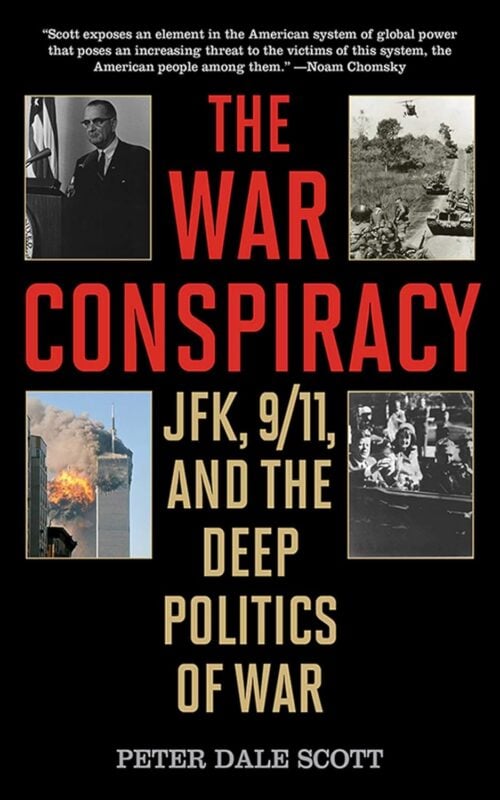
Peter Dale Scott’s The War Conspiracy: JFK, 9/11, and the Deep Politics of War uncovers the internal mechanisms through which clandestine actors shaped American military escalation and geopolitical intervention over decades.
The Architecture of Deep Politics
Deep politics functions through a layered relationship between official policy, covert operations, and opaque financial interests. Scott defines the “deep state” as a confluence of intelligence agencies, corporate power, and clandestine networks operating autonomously from democratic oversight. Within this framework, executive decisions appear reactive, but archival records and behavioral patterns suggest a consistent internal drive toward militarization. These forces generated parallel policy tracks—one for public presentation, another guiding actual operations. Scott traces the institutional logic that recurs in Vietnam, Iran-Contra, and the lead-up to Iraq.
Military Escalation as Method
Events such as the Tonkin Gulf incident did not emerge from isolated misunderstanding. They followed rehearsed pretexts, reinforced by false intelligence and strategic omissions. The same patterns appear in operations involving Laos, Cambodia, and later Iraq. Scott documents how covert actors manufactured confrontations to justify U.S. military expansion. These operations began well in advance of official policy changes. The timing and structure of provocations mirrored strategic objectives laid out by defense planners and intelligence assets embedded in decision-making loops.
Oswald, Ali Mohamed, and Double Agency
The use of double agents connects the JFK assassination and 9/11. Lee Harvey Oswald and Ali Mohamed each created public identities that camouflaged their operational roles. Scott highlights how each man left behind a trail of documentation that pointed to foreign conspiracies—Soviet in Oswald’s case, Islamist in Mohamed’s. In both cases, U.S. intelligence agencies possessed extensive prior knowledge of the individuals yet withheld or manipulated that data post-event. This pattern demonstrates a recurring operational tactic: create a narrative that channels attention away from internal complicity and focuses public emotion toward foreign enemies.
Deep Events and Their Patterns
Scott identifies 13 structural features that connect JFK’s assassination and the attacks of 9/11. These include early media identification of culprits, unexplained anomalies in intelligence gathering, and post-event legislative expansions of surveillance and military authority. Both events triggered wars already under strategic consideration. In 1963, the escalation into Vietnam followed the death of a president resisting a full-scale ground war. In 2001, the invasion of Afghanistan and Iraq followed a security paradigm already advanced by figures like Donald Rumsfeld and Dick Cheney in the 1990s.
From Civilian Oversight to Military Primacy
Within the Pentagon and intelligence community, actors subverted presidential constraints through unauthorized actions. During Kennedy and Johnson’s presidencies, unauthorized bombing raids and manipulated intelligence undermined diplomatic channels. Scott details how institutional interests within the military and CIA coordinated to sustain conflict in Southeast Asia. After 9/11, these same institutional dynamics enabled the Office of Special Plans and private contractors like Blackwater to conduct operations outside traditional command structures.
Drugs, Oil, and Geopolitical Leverage
Scott situates narcotics trafficking and energy politics within the architecture of American intervention. CIA-linked airlines such as Air America enabled opium transport across Southeast Asia. These supply lines were not incidental—they aligned with Cold War objectives and supported allied regimes. Similarly, oil interests influenced covert policy in Iran, Indonesia, and Iraq. Multinational firms interfaced with intelligence agencies to secure resource flows and suppress nationalist movements. The security state operated as the enforcement wing of a global resource strategy.
Institutional Continuity and Strategic Doctrine
From the Dulles brothers through Cheney and Rumsfeld, Scott maps continuity in personnel and ideology. National Security Action Memoranda (NSAMs), covert funding mechanisms, and parallel intelligence channels sustained a shadow policy regardless of electoral outcomes. The Vietnam War, justified through Tonkin, followed the same logic as the Iraq War, justified through manipulated claims of weapons of mass destruction. Both drew on pre-established strategic documents. The public rationale changed, but the internal objectives and operational tools remained stable.
The Media as Strategic Asset
Media framing played a structural role in legitimizing deep events. Immediate identification of culprits and suppression of dissent created consensus around necessary action. In 1963, the lone gunman narrative obscured organizational complicity. In 2001, rapid attribution to Al-Qaeda channeled policy toward regime change. Journalistic amplification of official sources, combined with institutional reluctance to pursue alternative narratives, fortified the architecture of permanent war. Scott documents how narratives seeded by intelligence operatives permeated both mainstream media and academic interpretation.
Financial Leverage and Intelligence Coordination
Private wealth amplified strategic objectives through institutional placement. Scott identifies the Rockefeller family and aligned financial entities as critical facilitators of deep state policy. Through control over key appointments and think tanks like the Council on Foreign Relations, financial elites shaped geopolitical strategy. The creation of the CIA and the Office of Policy Coordination occurred under their influence. These structures institutionalized the merger of private capital, foreign policy, and covert operations.
Permanent War as Political Infrastructure
Scott argues that deep events serve as gateways to institutional transformation. The JFK assassination enabled a transition from limited engagement to full-scale war. 9/11 enabled a transition from law enforcement to indefinite global conflict. These events catalyzed new funding structures, legal authorities, and military mandates. The War on Terror, like the War on Drugs before it, functioned as a vehicle for domestic militarization, international intervention, and resource consolidation. The architecture built around these deep events shapes not only foreign policy but internal governance.
The Logic of Convergence
Convergence in actors, tactics, and outcomes marks the continuity of deep politics. Scott demonstrates how intelligence operatives, political elites, and financial actors coalesce around strategic imperatives. The instruments of deception—false flag incidents, covert financing, dual-use agents—recur across decades. Institutional autonomy, bureaucratic collusion, and media management form an integrated system. This system does not operate as a monolith. It adapts, fragments, and realigns, yet the structural direction remains: perpetual mobilization under crisis pretexts.
This book maps the system that outlives administrations, crosses party lines, and integrates covert action with public policy. Scott names the forces, identifies their mechanisms, and traces their fingerprints across war and peace alike.