Brave New World
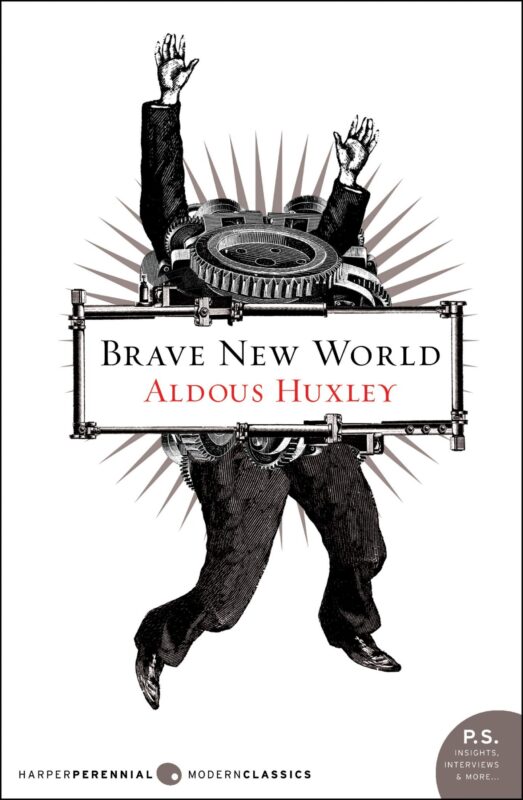
Brave New World by Aldous Huxley explores the mechanisms of control, conformity, and engineered happiness in a meticulously ordered future society. In this world, the Central London Hatchery and Conditioning Centre serves as the core of population management, where geneticists and social engineers direct human creation, assignment, and behavior with calculated precision. The World State’s commitment to “Community, Identity, Stability” defines every action, expectation, and desire from the moment a life begins in a bottle.
Birth by Design: Engineering the Individual
Engineers in the Hatchery divide humanity into castes: Alphas, Betas, Gammas, Deltas, and Epsilons. Each embryo receives a distinct chemical and hormonal regimen, dictating intelligence, strength, and temperament. The Bokanovsky Process multiplies a single fertilized egg into up to ninety-six embryos, producing vast cohorts of identical individuals—ensuring interchangeable workers and citizens. Eggs destined for the lowest castes undergo oxygen deprivation and chemical restriction, shaping minds and bodies for servility. Alphas receive optimal conditions, bred for management and intellect.
Standardization saturates both physical and psychological development. From inception, predestination guarantees each person a role in the machinery of the state. The Social Predestination Room monitors production with vast card indexes, tracking each embryo’s progress and making adjustments as needed. What occurs when individuality dissolves into perfectly calibrated sameness? The novel insists on the centrality of engineered identity as the bedrock of the World State’s stability.
Hypnopædia: The Manufacture of Belief
In the nurseries, hypnopædia—sleep-teaching—instills the values, prejudices, and behaviors approved by the Controllers. Infants and children receive thousands of hours of repeated slogans and lessons, absorbed unconsciously and accepted as unassailable truths. This process shapes the deepest layers of desire and judgment, dictating caste loyalty, consumption patterns, and emotional reactions.
Moral education proceeds in measured increments. Children learn to despise books and flowers through carefully orchestrated pairings of pleasure and pain, such as electric shocks and loud noises delivered when they reach for forbidden objects. Why do the lower castes recoil from nature or reading? The system cultivates aversions that reinforce economic priorities—industrial production and constant consumption—rather than independent thought or idle leisure.
Erasure of Family, Romance, and the Private Self
The World State eliminates the family unit, severing the ties that once linked generations. Mothers, fathers, and children exist only as historical curiosities, sources of shame or laughter for those conditioned by the State. Children grow up in communal nurseries, surrounded by others from their Bokanovsky group, forming shallow, interchangeable bonds. Exclusive relationships threaten stability; Controllers discredit monogamy, romance, and maternal love as sources of instability, neurosis, and pain.
Promiscuity is both duty and pleasure. Adults receive chemical treatments and social encouragement to seek new partners frequently, dispersing emotional energy and preventing the formation of dangerous attachments. The hypnopædic proverb “everyone belongs to everyone else” echoes in the thoughts and actions of citizens. The State replaces emotional depth with a web of fleeting encounters, ensuring both satisfaction and docility.
Consumer Culture and the Economics of Happiness
Economic health drives every social and psychological policy. The State engineers tastes, habits, and even aversions to guarantee perpetual consumption. Citizens develop a preference for elaborate games requiring expensive equipment, ensuring a steady flow of manufactured goods. Nature excursions morph into carefully managed outings, stripped of spontaneous pleasure and saturated with the need for products and devices.
Recreational drugs, particularly the ubiquitous soma, erase discontent and anxiety. When distress arises, the authorities prescribe chemical solutions, eliminating the need for introspection, debate, or struggle. Why tolerate suffering or existential uncertainty when bliss comes in a pill? The population accepts this transaction, trading the possibility of deep, authentic feeling for untroubled contentment.
The Power of Language and the Authority of History
Language serves as both shield and sword for the Controllers. Slogans, proverbs, and repetitive affirmations structure thought and behavior, cementing conformity at the expense of inquiry. Official history ceases to exist as a resource for understanding or critique. The Controller, Mustapha Mond, invokes the dictum “History is bunk,” dismissing the past as irrelevant, even dangerous. By suppressing books, art, and ancient traditions, the World State disconnects its citizens from alternative ways of living or thinking.
Caste consciousness runs deep, maintained by daily lessons and reinforced prejudices. Alphas look down on Betas, Betas despise Gammas, and so on, each group conditioned to accept its status as both natural and desirable. Who would question the wisdom of their place when satisfaction and belonging flow so readily from the acceptance of these roles?
Pleasure, Distraction, and the Machinery of Control
The novel stages play, sport, and sex as central tools of governance. Children practice erotic games from an early age, learning to associate pleasure with compliance. Adults fill leisure hours with state-sponsored amusements, feelies, and communal events, leaving little room for solitude or reflection. Centrifugal Bumble-puppy and other contrived games serve both as entertainment and economic stimulus.
State management extends to every physiological and psychological need. Pregnancy substitutes, hormonal treatments, and routine immunizations regulate both health and mood. The system discourages the accumulation of frustration or desire; gratification must arrive swiftly, leaving no time for longing or contemplation. Does this approach to fulfillment create deeper happiness, or does it suffocate the roots of human experience?
The Role of Authority: Controllers and the Logic of Stability
At the apex of this engineered society stand the World Controllers, figures of immense knowledge and authority. Mustapha Mond articulates the State’s philosophy with clarity and force. Stability forms the guiding imperative; the risk of disruption—whether from powerful emotions, intellectual dissent, or historical curiosity—necessitates constant vigilance. Controllers permit only those forms of expression, pleasure, and inquiry that advance stability and prosperity.
The Controllers understand both the power and danger of knowledge. They restrict science, art, and religion to an elite few, removing anything that might awaken restlessness or longing. In this society, knowledge flows downward only when it reinforces the logic of the system. What happens when individuals encounter questions the system cannot answer, or yearn for experiences it cannot provide?
Dissent and the Limits of Conformity
The early chapters introduce characters whose restlessness hints at the limits of conditioning. Bernard Marx, an Alpha Plus psychologist, exhibits physical and psychological traits that set him apart. Lenina Crowne, a Beta, grows uneasy with her own patterns of desire and behavior, while the Controller’s enigmatic presence suggests a depth of understanding that transcends simple slogans.
Tension gathers as the narrative prepares for conflict. The machinery of the World State grinds efficiently, yet the possibility of resistance lingers. How does a system predicated on sameness respond to difference—when it surfaces not only in the marginalized but also in those who serve its highest aims?
Convergence of Technology, Power, and Desire
Brave New World positions technological mastery as both means and end. The society’s power flows from its ability to shape bodies, minds, and environments. Authority enforces the seamless convergence of technology, consumption, and control, closing the distance between want and fulfillment. At what point does this perfection transform from achievement to confinement?
The narrative’s world contains no accidents of birth, no unpredictability of desire, no tragedies of fate. The absence of suffering, loss, and striving means that even pleasure acquires a manufactured quality. Does a life without friction, risk, or adversity satisfy the deepest needs of its citizens? Or does the urge for meaning and autonomy persist, no matter how skillfully the State manages the variables of existence?
Conclusion: The Endurance of Human Longing
Aldous Huxley’s vision compels readers to confront the foundations of happiness, freedom, and meaning. The machinery of the World State fulfills every promise of order, comfort, and certainty. Yet within its calculated perfection, the seeds of unease and rebellion take root. The text refuses to resolve these tensions. Instead, it insists on their centrality, asking what it means to live well—and at what cost one purchases the appearance of utopia.
Brave New World endures as an urgent meditation on the uses and dangers of power, the promises and perils of progress, and the irreducible demands of the human spirit. The story’s questions persist: Who shapes desire? Who controls memory? Where does meaning arise, and how does one claim a life worth living? Huxley’s narrative turns these questions toward the future, inviting inquiry, vigilance, and the refusal of simple answers.


About the Book
Jay Dyer GB17 – Globalist Books Series: Aldous Huxley – Brave New World (Audio)