The Strength of the Pack: The Personalities, Politics, and Espionage Intrigues that Shaped the DEA
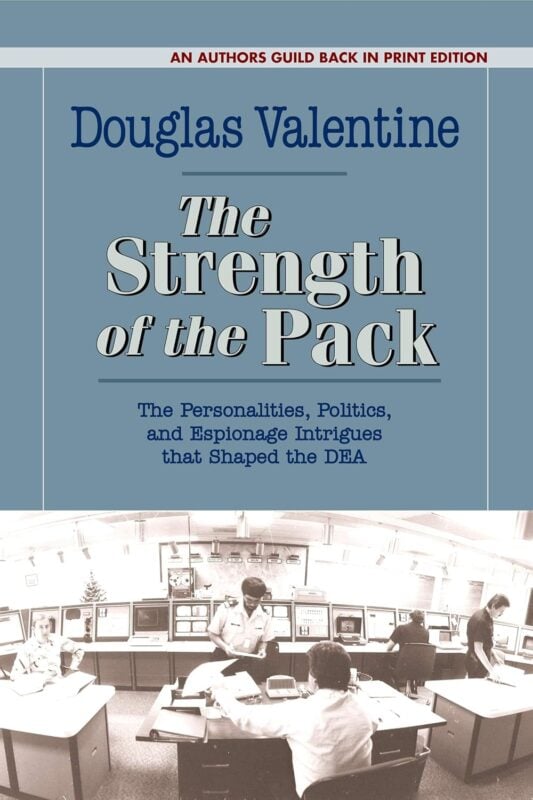
The Strength of the Pack by Douglas Valentine reveals the intricate web of personalities, espionage, and bureaucratic maneuvering that shaped America’s drug law enforcement apparatus. Focusing on the history of the Drug Enforcement Administration (DEA) and its precursor agencies, Valentine traces the institutional evolution through the lens of corruption investigations, intelligence operations, and policy conflicts. The narrative begins with the formation of the Bureau of Narcotics and Dangerous Drugs (BNDD) in 1968, a merger of the Federal Bureau of Narcotics (FBN) and the Bureau of Drug Abuse Control (BDAC), and examines how this transformation redirected the trajectory of U.S. drug enforcement.
The Origins of Institutional Reconfiguration
In 1968, amid widespread dissatisfaction with the FBN's corruption and outdated methods, Attorney General Ramsey Clark appointed John Ingersoll to lead the newly formed BNDD. Ingersoll had no prior experience making narcotics arrests, but his progressive management philosophy and emphasis on rationalizing enforcement structures aligned with the Johnson administration’s goals. The BNDD consolidated 670 agents into a centralized body aiming to modernize operations and integrate scientific management principles into narcotics law enforcement.
Ingersoll implemented a "management by objective" strategy, professionalizing agent training, expanding interagency coordination, and establishing foreign operations units. He appointed Andrew Tartaglino, a hard-nosed FBN inspector with a reputation for uncovering internal corruption, as chief inspector. Tartaglino’s investigations became central to the agency’s early identity, driving a purge that forced the resignation of dozens of agents.
The CIA’s Deep Integration
Behind the surface of drug enforcement operations lay a clandestine reality: CIA infiltration. Former CIA operatives, especially those involved in the Phoenix Program during the Vietnam War, found new roles within the BNDD and later the DEA. The CIA installed covert agents under BNDD cover, using the agency as a staging ground for foreign intelligence missions. Valentine documents how Paul E. Knight, a CIA officer posing as a narcotics agent, opened the BNDD’s Kabul office as a front for counter-Soviet operations in Afghanistan.
These intelligence overlaps blurred jurisdictional lines. The CIA’s agenda often conflicted with the DEA’s mission, especially when covert operatives used drug traffickers as assets. The DEA’s credibility suffered when agents discovered that traffickers they pursued were simultaneously protected by the CIA.
The War on Drugs and Political Utility
President Nixon’s escalation of drug enforcement in the early 1970s transformed the BNDD into a political weapon. Nixon created the Office of Drug Abuse Law Enforcement (ODALE) and appointed Myles Ambrose to direct operations, centralizing power in the White House. Nixon’s strategy politicized narcotics enforcement, using it to target political enemies and shift public attention from Vietnam and Watergate.
This politicization deepened internal fractures. A faction of former FBN agents, self-styled as the "Purple Gang," operated as an internal bloc, resisting Ingersoll’s reforms and aligning with Ambrose’s network. The group pursued its own power agenda, often obstructing integrity investigations and manipulating promotions. Valentine argues that the DEA’s survival depended on its willingness to adapt to the political demands of the intelligence community and the presidency.
The McDonnell Case: Catalyst for Internal Cleansing
The McDonnell case exemplifies the murky overlap of integrity enforcement and corruption. In 1968, Charles McDonnell, a former agent turned heroin trafficker, implicated dozens of agents in misconduct. Tartaglino and Justice Department attorney Robert Rostall used McDonnell’s testimony to initiate a sweeping probe. They authorized informants to make drug buys from suspected agents, employed electronic surveillance, and leveraged internal records to pursue indictments.
Though these methods produced resignations and arrests, they also generated backlash. Critics argued that enabling informants to commit crimes in pursuit of corrupt agents eroded procedural norms. Tartaglino’s zeal alienated allies and earned him accusations of overreach. Yet his investigations revealed a truth that Valentine positions as central: many agents viewed themselves as above scrutiny, and systemic corruption persisted because of entrenched alliances and institutional self-protection.
Foreign Operations and Global Narcotics Networks
The DEA’s expansion into foreign theaters created new operational challenges. Agents stationed in Mexico, France, Southeast Asia, and the Middle East often found themselves enmeshed in local power dynamics. Foreign governments hesitated to cooperate fully, wary of U.S. intelligence agendas. In France, efforts to dismantle the Corsican Mafia’s heroin production met resistance due to the SDECE’s own use of traffickers for anti-communist operations.
In Thailand and Vietnam, BNDD and DEA agents uncovered heroin pipelines that flowed through military supply chains. The CIA’s covert presence in these regions complicated enforcement, as officers shielded certain networks for strategic purposes. Valentine details how CIA assets overlapped with drug rings, rendering enforcement decisions subordinate to geopolitical concerns.
The Parallel Mechanism of Power
Inside the DEA, a parallel mechanism of authority emerged, shaped not by formal hierarchy but by informal networks. Agents with ties to the CIA, political backers, or ODALE operated with autonomy. Valentine introduces figures like Lucien Conein, a former CIA operative who led the DEA’s Special Operations Group—a unit composed of ex-CIA personnel known as "The Dirty Dozen." This unit functioned with its own rules, often engaging in covert activities that escaped normal oversight.
The integration of former Phoenix Program veterans solidified a culture of paramilitary tactics and intelligence-driven enforcement. The war on drugs adopted counterinsurgency frameworks, treating traffickers as insurgents and informants as intelligence sources. Valentine shows how this paradigm blurred ethical boundaries and embedded secrecy into the agency’s core.
The FBI Takeover and Institutional Realignment
In the early 1980s, the FBI assumed greater control over narcotics enforcement. Following the assassination of Judge John Wood and the exposure of DEA failures, President Reagan endorsed a reorganization that placed FBI veterans in top DEA posts. Figures like Francis M. Mullen Jr. and John C. Lawn brought Hoover-era tactics to drug enforcement, emphasizing surveillance, informant networks, and centralized control.
This realignment reinforced the DEA’s dependency on political patronage. Intelligence gathering, rather than interdiction, became the agency’s focus. DEA officials coordinated closely with military and intelligence agencies, transforming drug enforcement into a component of national security strategy. Valentine suggests this shift institutionalized the CIA’s prior covert role, formalizing its influence over enforcement operations.
The Legacy of Subordination
Valentine concludes that the DEA’s history reflects a pattern of subordination. The agency’s leaders, often caught between law enforcement objectives and intelligence agendas, made compromises that undermined their mission. The reliance on covert tactics, the tolerance of political manipulation, and the concealment of trafficking by allies weakened the agency’s integrity.
Agent integrity emerges as the central moral theme. The ideal of an impartial, fearless narcotics agent repeatedly collided with institutional incentives to conform, conceal, or collude. Valentine’s account challenges the perception of the DEA as a singular force against drugs. He depicts it instead as a contested field shaped by espionage, politics, and unresolved contradictions.
Who controls the controllers when the enforcers themselves operate in the shadows? What happens to accountability when secrecy becomes standard practice? These questions animate the book’s structure, guiding its narrative toward a stark conclusion: the war on drugs functions within a power system designed to protect itself.
The Strength of the Pack documents this evolution with precision and urgency. Valentine’s synthesis of personal interviews, classified documents, and historical analysis produces a comprehensive portrait of the DEA’s entanglements. His chronicle demands reconsideration of what drug enforcement means in a state system driven by secrecy and strategic calculation.