The Strength of the Wolf: The Secret History of America’s War on Drugs
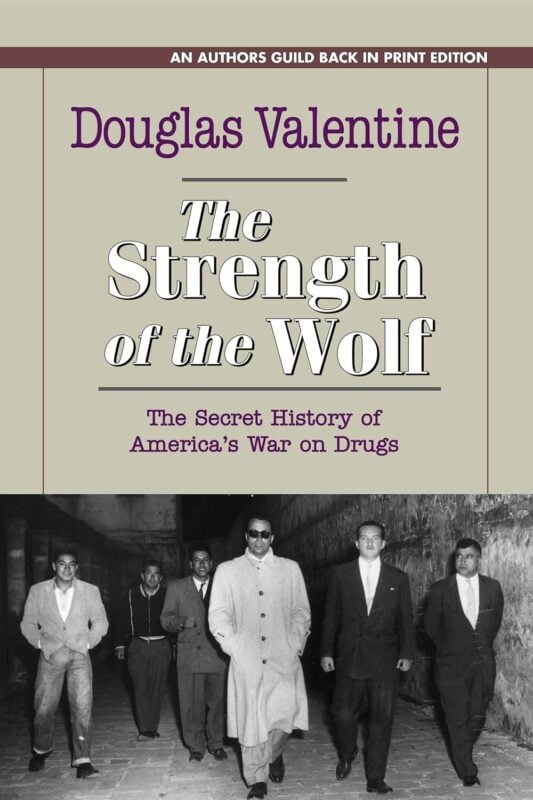
The Strength of the Wolf by Douglas Valentine investigates the hidden architecture of American drug enforcement from 1930 to 1968 through the lens of the Federal Bureau of Narcotics (FBN), revealing its entanglements with intelligence agencies, organized crime, and foreign policy.
The Engine of American Narcotics Enforcement
The Bureau of Narcotics began in 1930 as a consolidation of existing enforcement mechanisms within the Treasury Department. With fewer than 350 agents, it became a high-impact organization through undercover work, aggressive prosecutions, and international reach. At its helm stood Harry J. Anslinger, a fiercely loyal operative of elite power structures. Anslinger built a closed hierarchical system loyal to traditional social orders and responsive to strategic geopolitical interests. His agents functioned less as public servants and more as elite shock troops against narcotics networks—except the networks protected by political utility.
How Rothstein’s Empire Unveiled the Nexus
Arnold Rothstein’s drug empire, revealed in the 1920s, exposed the first clear interweaving of international smuggling, political corruption, and narcotic enforcement failures. The Treasury Department used the Rothstein case to argue for a centralized bureau. Documents uncovered during the investigation tied Rothstein to operations spanning Europe, Canada, and the Far East. These revelations led to the creation of the FBN, empowering it with investigative autonomy and bureaucratic reach. The Rothstein affair initiated the enduring pattern: federal drug enforcement would act as both a law enforcement tool and a selective filter against exposures threatening national security alignments.
Foreign Control and the Limits of Sovereignty
The international dimension of narcotics enforcement advanced through the League of Nations and later the United Nations, yet control remained fluid. The FBN navigated hostile foreign territories by establishing alliances with compliant regimes. Its agents operated in Marseilles, Rome, Bangkok, and Istanbul under diplomatic cover. These stations were not merely drug enforcement outposts; they were hubs of covert engagement, often coordinating with the CIA to protect or exploit narcotics routes aligned with American geopolitical objectives.
The so-called French Connection was a direct outgrowth of these activities. The FBN did not merely interdict heroin shipments; it mapped and surveilled flows that converged in southern Europe and fed American street markets. The agency’s agents created cases by embedding themselves in trafficking networks, collecting intelligence, and executing precision arrests. Yet they did so under instruction to avoid interference with operations linked to friendly foreign intelligence services.
The Shadow Bureaucracy Within
Within the FBN, a group of elite agents—often referred to as “case-makers”—held disproportionate influence. They mastered undercover techniques, cultivated informants, and secured convictions that built the Bureau’s reputation. These agents operated with autonomy but also bred internal division. Their success often revealed corruption among colleagues or conflicts with Bureau executives. The agency tolerated corruption among loyalists and pursued internal probes selectively. Loyalty to Anslinger and adherence to his worldview determined career trajectory, not legality or ethical conduct.
CIA Co-option and Operational Convergence
The Central Intelligence Agency penetrated the Bureau during the 1950s and 1960s through covert joint operations and personnel transfers. Key agents, including Charles Siragusa and Hank Manfredi, functioned as dual operatives—reporting to both the FBN and CIA. In Rome and Southeast Asia, narcotics investigations became intelligence collection platforms. The CIA used FBN agents to access smuggling networks, sometimes shielding traffickers deemed strategically useful. The agency's global narcotics operations aligned with anti-communist goals, creating blind spots in enforcement. FBN agents discovered these patterns only to face bureaucratic suppression.
What happens when law enforcers discover that their targets are protected? What consequences follow for agents who insist on pursuing those targets? The answer, in the FBN’s case, was organizational erasure. Agents who pressed into politically inconvenient investigations faced marginalization. Investigators like Andy Tartaglino, who led internal corruption probes, were ultimately instrumental in revealing the unsustainable contradictions in the Bureau’s mission.
Internal Corruption and Institutional Collapse
Two major corruption investigations—in 1960 and 1967—exposed systemic misconduct within the Bureau. These investigations revealed case manipulation, payoffs, evidence tampering, and narcotics theft. Senior executives shielded favored agents and suppressed reports. Tartaglino’s task force, formed with Treasury Department backing, initiated a final push to clean house. Their efforts revealed not only corruption but direct evidence of CIA infiltration and influence within the Bureau’s operational core.
As the investigations expanded, political support for the Bureau disintegrated. In 1968, the FBN was merged with another agency to form the Bureau of Narcotics and Dangerous Drugs (BNDD), a transition designed to dissolve institutional memory and suppress further inquiries into the CIA’s narcotics-related operations.
Narcotics Policy as a Tool of Class Power
Federal narcotics enforcement was never just about health or safety. It was designed to regulate behavior within targeted populations and to preserve social hierarchies. The FBN focused on street-level traffickers, often from poor, urban, and racialized communities, while bypassing well-connected international actors. Enforcement decisions reflected the Bureau’s ideological commitments—protection of Establishment norms and alignment with state interests abroad.
The war on drugs functioned as a pretext for surveillance, intervention, and incarceration. It served as an instrument of domestic control and foreign engagement. Agents internalized this mission through training and indoctrination, understanding that discretion defined legitimacy more than evidence or conviction.
Why the FBN’s Story Matters Now
What does the history of the FBN reveal about contemporary drug policy? The narrative documented in The Strength of the Wolf provides foundational evidence that drug enforcement in the United States has been shaped more by statecraft than public health. It demonstrates how drug policy has operated under a logic of secrecy, infiltration, and selective prosecution. It shows how institutional integrity was sacrificed to maintain geopolitical alliances and suppress dissenting factions within law enforcement.
This account reshapes the premise that the war on drugs began in the 1970s. Instead, it establishes that the machinery was fully operational by 1930, and its contradictions were evident from the start. The FBN created the template—an elite force, shrouded in secrecy, beholden to political directives, and willing to bend legal frameworks to produce convictions and maintain access.
The Agents Who Broke Ranks
Several FBN agents chose to speak despite institutional pressure. Their testimonies—gathered over years of interviews—anchor the book’s credibility. These agents described their methods, their targets, and the bureaucratic retaliation they endured when their work collided with protected interests. Their collective voices offer a rare view inside a federal agency that maintained secrecy with religious fervor.
Their experiences converge on a central truth: the war on drugs was constructed not only through laws and budgets but also through the suppression of truth, manipulation of justice, and strategic control of knowledge.
Legacy and Continuity
The FBN’s dissolution did not erase its patterns. Its successor agencies inherited its personnel, methods, and biases. The BNDD, and later the DEA, incorporated the same internal contradictions. Agents transferred with their case files, informant networks, and institutional alliances intact. The political logic that shielded traffickers linked to national security remained operative.
Douglas Valentine’s work captures this continuity. He connects the origins of federal drug law enforcement with its contemporary shape. His research reveals how deep-state institutions rely on the language of law to pursue extralegal goals. The FBN’s story is not an outlier but a blueprint. It shows how the state curates its enforcement strategies to serve elite interests, manage domestic populations, and wage covert operations abroad. This history is not simply academic—it is a key to understanding how the machinery of enforcement continues to function under the banner of justice.