The CIA as Organized Crime: How Illegal Operations Corrupt America and the World

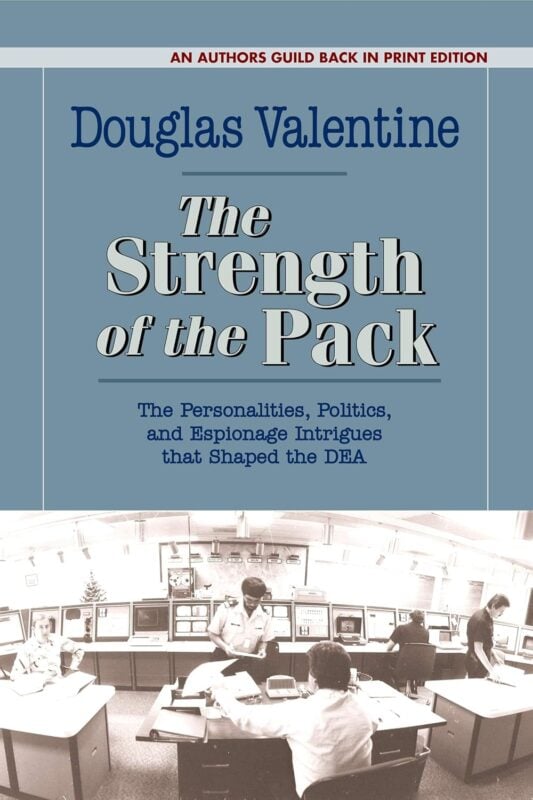
The CIA as Organized Crime: How Illegal Operations Corrupt America and the World by Douglas Valentine uncovers the operational mechanics, ideological foundations, and bureaucratic evolution of America’s most secretive intelligence agency. With rare access to former CIA officers and primary source documents, Valentine constructs a historical analysis that traces the agency’s role in domestic and international covert operations, exposing its integration into law enforcement, media, and politics.
The Bureaucratic Blueprint: Phoenix as Prototype
Valentine began his investigation with the CIA’s Phoenix Program in Vietnam. This program, designed to neutralize the civilian infrastructure of the Viet Cong, served as a prototype for later counterinsurgency efforts. William Colby, former CIA Director and architect of Phoenix, provided Valentine access to a wide range of CIA personnel. Through these interviews, Valentine traced how Phoenix evolved from an intelligence-gathering initiative to a bureaucratized assassination and psychological warfare campaign. Phoenix embedded the principles of population control, information centralization, and organizational integration across multiple U.S. agencies, creating a replicable model later seen in Iraq, Afghanistan, and within Homeland Security fusion centers.
Intelligence as Political Warfare
The CIA operates as a political police force under the guise of foreign intelligence collection. Valentine defines the agency’s core function as political warfare: identifying, neutralizing, and discrediting threats to the American state as defined by elite interests. Intelligence becomes the means, not merely to inform policy, but to execute it through covert manipulation, regime destabilization, and extralegal suppression. The targeting of civilian populations under Phoenix was justified as counter-subversion, a rationale extended into the War on Terror through drone strikes, rendition programs, and paramilitary operations. The seamless transition from foreign to domestic applications marks the institutionalization of Phoenix methods into American governance.
Control Through Coordination
The Phoenix model emphasized centralized control through decentralized execution. Intelligence Operations and Coordination Centers (IOCCs) in Vietnam fused military, police, and political intelligence, enabling targeted operations against suspected subversives. This operational architecture now manifests in Homeland Security’s fusion centers, which coordinate federal, state, and local law enforcement. These centers synthesize data on domestic threats, ostensibly to combat terrorism but functionally used to monitor and suppress dissent. Valentine identifies this as an evolution in internal colonialism, where bureaucratic systems exert structural control over potentially oppositional populations.
Managing the Drug War
The CIA’s relationship with global drug trafficking emerges as both a method of funding covert operations and a mechanism for controlling geopolitical clients. Valentine documents the agency’s alliances with drug lords in Southeast Asia, Latin America, and Afghanistan. These relationships enabled paramilitary campaigns while feeding narcotics into domestic markets. The War on Drugs, framed as a public safety initiative, operates in practice as a system of selective enforcement and racialized social control. Federal drug enforcement serves dual purposes: facilitating CIA objectives abroad and policing targeted demographics at home. The DEA, born from the Bureau of Narcotics and Dangerous Drugs, increasingly aligns with intelligence imperatives, insulating CIA assets from prosecution and protecting criminal networks that serve U.S. interests.
Suppressing the Narrative
Valentine describes how mainstream journalism collaborates in this process. Through a mixture of access journalism, informal censorship, and foundation funding, media institutions participate in the CIA’s political warfare strategy. Key journalists embedded within elite networks act as gatekeepers, filtering narratives and marginalizing dissent. Valentine encountered this firsthand when his work was systematically ignored or discredited by major outlets. The result is a media ecosystem that reaffirms state legitimacy while avoiding systemic critique. This symbiosis between intelligence and media reflects what CIA officer Cord Meyer termed the “Compatible Left”—a controlled opposition that maintains the boundaries of acceptable discourse.
From Vietnam to America: Phoenix Reborn
The adaptation of Phoenix domestically followed 9/11. Homeland Security absorbed Phoenix's operational logic, applying its lessons in coordination, intelligence fusion, and preemptive targeting to internal security. Fusion centers became the IOCCs of America. Special operations units formed Joint Terrorism Task Forces with local police, while metadata surveillance expanded the scope of political profiling. Valentine argues this represents a new phase in state formation: a militarized, surveillance-driven apparatus designed to forestall rebellion, manage social unrest, and preserve elite dominance.
Symbolic Control and Myth Creation
Through narrative management, the CIA constructs symbolic heroes to deflect attention from its deeper functions. Valentine critiques figures such as Daniel Ellsberg and Glenn Greenwald, whose partial revelations legitimize the system by showcasing its supposed capacity for reform. These icons operate within the spectacle, reinforcing belief in institutional self-correction. Valentine sees their popularity as indicative of a structural alignment between liberal critique and elite reproduction. The mythology of reform becomes a mechanism of control, redirecting revolutionary potential into manageable forms of dissent.
Covert Empire and Domestic Repression
The CIA’s transformation into an organized crime syndicate rests on three pillars: plausible deniability, compartmentalization, and integration with legal institutions. Operations are designed to be disavowed, actors are shielded from prosecution, and outcomes serve the national security state. This criminality is not incidental. It is structural. From death squads in El Salvador to drones in Yemen, from psyops in Ukraine to surveillance in Ferguson, the pattern repeats. Valentine situates the CIA as a vanguard agency for the enforcement of transnational capitalism, tasked with suppressing any force—foreign or domestic—that threatens the concentration of power.
The Failure of Reform
Attempts to constrain the CIA through oversight, whistleblowing, or judicial inquiry fail because the agency’s real purpose lies outside the law. Congressional committees, such as the Church Committee, expose practices without altering the agency’s mandate. Whistleblowers like Chelsea Manning or Edward Snowden face exile or imprisonment, while the policies they reveal continue. The legal and political systems function not to check the CIA but to protect it. Valentine emphasizes that without a fundamental change in the structure of power, reforms remain symbolic gestures.
The Archive of Resistance
Valentine’s interviews, documents, and recordings form a counter-archive—a historical record that contradicts the official narrative. Housed at the National Security Archive, this body of work provides empirical evidence of the CIA’s role in shaping modern governance. These sources support a structural analysis rooted in lived experiences and institutional mapping. By collecting the testimonies of operatives, Valentine reveals the internal logic and moral justifications that drive covert operations. This archive stands as both a historical intervention and a tool for future resistance.
The Implication of Silence
Silence sustains the system. Journalists who withhold truths, editors who suppress stories, and readers who prefer myths over history all participate in the reproduction of state violence. Valentine contends that change requires dismantling the ideological apparatus that shields power from accountability. This begins with exposing how narratives are constructed, how history is erased, and how institutions co-opt dissent.
Conclusion: The CIA as a Systemic Agent of Domination
Douglas Valentine’s investigation reveals the CIA as a structural entity designed to execute covert operations that maintain the global and domestic order of elite rule. Through its role in political warfare, drug trafficking, media manipulation, and bureaucratic integration, the agency acts as a systematized force of repression. Its programs transcend geography, shifting from Vietnam to Iraq, from Latin America to American cities. The continuity of these operations reflects their embeddedness in U.S. statecraft. Understanding this continuity, Valentine argues, is essential to any serious effort to confront or dismantle the machinery of modern imperial power.