Hermaphrodites, Gynomorphs and Jesus
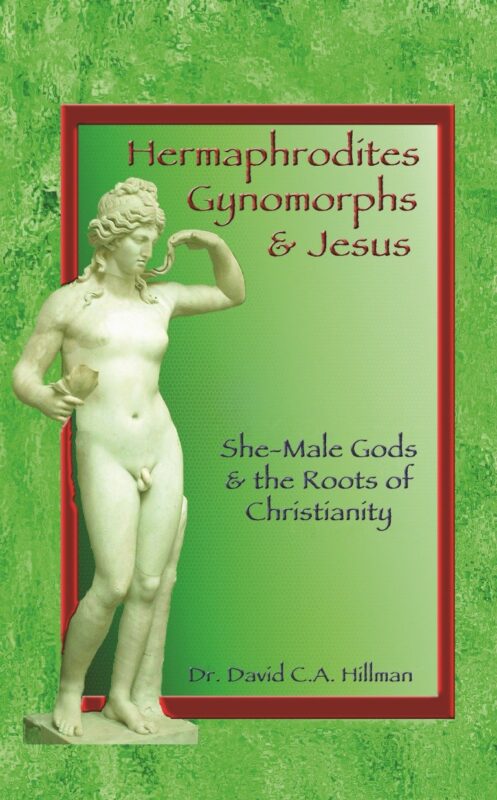
Hermaphrodites, Gynomorphs and Jesus by Dr. David Hillman repositions the origins of Western religion through the lens of sexual transformation, gender fluidity, and ecstatic ritual. Anchoring the argument in Greco-Roman metaphysics, Hillman demonstrates that bi-gendered deities—gynomorphs—formed the structural and spiritual core of ancient religious life. These entities did not symbolize moral duality but represented cosmic synergy: generative, chaotic, and restorative forces operating simultaneously through masculine and feminine archetypes.
The Gynomorph as Sacred Mediator
The gynomorph, a god exhibiting both male and female traits, functioned as an essential conduit between dimensions. Ancient priestesses, necromancers, and mystics invoked these figures to open portals to the divine. By blending the attributes of sexual polarity, gynomorphs bridged mortality with the immortal fabric of the cosmos. Their ambiguous form was not a challenge to divine clarity but a condition for access. Possessing both cosmic womb and generative phallus, the gynomorph achieved perfect symbolic totality.
Rituals involving gynomorphs required ecstatic states, often induced through sexual rites, drug use, and corporeal transformation. In Etruscan and Roman traditions, the boundary between erotic experience and spiritual initiation dissolved entirely. Participants understood sodomy, anal application of drugs, and sexual inversion as acts of purification, transcending physical pleasure to penetrate metaphysical realms.
Religio as Dimensional Binding
Hillman redefines religio—the Latin term misread in modernity as “religion”—as a thermodynamic ligature linking Earth to other cosmic dimensions. Roman sibyls, young priestesses trained in necromantic ecstasy, sang the divine into presence. Their voices operated like quantum detonators, breaching spacetime and summoning incorporeal intelligences. These entities, lacking anatomy or gender, inhabited gynomorphic avatars as temporary forms suitable for human perception.
This cosmological infrastructure framed ancient sexuality. There was no concept of “gender” in the modern sense. Classical languages lacked terms for homosexuality, heterosexuality, or fixed identity. Instead, sexual states cycled. Human bodies became instruments of divine resonance, undergoing gender shifts as part of ritual fulfillment. The self was not static. The self was transformational.
Sexual Metamorphosis and Prophetic Insight
Greek and Roman mythology preserves dozens of metamorphic narratives. In one key example, Teiresias, a seer struck blind after revealing divine sexual knowledge, lived as both man and woman. His unique prophetic power emerged from this embodied duality. The gods awarded insight through transgression, not compliance. Teiresias solved their riddles because he carried memory from both sides of the veil.
Adonis, lover of Aphrodite-Urania, exemplified a deity whose gender oscillated according to ritual context. The Orphic Hymns describe Adonis as both kore (maiden) and koros (youth). His lover, Aphrodite, appears in statues with erect phalluses and feminine curves, defying classification. Worship of Aphroditus included cross-dressing and role-reversal rites, practices integrated into Roman medicine and religious festivals.
Sacred sodomy, far from deviant, formed the core of these rites. Temple priestesses of Priapus administered psychoactive unguents anally using sacred dildos. These acts healed, initiated, and transformed. In necromantic contexts, they summoned the dead and invited prophetic possession. The anus became a portal—biological, spiritual, and eschatological.
Divine Castration and Mystical Union
The mystery cult of Cybele and Attis reveals the centrality of castration in divine love. Cybele, initially a hermaphroditic being named Agdistis, lost her male genitals to divine intervention. From the severed penis arose Attis, her lover and spiritual twin. The two reunited through mystical union, reenacted annually by the Galli—Cybele’s eunuch priests—who castrated themselves in public ecstasy.
This pattern—bi-gendered origin, castration, reabsorption through erotic communion—structures the spiritual ascent in Hillman’s analysis. It recurs in Origen’s self-castration, in Jesus’ depiction as both bridegroom and mother, in the Montanist claim that Christ returned as a woman. Early Christians absorbed these traditions while building their symbolic architecture.
The erotic metaphor of Christ as lover of the Church emerged not from abstract metaphor but from a deeply embodied tradition. Tertullian, Ambrose, and others described Jesus in terms echoing Dionysus and Priapus. They envisioned him lactating, womb-bearing, receptive and penetrative. These descriptions were not anomalies. They revealed the continuity between Christian mystery and earlier cultic practice.
Same-Sex Marriage and Divine Transformation
Ovid’s tale of Iphis and Ianthe illustrates the divine sanction of same-sex marriage through miraculous transformation. Iphis, a girl raised as a boy to escape her father’s decree, falls in love with another girl. At the moment of crisis, the goddess Isis intervenes and gives Iphis a penis. The wedding proceeds. The transformation affirms divine approval.
This myth is not isolated. The Greeks celebrated similar transitions through rituals and poetry. Leucippus received male genitals from the goddess Leto. These shifts did not constitute violations. They were revelations—signals that gender operated along fluid lines shaped by cosmic intention.
Isis, whose myth involves reassembling the dismembered body of her lover Osiris, guarded the regenerative power of the phallus. Her presence in gender transformations reflects an ancient belief in sexual energy as the material of divine restructuring. To change sex was to conform more closely to divine pattern.
Marriage, Penetration, and Medical Rites
Ancient Roman brides engaged in anal intercourse on their wedding nights. This practice served as both initiation and medical procedure. Priests and midwives used oil-based drugs, applied via phallic instruments, to ease pain and prepare the body. Martial and Ovid describe these acts without euphemism. The hymen—the tissue, the god, the act—marked transformation, not modesty.
Hymenaeus, god of marriage, appeared in myths dressed as a girl. His effeminacy enabled him to seduce, to rescue, to teach. Songs sung to Hymen during weddings echoed cries of sexual ecstasy, transmuting pleasure into ritual sound. These cries, like the sibylline songs of necromancers, functioned as invocations. They summoned fertility, prosperity, divine attendance.
Hillman locates the Christian absorption of these rites in the language of early New Testament texts. The Gospel of Mark’s ambiguous references to Jesus’ embrace of children, Paul’s statements on marrying one’s daughter if passion stirs, and the accusations of early pagans that Christians conducted orgies in secret—all find their structural antecedents in the mystery cults of Rome and Phrygia.
Jesus as Gynomorphic Messiah
In early Christian iconography, Jesus appears crucified with an ass’s head. This symbol, shared with Priapus and Dionysus, signals fertility, wildness, ecstatic possession. Roman accusations that Christians worshipped such a god align with internal Christian prophecies. The sibyls, revered by Church Fathers, foretold a hermaphroditic messiah. Tertullian addressed this rumor seriously. Ambrose described Christ’s nourishing breasts and reproductive power.
The figure of Jesus, Hillman argues, crystallized from this mythic matrix. He inherits the structure of Adonis, the role of Dionysus, the aesthetic of Hymen, and the regenerative force of Priapus. His crucifixion performs the castration that leads to divine union. His resurrection follows the arc of Attis, whose madness, death, and return structured the annual rites of spring.
Structural Resurrection
Necromancy in ancient Rome was a medical and spiritual science. Priests opened the underworld through drugs and ritual sex. They communicated with the dead, not for spectacle, but to restore order. Justice, they taught, required the return of the divine to correct the imbalances of the living world. The gynomorph, as resurrector, performed this function. Jesus, emerging from the tomb, repeats the formula: death, descent, return with power.
This resurrection sequence depended on transformation. It required the initiand to suffer dissolution—of body, gender, status—and reemerge in divine likeness. Ancient rituals codified this through mutilation, cross-dressing, orgiastic celebration, and ingesting entheogenic substances. These processes encoded metaphysical law: power follows loss, unity follows split, revelation follows inversion.
Sacred Sexuality as Cultural Engine
Hillman concludes by framing sacred sexuality as the engine of classical civilization. Geometry, law, medicine, and ritual all formed through gynomorphic logic. The gods carried shapes, not genders. The circle and triangle existed in tandem with Dionysus and Aphrodite. The pursuit of justice, knowledge, and harmony depended on accessing the unseen forces behind these figures—forces accessible through altered states, erotic acts, and spiritual surrender.
The early Church preserved more of this heritage than it later acknowledged. Saints mutilated themselves for purity. Monks described divine penetration in mystical visions. Ecstatics sought union with a mothering, fathering god. Hillman reads these texts with philological precision and theological clarity, uncovering an unbroken line from the garden of Priapus to the garden of Gethsemane. The hymns changed, but the god who received them remained both.