True Himmler
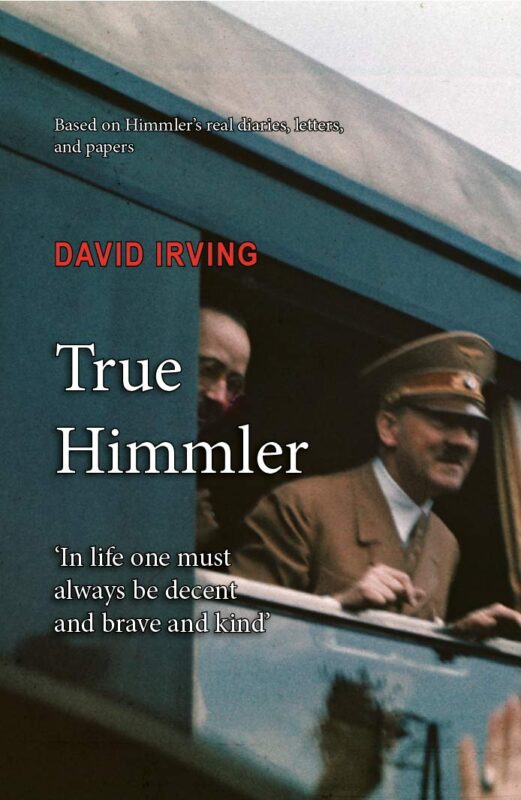
True Himmler by David Irving reconstructs the life of Heinrich Himmler with emphasis on the structure of his rise, the routines that defined his authority, and the contested record of his death. Irving arranges the book as both biography and forensic inquiry, weaving personal diaries, intercepted conversations, and archival fragments into a continuous narrative of power and collapse.
The final hours in Lüneburg
On May 23, 1945, British officers brought Himmler into a villa in Lüneburg after his capture. Irving traces the sequence of events through eyewitness accounts, signals sent to headquarters, and diary entries. Himmler entered the room expecting to see Montgomery or Eisenhower. Instead he faced interrogation, forced disrobing, and an examination for hidden poison. Official reports recorded suicide by cyanide capsule, yet Irving presents fractures in testimony, altered war diaries, and photographs that reveal bruising, broken nasal cartilage, and unexplained scuff marks on the floor. The absence of glass splinters in the medical notes undermines the narrative of a crushed capsule. Officers present at the scene later recalled inconsistent details, and Irving foregrounds those inconsistencies as evidence that Himmler’s death may have involved deliberate killing rather than self-administered poison.
Childhood discipline and early identity
Himmler grew up in Munich in a Catholic, middle-class family that valued obedience, scholarship, and tradition. His father, a strict schoolmaster, imposed rigorous discipline that shaped Heinrich’s sense of order. Frail health as a child led him to immerse himself in books, developing a fascination with history, agriculture, and military heroes. He kept precise diaries, recorded his weight daily, and cultivated a habit of relentless routine. Irving emphasizes the continuity from this structured childhood to the obsessive record-keeping that later characterized Himmler’s leadership of the SS.
Entry into Hitler’s movement
The book follows Himmler into the political ferment of the early 1920s. He joined the Nazi Party as a young activist, drawn by ideas of national revival and cultural purification. His diligence impressed senior figures, and by 1929 he gained command of the SS, then a small unit attached to the SA. Irving describes how Himmler imposed hierarchical order, transformed the SS into a disciplined corps, and demanded loyalty defined through ritual and ideology. He cultivated personal distance from corruption and presented himself as modest, methodical, and incorruptible.
Building the SS state
From the late 1920s to the outbreak of war, Himmler expanded the SS into a vast structure of police power, concentration camps, and military divisions. Irving portrays him as an administrator who managed structures through written orders, inspections, and endless briefings. He emphasized physical fitness, sobriety, and strict discipline for officers. Smoking bans, speed limits on the road, and monitoring of personal behavior reflected his view that leadership required moral and physical control. Officers remarked that Himmler worked from early morning until deep into the night, drafting directives and micromanaging detail.
Financial practices and Circle of Friends
Irving highlights Himmler’s approach to money as distinct from the ostentation of other Nazi leaders. He lived in a modest villa on the Tegernsee, paid off over several years, and kept his lifestyle simple. His Circle of Friends, composed of industrialists and bankers, contributed funds that he used to finance SS projects, research institutes, and his porcelain factory at Allach. Contributions functioned as both patronage and insurance, since business leaders sought favorable treatment and protection. Despite these flows of capital, Himmler himself acquired little personal wealth, maintaining an image of austerity that reinforced his authority within the SS.
Occult projects and pseudo-science
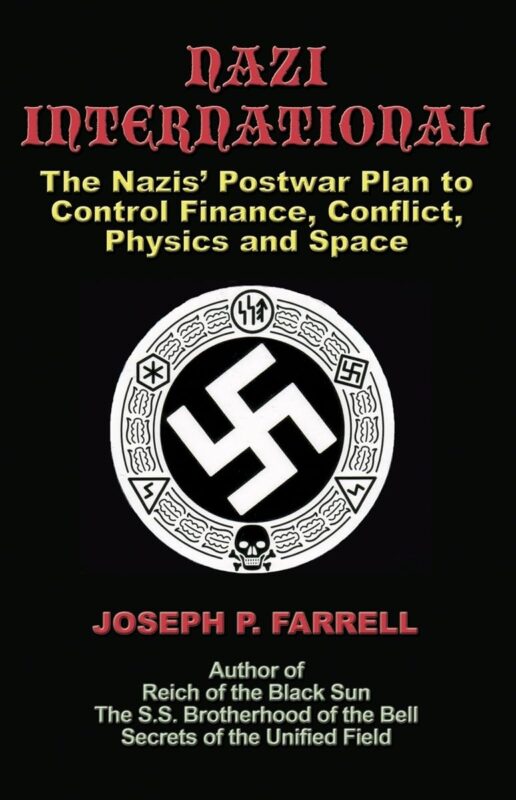
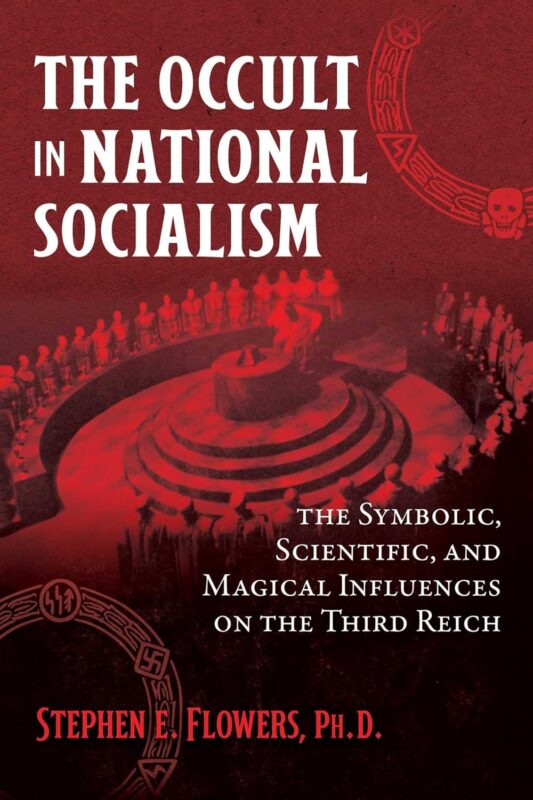
Irving devotes extended attention to Himmler’s fascination with Germanic mythology and racial origins. He established the Ahnenerbe, an institute for ancestral heritage studies, and sent Ernst Schäfer to Tibet in 1938 to search for traces of Aryan migration. He funded archaeological digs across Europe to demonstrate Germanic cultural supremacy. He promoted rune studies and celebrated solstice rituals that framed the SS as a modern knightly order. These activities reveal the ideological environment he created for his officers, where myth, race theory, and pseudo-science reinforced loyalty and identity.
Relationship with Hitler
Himmler revered Adolf Hitler as a messianic figure. He saw himself as servant and executor of the Führer’s will, maintaining absolute loyalty. Other Nazi leaders mocked his pedantic demeanor, yet Hitler valued his reliability and organizational capacity. Himmler often positioned himself as mediator between Hitler and the SS, ensuring that his men saw loyalty to him as loyalty to the Führer. Irving presents this devotion as both a strength that secured his rise and a weakness that left him unable to act independently when Hitler’s strategies faltered.
Family and private life
Publicly, Himmler appeared as a devoted husband to Margarete and father to their daughter Gudrun. Privately, he sustained a relationship with his secretary Hedwig Potthast, with whom he had two children. Irving uses surviving letters to reveal moments of tenderness, domestic concerns, and personal contradictions. Himmler maintained strict expectations of propriety within the SS while justifying his own dual family life as a duty to preserve bloodlines. The correspondence shows a man who balanced affection with ideological conviction, documenting the intersection of personal and political life.
Expansion of the Waffen-SS
During the war, Himmler oversaw the transformation of the Waffen-SS into a million-man military force. Irving depicts the Waffen-SS as elite troops admired for discipline and cohesion. Officers captured after 1945 often expressed loyalty to Himmler and described him as a leader who combined strictness with concern for his men. He created a structure that linked combat performance with ideological training, ensuring that SS units saw themselves as guardians of a new European order. His officers spoke of him as incorruptible, tireless, and unyielding in demands for loyalty.
War’s end and negotiations
As Germany collapsed in 1945, Himmler sought avenues to preserve power. He attempted to negotiate with Western Allies through intermediaries in Sweden and Switzerland, offering SS divisions to resist the Soviet advance. These overtures failed. Hitler discovered the negotiations and expelled Himmler from his positions in April 1945. Discredited, Himmler disguised himself and attempted to flee. British forces captured him near Bremervörde and transported him to Lüneburg, setting the stage for the contested events of his death.
The burial and erasure
Irving details the aftermath of Himmler’s death. British officers buried his body secretly in the heath, marked only by map coordinates, without ceremony or monument. His belongings were distributed as souvenirs. Journalists viewed the corpse under supervision, and sketches and photographs entered archives. The absence of a formal autopsy, the hasty burial, and the destruction of records contribute to the unresolved questions Irving emphasizes throughout the opening chapter. The narrative suggests deliberate erasure, ensuring that Himmler left no testimony in court and no visible grave for followers.
Postwar perception and legacy
Captured officers reflected bitterly on Himmler’s fate. Some saw betrayal in his supposed suicide, interpreting it as desertion. Others considered him guilty of ultimate crimes through loyalty to Hitler’s policies. Irving records these reactions to illustrate the fracture within Nazi ranks. In postwar memory, Himmler became emblem of bureaucratic ruthlessness. Irving, however, frames him as enigmatic, emphasizing his administrative diligence, occult pursuits, and modest lifestyle. The book concludes that Himmler embodied both ideological fervor and personal rigidity, producing a leader who built vast systems of control and perished in secrecy.
Interpretive convergence
Across its chapters, the book presents Himmler as disciplined child, meticulous organizer, ideological experimenter, family man, and commander of the SS. The structure creates convergence between his obsession with order, his fascination with myth, and his management of terror. Irving builds narrative tension by anchoring the biography in the unresolved drama of Lüneburg, where testimony conflicts and records falter. The unanswered question of his death frames the life as unfinished, his testimony erased at the moment it might have revealed the mechanics of Nazi power.
Search-driven relevance
Readers encounter a portrait of Himmler grounded in diaries, intercepted conversations, financial records, and eyewitness testimony. Irving delivers specificity: the Circle of Friends with its industrial donors, the Ahnenerbe’s expeditions to Tibet, the meticulous notes in his weight diary, the strict limit of three cigars daily, the burial coordinates entrusted to Colonel Murphy, and the photographs showing a broken nose. These details anchor the narrative in concrete material, establishing relevance for historical inquiry into leadership, ideology, and the structures of the Third Reich.
Narrative consequence
The biography presents Himmler as a man who fused private discipline with institutional violence. His daily routines, financial integrity, occult fascinations, and ideological rigidity structured the SS and shaped its role in war. His collapse in 1945, framed by failed negotiations and contested death, illustrates the fragility of constructed power when detached from its source. Irving presents the disappearance of Himmler’s body into an unmarked grave as both literal and symbolic erasure, leaving future generations to reconstruct meaning from fragments of record and testimony.

About the Book