Goebbels: Mastermind of the Third Reich
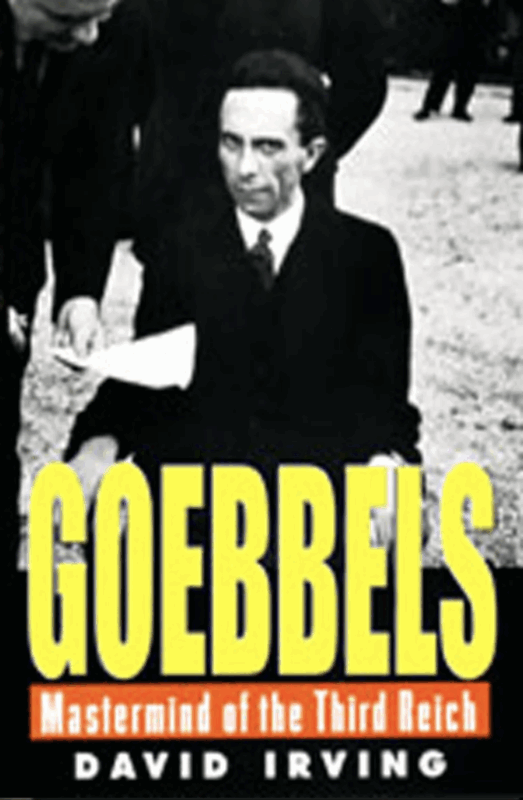
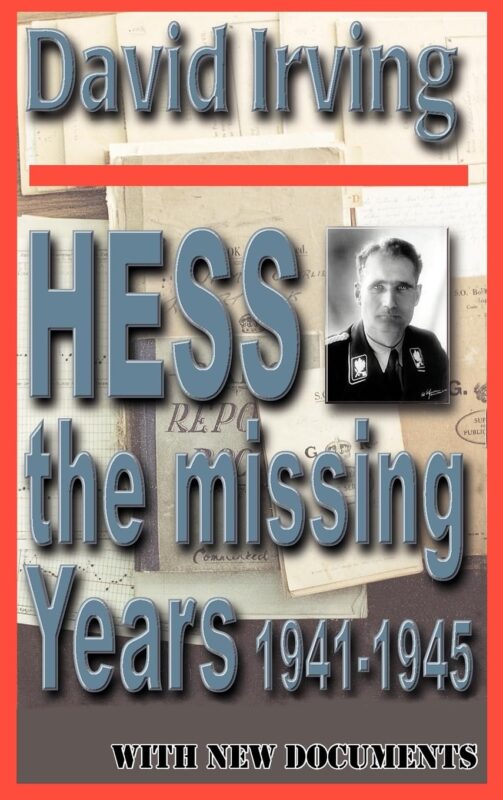
Goebbels Mastermind of the Third Reich by David Irving traces the trajectory of Joseph Goebbels from a fragile boy in the Rhineland to the architect of Hitler’s propaganda state. Irving draws heavily on Goebbels’ diaries, private papers, and state archives, weaving a narrative that reveals the mechanics of power, the design of persuasion, and the execution of ideological war.
Origins in Rheydt
Joseph Goebbels was born in 1897 in Rheydt, a textile town marked by Catholic tradition and working-class austerity. His father, Fritz, worked as a bookkeeper at a local factory, while his mother, Katharina, shaped his early intellectual and emotional world. Goebbels grew up with a club foot, a condition that caused ridicule and exclusion during his childhood. This deformity shaped his psychological drive, sharpening his hunger for intellectual achievement and rhetorical mastery. He read voraciously, absorbing literature, philosophy, and theology, cultivating a voice that he would later use as a political weapon.
Education and Early Literary Ambitions
Goebbels attended the Gymnasium in Rheydt and later studied literature and philosophy at universities in Bonn, Freiburg, and Heidelberg. He earned a doctorate with a dissertation on 18th-century romantic drama. His ambitions first took form in literature: he wrote novels, plays, and poems, none of which achieved recognition. The frustration of literary failure coincided with the political turmoil of post–World War I Germany. His transition from writer to agitator emerged when he discovered the emotional power of mass politics.
Conversion to National Socialism
The economic collapse of the Weimar Republic and the perceived humiliation of Versailles created fertile ground for radical politics. Goebbels joined the National Socialist German Workers’ Party in the 1920s, first under the influence of Gregor Strasser. His early speeches in northern Germany displayed his ability to fuse cultural despair with promises of national renewal. In 1926, Hitler personally appointed him Gauleiter of Berlin. This role provided the stage on which he refined propaganda as a systematic practice, orchestrating demonstrations, distributing leaflets, and staging confrontations that built visibility for the movement.
Gauleiter of Berlin
Berlin, with its vibrant press, radical street politics, and cosmopolitan culture, became the laboratory for Goebbels’ propaganda. He organized marches, directed attacks on rival groups, and honed the style of public speaking that electrified audiences. His newspaper, Der Angriff, became a vehicle for slogans, caricatures, and biting commentary. Goebbels demonstrated how repetition and emotional appeal could drown out reasoned opposition. His success in Berlin established him as Hitler’s indispensable voice in the capital.
Rise to Reich Minister of Propaganda
In 1933, Hitler rewarded Goebbels with the post of Reich Minister of Public Enlightenment and Propaganda. Goebbels centralized control over press, radio, film, and theater. He implemented censorship, dictated cultural production, and coordinated mass spectacles such as the Nuremberg rallies. Book burnings in 1933 dramatized the rejection of ideas labeled un-German. Goebbels insisted that propaganda should be simple, emotional, and repetitive, embedding messages in popular culture as much as in political speech.
Propaganda and War Mobilization
With the outbreak of war in 1939, Goebbels shifted propaganda toward themes of endurance and total commitment. He orchestrated the portrayal of Hitler as an infallible leader and sought to unify the population under narratives of struggle and destiny. His campaigns used newspapers, film, and radio to reinforce images of external threat and internal loyalty. Goebbels understood propaganda as psychological warfare, aiming not only to mobilize Germans but also to weaken enemy morale.
Orchestration of Total War
By 1943, after the defeat at Stalingrad, Goebbels confronted a crisis of faith in the Nazi state. In his famous Sportpalast speech, he called for “total war,” demanding complete mobilization of resources and acceptance of sacrifice. This speech exemplified his ability to transform despair into defiance. He framed the war as existential, binding the civilian population to the fate of the regime. His diaries reveal a man who perceived words as weapons and who believed that rhetorical fervor could conjure resilience from collapse.
Relationship with Hitler
Goebbels’ devotion to Hitler remained absolute. He cast himself as the interpreter of Hitler’s will, recording conversations, moods, and strategies in his diaries. He saw Hitler as both inspiration and destiny, aligning his own identity with the Führer’s vision. This loyalty extended to the end. In April 1945, as Berlin fell to Soviet forces, Goebbels and his wife Magda murdered their six children in the Führerbunker before taking their own lives.
Diaries as Historical Source
Irving’s account relies extensively on the rediscovered microfiche of Goebbels’ diaries, preserved by the Nazis in 1944–45 and hidden in Soviet archives. These diaries, covering the years 1923 to 1945, provide a continuous record of his thoughts, ambitions, and strategies. They expose his role in major events: the Reichstag fire, the Röhm purge, Kristallnacht, and the escalation of anti-Jewish measures that culminated in genocide. They also reveal his personal conflicts, his affairs, and his self-perception as an artist-politician.
The Craft of Manipulation
Goebbels treated propaganda as a science of influence. He emphasized the need for repetition, emotional resonance, and the alignment of cultural forms with political goals. He fused modern media with ancient techniques of rhetoric, using cinema, radio broadcasts, and staged rallies to create immersive experiences. He understood that persuasion required spectacle as well as message. His orchestration of Leni Riefenstahl’s films and his supervision of newsreels exemplified his integration of aesthetics into politics.
Collapse and Legacy
As the Reich collapsed, Goebbels’ propaganda shifted to themes of martyrdom and loyalty unto death. He depicted the German people as bound to a tragic destiny that required fidelity to Hitler. His end in the ruins of Berlin symbolized the consummation of this vision. Irving presents Goebbels as both a manipulator of the masses and a figure consumed by his own narratives. His diaries show a man who believed in the transformative power of words until his last day.
Historical Significance
Goebbels Mastermind of the Third Reich underscores how a single figure could weaponize culture, communication, and emotion to sustain a regime built on violence. The book demonstrates how propaganda functions not as an accessory to power but as its central mechanism. By reconstructing Goebbels’ life through his diaries and archival evidence, Irving exposes the inner logic of a system that fused ideology with performance. The biography confronts the reader with the structure of persuasion that mobilized a nation for war and destruction.
Conclusion
The story of Joseph Goebbels illustrates how personal ambition, rhetorical genius, and ideological conviction converged to shape the propaganda state of the Third Reich. Irving’s study reveals the methodical creation of a political environment where words became instruments of domination. The diaries capture a life consumed by the pursuit of influence and the belief that language could command history. In the end, Goebbels’ legacy lies in the destructive power of propaganda harnessed to authoritarian rule.

About the Book