Treason in America from Aaron Burr to Averell Harriman
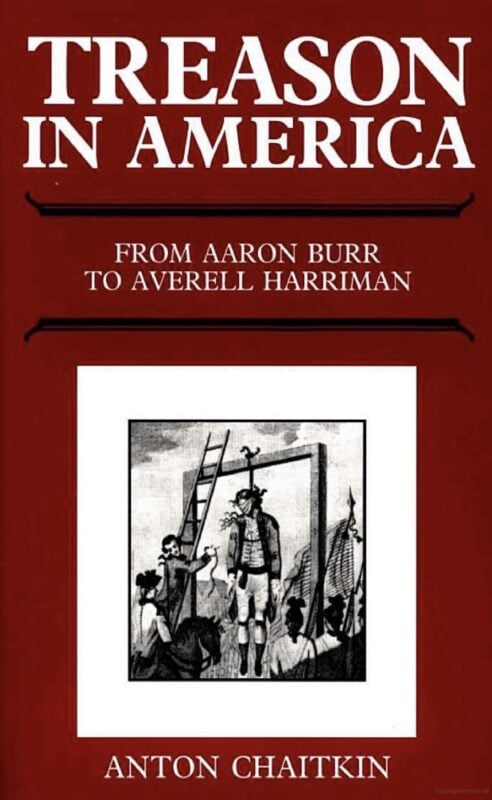
Treason in America from Aaron Burr to Averell Harriman by Anton Chaitkin exposes the covert manipulation of American political power by elite networks rooted in transatlantic financial interests. The book reconstructs a covert lineage of influence, tracing a line from British intelligence assets during the Revolutionary War to policy-shaping families dominating the 20th century. With primary-source evidence and a direct historical method, Chaitkin delineates how entrenched alliances undermined American sovereignty through strategic subversion.
The British-Swiss Nexus and the American Founding Betrayal
Benedict Arnold, Aaron Burr, and Albert Gallatin form the original American triad tied to a foreign-directed intelligence network, particularly the British-Swiss oligarchy operating through the East India Company and secret intelligence cells based in Geneva. Burr, educated in rhetoric and manipulation, rose as a disruptive force inside the early republic. His alignment with British agents like James Mark Prevost and his marriage into a loyalist family place him within a deliberately constructed opposition to the Washington-Hamilton program of national strength.
Gallatin, descended from a Geneva-based banking elite, arrived in America with direct links to the Mallet and Prevost families. These networks, allied through blood and shared ideological commitments, moved to destroy the nationalist financial system laid by Hamilton. Gallatin’s early legislative role in Pennsylvania targeted the federal excise tax, laying the groundwork for the Whiskey Rebellion, an armed resistance movement that threatened national unity.
The Use of Insurrection as Political Leverage
Chaitkin demonstrates that the Whiskey Rebellion was not an eruption of grassroots frustration but a deliberate strategy engineered by Gallatin and his network to delegitimize federal authority. Mobilizing settler grievances, Gallatin built a campaign that flared into open defiance, forcing President Washington to deploy the army. The federal response proved that the Constitution could enforce national law, but it also marked a pivot: covert actors recognized that overt secession was less effective than sustained institutional infiltration.
The tactic of using controlled opposition repeats in Chaitkin’s recounting of secessionist plots across multiple states. From New England federalists allying with Southern slave elites to mid-century operatives like Caleb Cushing aligning with Scottish Rite Masons and European bankers, a pattern crystallizes: cultivate regional antagonisms to paralyze national cohesion.
Building a Subversive Bureaucracy
The 19th century saw the transformation of sporadic treason into a durable structure. With the rise of Boston Brahmin power and the Scottish Rite Freemasonry, institutional channels for British influence expanded. Key figures such as Charles Sumner and William Lloyd Garrison, while posturing as reformers, funneled anti-nationalist ideology into abolitionist causes, conflating moral imperatives with British geopolitical aims. Chaitkin’s analysis here contends that the British empire backed anti-slavery advocacy to fracture the Union, not to end injustice.
Harvard, Yale, and the Lowell-connected clubs served as recruitment hubs for what Chaitkin calls the “Anglophile Establishment.” These networks maintained ideological hegemony through the Civil War, promoting policies of economic deregulation and foreign entanglement while deriding the Carey-Lincoln tradition of protective development.
The Rise of Financial Oligarchy and State Capture
After Lincoln’s assassination, which Chaitkin attributes to a coordinated conspiracy involving Southern and Northern elites, the path cleared for financial consolidation. The Harrimans, Morgans, and Rockefellers institutionalized transatlantic control via the Federal Reserve, the Barings, and Wall Street's tight connections to London banks. These families operated not as American capitalists, but as agents executing long-term imperial strategy—removing economic independence, spreading speculative finance, and suppressing nationalist dissent.
By the 20th century, the Anglo-American axis embedded its operatives directly into state organs. McGeorge Bundy, a key figure in national security policy, traces his lineage to opium-dealing New England families and served as a bridge between British imperial interests and U.S. global strategy during the Cold War.
Cultural Engineering and Ideological Subversion
The book tracks how elite circles shaped ideology through education, media, and science. Chaitkin details how the Smithsonian’s founding period became a battlefield between nationalists like Joseph Henry and oligarch-backed factions using anthropology to justify cultural relativism and suppress Native American development. Environmentalism emerged as another instrument of sabotage—promoting the myth of finite resources to arrest industrial growth and weaken American geopolitical power.
Anthropologists and academics, funded through private trusts, advanced pseudoscience to delegitimize traditional American civic republicanism. These intellectuals, trained by European radical currents, discredited the American System of political economy and displaced it with either laissez-faire dogma or collectivist utopianism—each stripping the state of its developmental mandate.
Strategic Deployment of Drug Networks and Secret Societies
Chaitkin’s treatment of opium trafficking reveals a convergence of financial and political agendas. Families like the Delanos and Roosevelts accrued wealth through narcotics trade managed by the British East India Company. This trade not only destabilized China but also funded covert operations in America. The Knights of the Golden Circle, an underground Confederate organization, coordinated with Northern Freemasonic orders to sow division. This network laid ideological groundwork for the Ku Klux Klan and other postwar terror structures, ensuring continued subordination of freed slaves and suppression of industrial democracy.
Secret societies like Skull and Bones operated as internal liaison groups, recruiting American youth into a permanent class of collaborators. These initiates received mentorship, placement, and inheritance—not from domestic traditions, but from a supranational elite governing through finance and ideology.
The Psychological War Against American Sovereignty
At the heart of Chaitkin’s narrative lies the strategic war for the American mind. Media organs like The New York Times shielded collaborators and sanitized their treason. Biographies of Aaron Burr, for instance, omit his British ties and portray him as a tragic anti-hero. This reframing converts treachery into personal failure and masks systemic betrayal.
Public education, meanwhile, reduced history to anecdote and abstraction, erasing the lineage of American patriots like Carey, Clay, and Lincoln. By denying youth access to these developmental traditions, the oligarchy ensures intergenerational ignorance of political economy and nation-building strategy.
Embedded Infrastructure of Elite Control
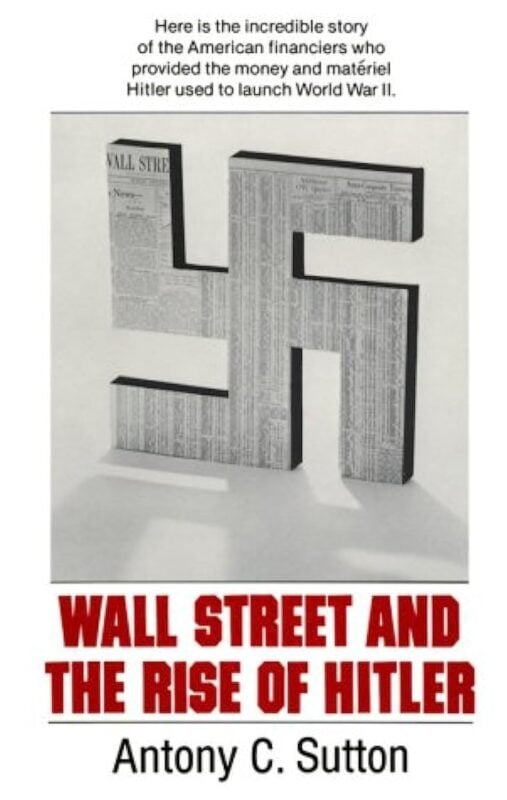
Treason requires infrastructure. Chaitkin maps the transformation of intelligence work from ad hoc espionage to institutional permanence. The Dulles brothers’ coordination with Harriman firms and Nazi industrialists exemplifies this shift. During and after World War II, Wall Street firms, foreign intelligence, and postwar planning coalesced into a seamless command system.
By aligning U.S. strategic goals with British imperial survivability, these families subordinated American policy to foreign aims. Institutions like the Council on Foreign Relations served as open platforms for executing covert directives. From drug finance to disarmament lobbying, the mechanics of betrayal grew more sophisticated and legally sanctioned.
The Central Premise: Conflict Between Two American Traditions
Chaitkin defines two competing American visions. The first, republican nationalism, prioritizes sovereignty, industry, and education as the engines of liberty. The second, oligarchic collaborationism, centers on unaccountable finance, strategic dependency, and elite governance.
This conflict unfolds across generations—not as a philosophical debate, but as a war of institutions, actions, and allegiance. Through military suppression, financial sabotage, and psychological reprogramming, the oligarchs press their agenda. Yet the story reveals a countercurrent: patriots, marginalized but not extinguished, who preserve the capacity to reorganize national strength.
Future Stakes and Strategic Clarity
The book does not end with nostalgia or despair. It issues a strategic warning. Identifying enemies of the republic demands more than critique; it requires reconstruction of historical continuity. Without a revival of Hamiltonian principles and a reconstitution of developmental governance, the republic remains exposed.
How do nations reclaim sovereignty once captured from within? How do institutions realign with national interest when their leadership belongs to a different civilization? These questions shape the challenge Chaitkin presents.
He does not ask for reform. He demands structural inversion. The solution, implicit in every chapter, lies in rebuilding the state along republican lines: restoring national credit, defending productive industry, protecting labor, securing frontiers, and expelling oligarchic agents from command. The book is not a lament. It is a call to action rooted in political clarity and historical truth.

About the Book