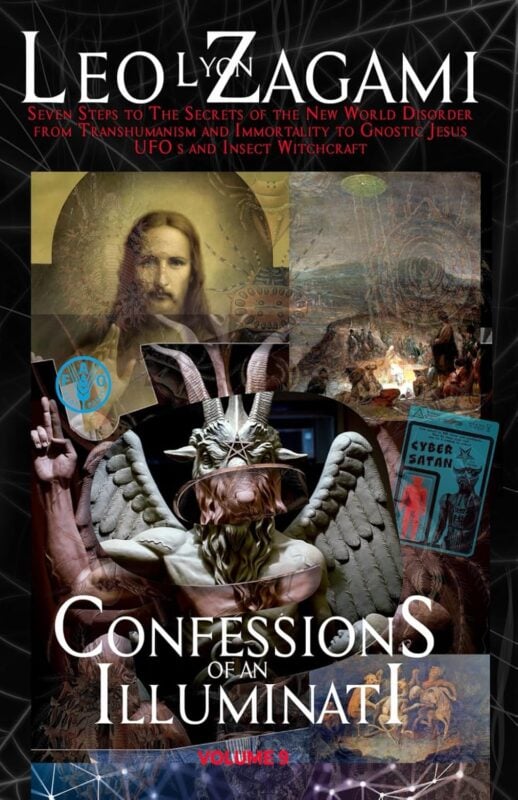
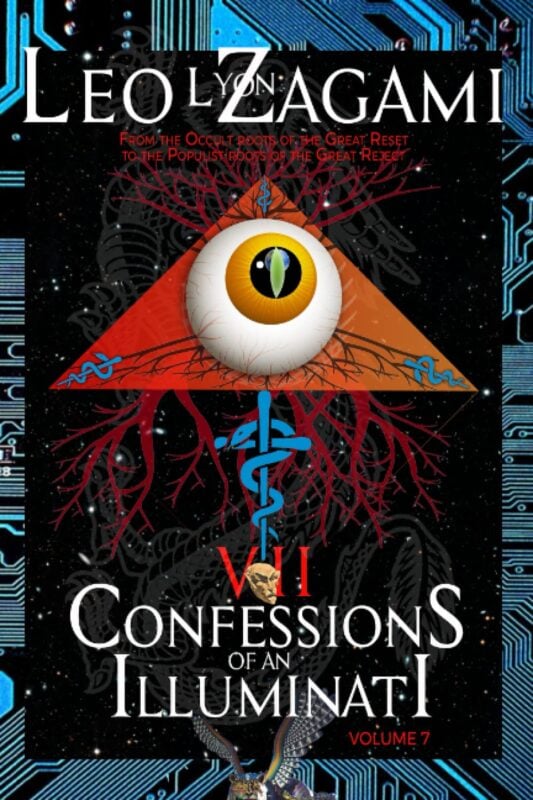
Confessions of an Illuminati, Volume I: The Whole Truth About the Illuminati and the New World Order by Leo Lyon Zagami interrogates the hidden architectures of power, exploring how secret societies influence the unfolding of world events and shape the destinies of nations and individuals alike. Zagami brings his experience and research into an intricate narrative that penetrates beyond the surface of conspiracy theory into a detailed mapping of esoteric structures and mechanisms at work.
Origins and Evolution of the Illuminati
Historical threads converge in the mythos and operations of the Illuminati, tracing a lineage from ancient Egyptian and Alexandrian mystery schools to the formal creation of Adam Weishaupt’s Bavarian Illuminati in 1776. These orders draw on traditions, rituals, and doctrines preserved and adapted over centuries, embedding themselves within cultural, religious, and political systems. Through the centuries, initiatic societies—Hermetic, Templar, Rosicrucian—have sustained secret knowledge, passing it through carefully constructed hierarchies that adapt and renew their influence as the world transforms. The continuity of their presence in Western civilization extends into modern Freemasonry, whose Scottish Rite, Memphis-Misraïm, and para-Masonic orders like the Osiridean Egyptian Orient serve as vehicles for esoteric practices and strategic influence.
Architectures of Secrecy
Societies with secret forms, objectives, or methods generate structures that prioritize concealment and selectivity. Zagami documents typologies of these organizations, outlining distinctions between societies formed for secrecy’s sake and those that pursue specific, often unspoken objectives through covert means. Hierarchical segmentation enables the movement of information and authority with precision, insulating inner circles while projecting influence outward through affiliated but compartmentalized lodges and groups. This architecture creates robust channels for inter-societal infiltration, allowing Illuminati-linked networks to absorb or redirect the energies of lesser-known or rival secret orders.
Ritual, Symbolism, and Esoteric Practice
Occult rituals and symbolic calendars animate the operations of these societies. Ritual serves as both a tool for psychological conditioning and as a method of transmitting initiatory knowledge that shapes the worldview of participants. Calendars based on Thelemic, Masonic, and Egyptian systems mark epochs, encode power cycles, and synchronize action with cosmic phenomena. Symbols—Boaz and Jachin, the owl of Bohemian Grove, the double-headed eagle—encode layered meanings, reinforcing group identity while communicating power to those trained in their interpretation. These practices create durable bonds between members and anchor esoteric legitimacy.
Intersections with Political and Financial Power
Zagami asserts that secret societies operate within and across spheres of political, financial, and military power, often forming “invisible colleges” that exert substantial influence over policy, culture, and ideology. Prominent lodges, such as Har Tzion Montesion in Rome, serve as nodes where Masonic, Kabbalistic, and Zionist interests intersect, leveraging esoteric tradition for strategic advancement. These networks extend their reach through the infiltration of religious institutions, business conglomerates, and universities, as the manipulation of knowledge becomes a currency as valuable as gold or political capital. The revolving doors between intelligence agencies, military structures, and occult orders—illustrated by the influence of the O.T.O., Skull and Bones, and related groups—amplify their capacity for covert intervention.
MK-ULTRA and Psychological Warfare
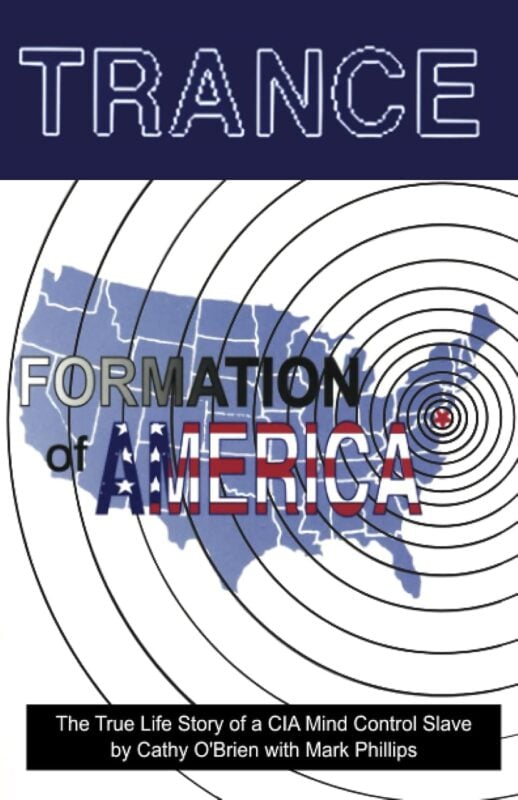
The book details the convergence of occult research and military intelligence in projects like MK-ULTRA, where mind control, subliminal programming, and psychological operations draw on techniques adapted from ritual magic, hypnosis, and esoteric traditions. The CIA’s clandestine experimentation with drugs, psychic phenomena, and behavioral modification reflects a synthesis of modern science and ancient occultism. These operations, often conducted in partnership with universities and covert institutions, build on a legacy of manipulation and control that reverberates through both public policy and underground culture.
Occult Rivalries and Schisms
Internal conflicts, ideological disputes, and schisms animate the world of secret societies. Power struggles within Freemasonry, the O.T.O., and fringe Masonic rites are depicted as struggles for spiritual and material supremacy, often spilling over into public scandals or covert interventions. Zagami identifies episodes where Masonic rebellions, clandestine alliances, or ideological rifts have catalyzed changes within these organizations, reshaping their agendas and expanding or contracting their influence. The book documents cases in which rivalries drive the formation of splinter groups or the absorption of smaller societies into larger, more dominant networks.
Sexuality, Gnosis, and Transgressive Practice
Ritual sexuality, Gnostic heresy, and transgressive Eucharistic practices constitute a powerful undercurrent in Zagami’s account. He explores how libertine sects and neo-Gnostic churches—such as those derived from Aleister Crowley’s teachings—deploy sexuality as a tool for spiritual transformation and social control. These practices, he argues, create a framework where pleasure, taboo, and mystical knowledge intertwine, forging bonds that transcend ordinary moral boundaries. In this domain, the quest for enlightenment, the pursuit of power, and the impulse toward secrecy converge, producing a volatile mix that can tip toward both personal transformation and exploitative manipulation.
Symbolic and Real Infiltration
Secret societies cultivate mechanisms for infiltration and subversion. Through the spread of “Sheet No. 51” and similar strategic documents, elite groups develop protocols for entering and redirecting the energies of rival organizations or institutions. This extends to the recruitment and deployment of key agents in religious, academic, or governmental settings. Initiates receive instruction in psychological operations, disinformation, and covert persuasion, allowing them to shape narratives and guide outcomes. The intent extends beyond influence to the reordering of social and political reality according to occult principles and long-term strategic designs.
Convergence with New Age and Modern Esotericism
The evolution of the New Age movement provides fertile ground for the proliferation of pseudo-esoteric sects and the commercialization of spiritual knowledge. Zagami investigates how influential organizations—such as AMORC and the Golden Dawn—integrate mystical doctrines with modern marketing and global outreach, creating hybrid forms that blur the lines between authentic initiation and commodified occultism. This convergence accelerates the diffusion of esoteric ideas into mainstream culture while also enabling the emergence of new cults and movements, some of which become entangled in criminal or abusive activity. The distinction between true and false gnosis becomes a flashpoint for control over spiritual capital.
UFO Phenomena and Extradimensional Contact
The narrative extends into the territory of UFOs, extraterrestrial contact, and the involvement of secret societies in managing anomalous phenomena. Zagami chronicles episodes where Illuminati-affiliated groups explore the potential of “extradimensional entities” and alien intelligences, weaving these investigations into their broader spiritual and political agendas. This element introduces an expanded field of power, suggesting that the struggle for influence and knowledge may encompass dimensions beyond the purely human. Occult orders incorporate these phenomena into their rituals and mythologies, using them to reinforce claims of unique authority and cosmic significance.
Criminality, Scandal, and Exploitation
Documented scandals involving sex abuse, financial fraud, and ritual exploitation punctuate the book’s exposé of the shadow side of secret societies. Zagami draws on cases involving clergy, politicians, and business leaders, arguing that the permeability of these organizations enables both genuine seekers and opportunists to coexist. The protective veils of secrecy and tradition serve as shields against legal and social accountability, complicating efforts to expose or prosecute wrongdoing. This dynamic generates persistent risks for corruption and abuse, which the author regards as endemic hazards in the pursuit of occult power.
Manipulation of Collective Imagination
The propagation of myth, legend, and fabricated history operates as a tool for manipulating collective imagination. Secret societies invest in the creation and dissemination of foundational stories, artifacts, and rituals, using these to consolidate group identity and control access to privileged knowledge. Through ritual drama, historical forgery, and strategic public interventions, these groups reinforce their perceived legitimacy and attract new initiates. The interplay between myth and reality, belief and manipulation, operates as a central mechanism in the perpetuation of the Illuminati network’s influence.
Enlightenment and the Dangers of Initiation
The quest for higher knowledge animates the actions of many initiates and seekers drawn into the orbit of secret societies. Ritual magic, theurgy, and contact with the “Holy Guardian Angel” serve as vehicles for spiritual ascent and self-transformation. Yet, Zagami insists that these quests often open participants to dangers of exploitation, manipulation, and psychological breakdown. The boundary between spiritual awakening and descent into chaos remains perilously thin, as the structures that promise enlightenment can also serve as traps engineered for the benefit of powerful elites.
Sustaining the Network: Adaptation and Resilience
The enduring presence of the Illuminati and related societies arises from their capacity for adaptation. Internal reforms, strategic alliances, and the absorption of new doctrines enable these groups to renew themselves across generations and historical disruptions. By integrating emerging technologies, contemporary ideologies, and globalized structures, they maintain relevance and operational capacity. The integration of intelligence work, financial engineering, and esoteric ritual ensures that the network continues to evolve in response to shifting social and political landscapes.
Call to Awareness and Critical Engagement
Zagami frames his work as a call to vigilance and inquiry. He challenges readers to examine the layers of deception, manipulation, and genuine initiation that characterize the world of secret societies. The acquisition and deployment of hidden knowledge, he argues, carry profound implications for the future of individual autonomy and collective destiny. The imperative to investigate, expose, and understand the realities concealed behind ritual, symbolism, and clandestine organization becomes an essential act for anyone concerned with truth, freedom, and the trajectory of civilization.
Enduring Significance and Ongoing Influence
Confessions of an Illuminati, Volume I reveals a landscape in which secret societies act as engines of historical change, cultural innovation, and strategic manipulation. The convergence of occult, political, financial, and military currents shapes the structures of modern power, guiding the emergence of the New World Order. The book’s synthesis of historical research, personal testimony, and controversial revelations positions it as a critical intervention in the ongoing debate about the presence and influence of the Illuminati and their allies. Readers encounter a world where ancient traditions, modern ambitions, and esoteric knowledge combine to forge the destinies of individuals and societies, inviting a new level of engagement with the mysteries and machinations that shape the world.