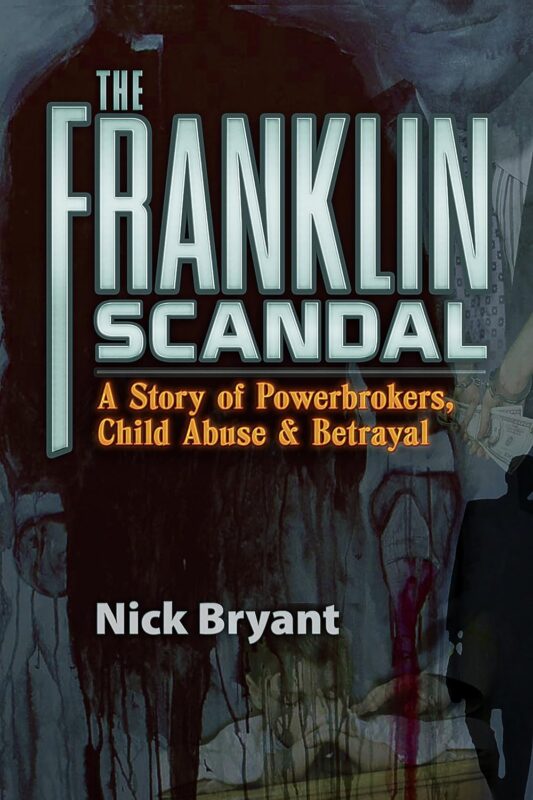
The Franklin Cover-Up: Child Abuse, Satanism, and Murder in Nebraska by John W. DeCamp exposes a web of allegations linking financial corruption, institutional abuse, and political power in late twentieth-century America. DeCamp, a former Nebraska state senator and attorney, grounds his narrative in the investigation of the Franklin Community Federal Credit Union scandal, focusing on its manager, Larry King, and the unfolding charges of child abuse and satanic ritual crimes. The account claims a convergence of criminal networks, compromised legal institutions, and silenced witnesses. Through specific cases, documents, and personal testimony, the book builds a case for deliberate suppression and orchestrated obstruction, culminating in a portrait of systemic failure at the highest levels.
The Origins of the Franklin Scandal
In the mid-1980s, investigators uncovered the Franklin Community Federal Credit Union’s missing $40 million under the management of Larry King, a prominent Nebraska Republican with ties to national politics. As regulatory scrutiny increased, testimonies from children in foster care, notably those placed with Jarrett and Barbara Webb, revealed patterns of physical and sexual abuse, as well as forced participation in drug trafficking and child prostitution. Social workers and police received reports describing ritualistic elements—strange parties, threats, and pornography—tracing a line from Omaha to high-profile gatherings in Washington, D.C. The children named local figures: judges, police officials, business leaders, and, crucially, Larry King. DeCamp asserts that their statements, corroborated through polygraph tests and cross-interviews, established a foundation for further inquiry. Why would children from disparate backgrounds describe similar scenes of coercion, abuse, and interstate travel?
Institutional Responses and Patterns of Suppression
Authorities at both local and federal levels redirected the investigation from the accused to the accusers. Grand juries indicted primary witnesses, including Alisha Owen and Paul Bonacci, on perjury charges. Judges sentenced Owen to nine to twenty-seven years in prison for describing her abuse by elite Nebraskans. Both local and national media, especially the Omaha World-Herald, amplified official statements minimizing the charges and casting doubt on victims’ credibility. Law enforcement agencies, including the FBI, declined to pursue evidence described in police reports, foster care logs, and legislative committee files. Key figures who refused to recant or alter their testimony faced legal reprisals, social ostracism, and relentless pressure.
Witnesses and Whistleblowers Face Retaliation
Gary Caradori, chief investigator for the Nebraska Legislature’s Franklin committee, stands as a central figure in the narrative of obstruction. Caradori and his team encountered threats, surveillance, and suspected sabotage, including tapped phones and vehicle tampering. In July 1990, Caradori died with his son in a suspicious plane crash after collecting new photographic evidence in Chicago. Eyewitnesses reported an explosion before the crash, but authorities removed those reports from public record. The FBI immediately seized Caradori’s files. Fifteen people associated with the Franklin case, either as witnesses or investigators, died suddenly or violently over a span of three years. DeCamp contends that fear permeated the state: civil rights leaders visiting Nebraska reported an atmosphere of terror more acute than during the height of Ku Klux Klan violence in the South.
Case Study: Foster Care, Power, and Access
Children placed in the care of the Webbs, whose household was supported and protected by influential connections, described a pipeline linking state institutions to King’s network. Foster children alleged beatings, sexual assaults, and forced attendance at parties where adults exchanged cash for access to minors. These accounts referenced local educational leaders, prosecutors, and members of King’s social circle. Larry King’s reputation as a philanthropist and his roles in organizations like Boys Town and the Omaha Girls’ Club provided cover for repeated contact with vulnerable children. Victims’ reports included specific details about transportation, documentation procedures at parties, and the use of intimidation to enforce compliance. The narrative follows these details into broader allegations involving national politicians.
Intersecting Networks: Politics, Media, and the Law
DeCamp explores the interconnectedness of financial crime, political influence, and abuse. Larry King, a familiar figure at Republican national conventions, operated at the intersection of philanthropy, banking, and political fundraising. Witnesses described parties attended by nationally prominent figures, including mentions of then-Vice President George Bush. While these allegations remain highly controversial, the specificity and consistency in witness testimony shaped the urgency of the legislative investigation. As media narratives focused on the financial collapse of Franklin Credit Union, the deeper story of child trafficking and ritual abuse faded into the background. DeCamp maintains that the simultaneous inaction and active suppression by the legal system, law enforcement, and media outlets constitutes evidence of an orchestrated cover-up, not bureaucratic inertia.
The Role of the Catholic Church and Institutional Complicity
DeCamp devotes substantial attention to the Catholic Church’s role in the broader epidemic of abuse. Legal actions taken against clergy in the wake of the Franklin case reflect a growing awareness of the scope and pattern of institutional complicity. The book places Nebraska’s crisis within a national landscape of cover-ups, lawsuits, and public reckoning, with the Franklin case marking a turning point in the willingness of survivors and attorneys to pursue claims against powerful entities.
Statistical and Documentary Evidence
The author marshals a wide array of data: reports from the Children’s Defense Fund estimating millions of abused and neglected children; statements from law enforcement veterans like Ted Gunderson, who points to tens of thousands of missing children yearly; and internal police memos detailing pornography, ritual abuse, and the systematic disregard for physical evidence. The absence of federal record-keeping for missing children, contrasted with the meticulous tracking of vehicle thefts and homicides, signals a structural unwillingness to confront the scale of the problem.
Social Consequences and Continuing Impact
The aftermath of the Franklin cover-up reverberates beyond Nebraska. DeCamp recounts the ongoing repercussions for survivors, attorneys, and investigators who have come forward. Public skepticism of official narratives reached a high point after Alisha Owen’s conviction, with 94 percent of respondents in a local poll expressing belief in her railroaded prosecution and the existence of a cover-up. Legislative efforts to continue the investigation failed, but the circulation of DeCamp’s book—over 110,000 copies sold—has fueled new cases and calls for reform across the United States.
Narrative Voice and Authorial Authority
DeCamp establishes his personal credibility through his proximity to both state power and the victims. He recounts direct involvement as a state senator, delegate to national conventions, and legal representative for victims and whistleblowers. The narrative incorporates official documents, investigator notes, and sworn testimony to construct a record that, while challenged in the courts and press, remains unrefuted in the specifics he presents. The author’s relationship with figures such as William Colby, former CIA director, adds gravitas and reinforces the risk inherent in exposing institutional wrongdoing.
The Stakes of Institutional Secrecy
The central argument of The Franklin Cover-Up hinges on the consequences of institutional secrecy. DeCamp frames the control of information—by courts, grand juries, and the press—as the primary mechanism for preserving power and preventing accountability. He invokes Benjamin Franklin’s assertion that subduing freedom of speech is the first step in overthrowing liberty, drawing a direct line from local corruption to national implications for democratic governance.
Patterns of Denial and the Challenge of Proof
Mainstream media narratives, buttressed by official statements, recast child witnesses as fantasists and their stories as hoaxes. DeCamp identifies a pattern: authorities declare insufficient evidence, refuse to pursue leads, and then use the absence of action as proof of innocence. The voices of victims, corroborated by lie detector results and witness statements, remain marginalized in official histories.
Action and Reform
The book concludes with a call for public action. DeCamp urges readers to demand transparency, protection for whistleblowers, and reforms in child welfare and law enforcement. He identifies the need for new investigative frameworks, robust public oversight, and a cultural shift that places the well-being of children above the reputations of institutions and elites.
Conclusion: The Enduring Legacy
The Franklin Cover-Up by John W. DeCamp remains a foundational text in the literature of American institutional abuse and corruption. By documenting the links among financial crime, sexual exploitation, and systemic cover-up, the book articulates the stakes for both individual survivors and the public at large. The narrative’s specifics—names, places, timelines, and official documents—invite further research and scrutiny, while its broader implications challenge readers to confront the mechanisms that enable abuse to persist within powerful networks. The convergence of survivor testimony, investigative persistence, and institutional obstruction in Nebraska offers a case study with national resonance, posing a central question: What mechanisms best ensure accountability and justice when institutions serve their own protection above all else?