The Franklin Scandal: A Story of Powerbrokers, Child Abuse & Betrayal
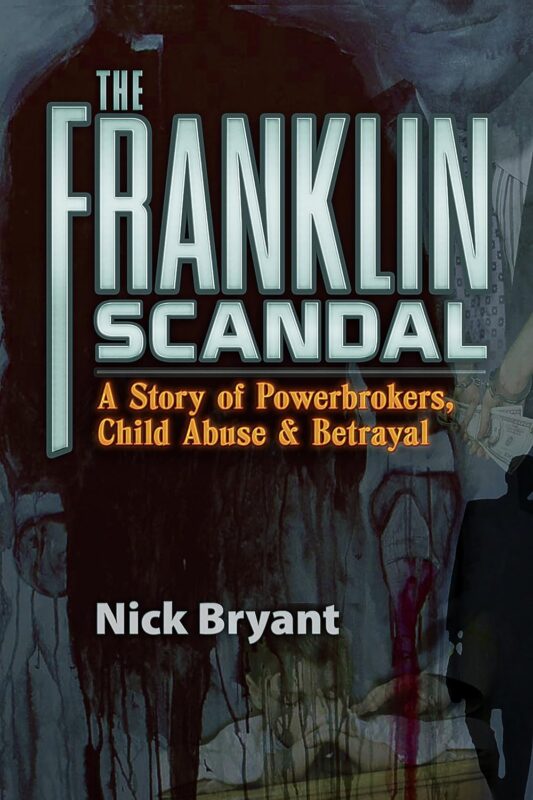
The Franklin Scandal: A Story of Powerbrokers, Child Abuse & Betrayal by Nick Bryant dissects a clandestine network that, through political and financial power, orchestrated and concealed the sexual exploitation of children in late twentieth-century America. Bryant’s reporting penetrates the surface narratives of criminal fraud, child abuse, and media silence, documenting how the Franklin Credit Union in Omaha, Nebraska, served as a node connecting a pedophile ring to elite national institutions.
Exposing the Hidden Infrastructure
Nick Bryant begins by situating the Franklin case within a broader history of institutional betrayal. He details how the Franklin Credit Union, managed by Lawrence E. King, operated far beyond the boundaries of financial crime. King, a charismatic Republican fundraiser, commanded national influence, using his position to cultivate relationships with the powerful in Washington, DC. Bryant’s investigation draws from thousands of pages of police reports, internal memos, victim debriefings, flight receipts, and interviews. Each document reveals patterns of abuse, transport, and cover-up, challenging the notion that these events occurred in isolation or were the product of overactive imaginations.
The Structure of Corruption
Corruption in the Franklin case reveals a complex interdependence between local enablers and national power. State and federal grand juries declared the child sex ring a “carefully crafted hoax,” yet Bryant shows that their conclusions arose from a process riddled with intimidation, document suppression, and selective prosecution. Victims recanted under pressure; whistleblowers encountered threats and surveillance. The evidence points to systemic forces that extended protection to perpetrators at the expense of children’s safety. Investigators and journalists working the case faced resistance from law enforcement agencies, courts, and media organizations. As Bryant compiles victim accounts and traces financial trails, a network emerges—one with the capacity to shape legal outcomes, manipulate public perception, and neutralize scrutiny.
The Role of the Media
Mainstream media repeatedly turned away from the Franklin story. Major outlets in New York and Washington refused to publish Bryant’s meticulously documented articles, even after he supplied victim lists, corroborating documents, and video evidence. His description of editorial indifference does not stem from the implausibility of the facts, but from the narrative’s incompatibility with prevailing beliefs about American institutions. The reluctance of media to engage with the Franklin scandal enabled misinformation, erased victim voices, and contributed to a climate in which denial trumped accountability. Bryant draws parallels between the press’s failures and the larger phenomenon of institutional self-preservation. Why do the media, entrusted as the public’s watchdog, so often choose silence over confrontation with entrenched power?
Testimonies from the Margins
Victims’ stories drive the narrative forward, lending depth and urgency to Bryant’s account. Boys Town, the famed institution for troubled youth, surfaces repeatedly as a recruitment ground for the ring. Former residents recount abductions, sexual exploitation, and threats to themselves and their families. The book recounts interviews with Paul Bonacci and other survivors, revealing intersecting traumas of abuse, psychiatric manipulation, and legal persecution. Bryant does not treat these testimonies as anomalies. He documents how institutions—including the Nebraska foster care system and Boys Town administration—responded with secrecy and denial. The resulting silence isolated victims, increased their vulnerability, and reinforced the machinery of abuse. Each individual’s story converges on a pattern: authorities, given opportunities to intervene, chose instead to protect the reputations of their organizations.
Legal Manipulation and Intimidation
Legal processes within the Franklin case functioned less as instruments of justice and more as tools of erasure. Grand juries dismissed evidence and criminalized witnesses who refused to retract their statements. Those attempting to expose the ring, from state senators to social workers, faced retaliation. Bryant describes how investigators, journalists, and even clergy endured threats, surveillance, and in some cases, mysterious deaths. The book references the deaths of witnesses and officials as part of the systemic protection extended to those implicated in the abuse network. This climate of intimidation undermined the possibility of open inquiry, making accountability elusive and enabling further harm. What mechanisms allowed the machinery of law to serve the interests of perpetrators?
Network Power and Blackmail
The Franklin scandal involved more than isolated acts of sexual violence. Bryant documents the use of children for blackmail purposes, with photographs and videotapes reportedly used to compromise politicians and business leaders. Rusty Nelson, King’s admitted photographer, claimed responsibility for creating such materials, stating that the goal was to secure political leverage and enforce loyalty among the elite. The book details repeated allegations of intelligence agency involvement, specifically the CIA’s intervention in connected cases such as the “Finders” cult. Blackmail functioned as both a method of control and a barrier to investigation. The power of the ring derived not only from its criminal acts but from its capacity to compromise and entangle those with the authority to investigate or prosecute.
The “Finders” Case and Institutional Parallels
Bryant explores the “Finders” affair, in which police and U.S. Customs agents in the late 1980s discovered a group connected to child trafficking and ritual abuse in Washington, DC. The Customs report, quoted extensively, describes evidence of planned abductions, coded communications, and explicit instructions for avoiding law enforcement detection. When the investigation reached a critical point, the CIA intervened, designating the matter an “internal” issue and closing the inquiry. Bryant uses this case to illustrate the structural features that enable abuse networks: inter-agency communication barriers, classified evidence, and the invocation of “national security” to stifle investigation. What creates the space for such protection, and who benefits from the closure of inquiry?
Poverty, Vulnerability, and Societal Betrayal
Bryant situates the Franklin case within a broader American crisis. Drawing on his prior work with disadvantaged children, he describes a society in which poverty, homelessness, and neglect leave millions at risk. He cites figures from his book America’s Children: Triumph or Tragedy, showing that nearly 20% of children in the United States live below the poverty line, with millions uninsured or homeless. This context exposes the conditions that make children susceptible to exploitation. The systemic betrayal documented in the Franklin scandal grows from the soil of societal neglect, institutionalized indifference, and a willingness among authorities to subordinate individual welfare to institutional stability. When social policy and legal frameworks prioritize reputation and funding over child safety, abusers find shelter.
Narrative Strategy and Methodology
Bryant’s research strategy rests on dogged pursuit of primary documentation. He gains access to thousands of pages of legislative, police, and social service records, supplementing them with extensive interviews. He recounts the process of gaining trust with reluctant witnesses, many of whom feared reprisal or had been instructed to avoid contact with outsiders. His narrative exposes the labor of uncovering truth in a hostile environment, where both official and unofficial channels resist transparency. Through first-person accounts, Bryant demonstrates the stakes and dangers of confronting entrenched power. The unfolding story retains urgency as each new source reveals further depths of institutional complicity.
Call to Action and the Role of Public Will
The book concludes with a direct appeal to collective responsibility. Bryant and his publisher, Kris Millegan, urge readers to act—to speak out, demand investigation, and leverage technology for transparency. They argue that the persistence of such scandals depends on widespread apathy and the willingness of the public to trust official narratives. In an era where digital media offer new channels for advocacy and exposure, the possibility for true accountability expands. What would it mean for citizens to use their voices and tools to pursue justice where institutions have failed? The question presses on the reader: what action follows from knowledge of systemic abuse and betrayal?
The Limits of Institutional Reform
Bryant’s account poses fundamental challenges to faith in reform through existing structures. The Franklin Scandal reveals patterns of corruption, cover-up, and legal manipulation that resist superficial correction. Effective change requires more than exposure; it demands sustained public engagement, institutional overhaul, and legal accountability for those who use power as a shield for predation. Bryant’s meticulous research and relentless pursuit of the story serve as a model for investigative journalism, but they also underscore the limits of individual effort in the face of entrenched interests.
Sustaining the Narrative of Accountability
The Franklin Scandal functions as a living document, a record that confronts readers with evidence and testimony. It insists on the reality of institutional betrayal and challenges readers to recognize the consequences of silence. Through detailed documentation, narrative synthesis, and repeated calls for action, Bryant’s work cultivates the conditions for ongoing inquiry. He leaves open the question: who will take up the task of investigation, advocacy, and reform in the next generation?
Implications for Future Investigations
Bryant’s findings point toward structural changes required to prevent similar abuses. Legal reforms must ensure protection for whistleblowers, independent oversight of investigations, and mechanisms for transparency that do not rely on institutional goodwill. Media organizations bear responsibility to engage with uncomfortable truths and resist the pressure to silence dissent. Social services, law enforcement, and legislative bodies require training, resources, and the authority to pursue abuse cases wherever they lead, regardless of the status of those implicated.
Conclusion: Uncovering the Real Cost
The Franklin Scandal by Nick Bryant establishes a benchmark for investigative reporting on institutional child abuse and elite corruption in America. Its impact derives from the cumulative weight of evidence and the convergence of victim testimonies, official records, and the lived experience of resistance and threat. The book documents the costs borne by those who confront entrenched power—costs measured in lost careers, shattered families, and in some cases, lost lives. The stakes extend beyond Nebraska, illuminating the mechanisms by which powerful actors subvert justice, exploit vulnerability, and maintain silence. Bryant’s work stands as a call to vigilance and engagement, inviting readers to confront the realities of power, betrayal, and the urgent necessity of collective action.