ACCESS DENIED For Reasons Of National Security: Documented Journey From CIA Mind Control Slave To U.S. Government Whistleblower

ACCESS DENIED For Reasons of National Security by Cathy O'Brien with Mark Phillips chronicles a harrowing journey from CIA mind control slavery to whistleblower activism. O'Brien, alongside Phillips, exposes a world of covert operations, systemic abuse, and political corruption that threatens individual freedom and global stability. The book details their escape from the CIA's MK Ultra Project Monarch, a program rooted in trauma-based mind control, and their relentless pursuit of justice for O'Brien's daughter, Kelly, and themselves. Through meticulous documentation, the narrative unveils a labyrinth of government secrecy, offering a guide for truth-seekers to navigate and dismantle oppressive systems.
A Life Under Control
O'Brien's story begins in a childhood marked by abuse in Muskegon, Michigan, where pedophilia and child pornography thrived unchecked. Her father, Earl O'Brien, exploited her in a pornographic film, Bonnie and the Boxer, which drew the attention of local politician Gerald Ford. Ford, later an unelected U.S. President, facilitated her entry into MK Ultra, a CIA program leveraging multigenerational incest to create dissociative states ideal for espionage and control. Senator Robert C. Byrd became O'Brien's "owner," dictating her movements, from military bases to political circles, during the Reagan-Bush era. Her existence, devoid of free will, revolved around programmed tasks, including prostitution and covert operations, until Phillips intervened.
The Rescue and Its Cost
In 1988, Mark Phillips, an intelligence insider, orchestrated O'Brien's and Kelly's escape from their handler, Alex Houston, in Tennessee. Phillips, leveraging his knowledge of CIA tactics, outmaneuvered Houston, freeing their livestock from abuse and securing critical evidence like Houston's CIA diary. The escape triggered immediate retaliation. Senator Byrd and other MK Ultra stakeholders, fearing exposure, intensified threats against their lives. Local authorities, compromised by CIA influence, offered no protection, forcing the trio to flee to Alaska. Phillips liquidated his assets, including a DeLorean, to fund their relocation, prioritizing safety over financial security. Why did such powerful figures fear their freedom? The answer lies in the secrets O'Brien carried—secrets her amnesia initially concealed.
Reclaiming Memory, Reclaiming Power
In Alaska, O'Brien began the grueling process of memory recovery, guided by Phillips' deprogramming techniques. Her brain, compartmentalized by trauma, held photographic memories of abuse and covert operations. Phillips taught her to write memories logically, shifting emotional horror into comprehensible narratives. This method, using pen and paper, allowed O'Brien to access suppressed events without reliving trauma, dismantling the mental walls built by MK Ultra. She recalled rituals at St. Francis deSales Catholic Church, meetings with George Romney on Mackinac Island, and CIA cocaine operations tied to figures like J. Bennett Johnston and Bill Clinton. Each memory, meticulously recorded, formed a collage of truth, piecing together her lost years and exposing a network of corruption.
A Daughter's Plight
Kelly's condition, marked by Dissociative Identity Disorder and advanced harmonic mind control, posed a parallel challenge. After a court-ordered visit with her biological father, Wayne Cox, an occult serial killer, Kelly suffered respiratory failure, a programmed response to trauma. Anchorage's Humana Hospital, under Dr. Pat Patrick's care, diagnosed her condition but lacked the classified technology needed for full rehabilitation. O'Brien and Phillips, desperate to protect Kelly, faced bureaucratic resistance and cover-ups. Dr. Lillibridge, documenting Kelly's physical scars from years of abuse, faced threats to his license and life, highlighting the systemic obstruction they encountered. How could a child’s suffering be ignored? The invocation of "national security" shielded perpetrators like Cox and Byrd, leaving Kelly vulnerable.
Confronting the System
O'Brien and Phillips submitted evidence to multiple agencies—FBI, U.S. Customs, and Tennessee authorities—only to face dismissals and threats. Anchorage FBI agents, initially receptive, were reassigned to Washington, D.C., while U.S. Customs' Max Kitchens confirmed the veracity of their claims but warned of a high-level hit. The Tennessee Violent Crimes Claims Commissioner, Richard Rucker, verified their documentation but hit a wall when "national security" was invoked, linked to Senator Byrd’s influence. Undeterred, O'Brien and Phillips mailed hundreds of letters to law enforcement, mental health professionals, and citizen groups, amplifying their call for justice. Their persistence exposed a pattern: government agencies prioritized secrecy over accountability, protecting powerful figures implicated in MK Ultra and related crimes.
Exposing Global Corruption
The book situates O'Brien’s experience within a broader conspiracy. MK Ultra, rooted in Nazi research from Project Paperclip, exploited dissociative disorders for espionage and control. Politicians like Ford, Byrd, and Clinton, alongside institutions like the Catholic Church and Mormon networks, facilitated these operations. CIA cocaine trafficking, linked to Arkansas’ Mena Airport and Louisiana’s J. Bennett Johnston, funded covert activities, while media suppression ensured silence. O'Brien details how the 1947 National Security Act and Patriot Acts shielded these crimes, obstructing justice. Why does such secrecy persist? The answer lies in the global elite’s pursuit of a New World Order, a centralized control system undermining individual sovereignty.
A Call to Collective Action
ACCESS DENIED transcends personal narrative, offering a blueprint for resistance. O'Brien and Phillips advocate for collective consciousness, urging readers to reject manipulated media and embrace truth. The book’s epilogue, "Assume Your Victory," calls for spiritual evolution over violent revolution. Australians, described as resisting social engineering, exemplify this awakening, maintaining freedom of thought against globalist pressures. O'Brien emphasizes that knowledge dismantles mind control, empowering individuals to reclaim autonomy. The internet, a tool for global communication, amplifies this resistance, connecting truth-seekers worldwide. The narrative converges on a unified purpose: to expose and dismantle systems of oppression through informed action.
Legacy of Resilience
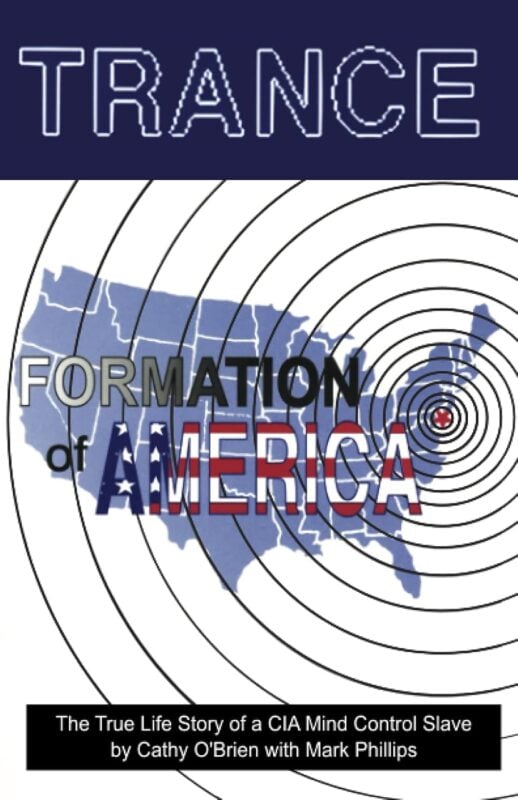
O'Brien and Phillips’ journey, spanning 16 years of survival and three years of writing, stands as a testament to human resilience. Their earlier work, TRANCE Formation of America, provided raw testimony to Congress and the United Nations, untranslated into multiple languages to reach global audiences. ACCESS DENIED builds on this, offering detailed answers and solutions. It addresses how O'Brien recovered from decades of torture, how they navigated a corrupt justice system, and how they survived relentless threats. The book’s strength lies in its unapologetic documentation—hundreds of hours of recordings, thousands of pages of notes, and sworn testimonies—presented without alteration to the Court of Public Opinion.
Empowering the Future
The narrative closes with a vision of hope. O'Brien and Phillips assert that humanity’s innate strength—rooted in diverse genetics and shared values—can overcome engineered divisions. They call for vigilance, urging readers to act on truth and foster peaceful change. The book’s final pages resonate with a call to lead, emphasizing that when people unite, leaders follow. Kelly’s ongoing struggle, marked by her telepathic connection with horses and resilience despite institutional failures, underscores the stakes. O'Brien’s love for Phillips, who saved her life, and her bond with Kelly fuel this fight, proving that love and truth are the ultimate forces for freedom.
ACCESS DENIED For Reasons of National Security delivers a raw, unflinching look at a hidden world of control and resistance. It equips readers with the tools to question, act, and evolve, ensuring that truth, not secrecy, shapes the future.

About the Book