Codex Magica: Secret Signs, Mysterious Symbols, and Hidden Codes of the Illuminati
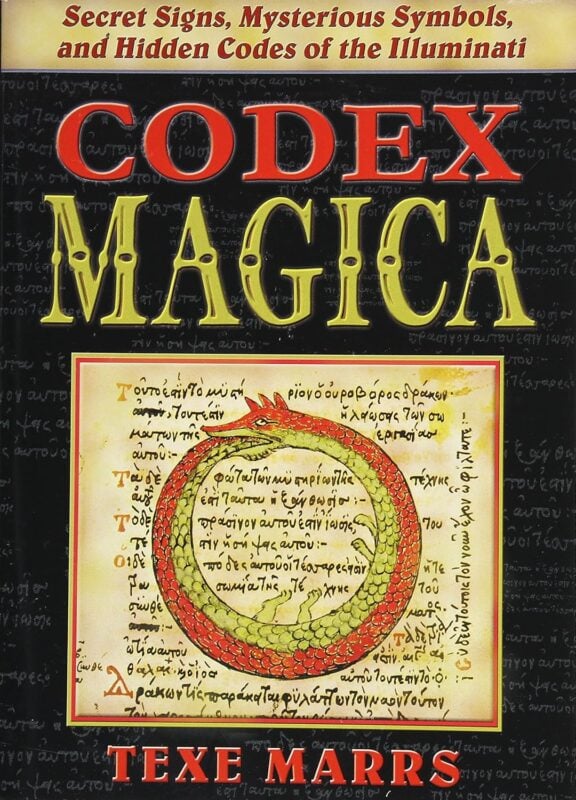
Codex Magica by Texe Marrs unmasks the intricate web of signs, symbols, and gestures that he claims reveal the hidden operations of global elites. Marrs opens the narrative by positioning the reader at the edge of a labyrinth: ancient societies, secret brotherhoods, and modern power structures converge through a shared language of visual signals. In over 600 pages and with more than 1,000 photographs and illustrations, the book explores the assertion that occult symbolism saturates politics, entertainment, business, and culture, transmitting coded messages that shape events and beliefs.
The Structure of the Hidden Order
Marrs details the architecture of secret societies, centering the Illuminati and Freemasonry as core actors. These organizations, he claims, rely on elaborate rituals and a distinct iconography to enforce hierarchy, allegiance, and silence. The book catalogues dozens of groups—Rosicrucians, Skull and Bones, Bohemian Grove, and others—each sustaining power by enforcing secrecy and marking boundaries with unique emblems, handshakes, and coded language. Marrs argues that the perpetuation of hidden orders depends upon an intricate system of oaths, the threat of retaliation, and psychological conditioning.
The Language of Symbols
Symbols act as both barriers and gateways. Marrs asserts that control depends on the widespread deployment of esoteric signs: the all-seeing eye, double-headed eagle, pentagrams, triangles, the “X” mark, solar discs, and countless hand gestures. Photographs of politicians, celebrities, and business magnates populate the book, each image presented as a clue in a global code. According to Marrs, these are not accidental or stylistic choices—they are deliberate signals of membership, rank, and intent. The book insists that symbolic language structures power relationships, asserts dominance, and initiates new adherents through shared visual codes. When a world leader covers an eye or flashes a horned hand gesture, Marrs sees not coincidence but a calculated broadcast to the initiated.
Psychological Conditioning and the Matrix of Control
Marrs identifies a persistent campaign of psychological manipulation that he calls a “Psychological Matrix.” The author contends that generations have grown up saturated in occult symbology—through television, film, advertising, and architecture—producing a trance-like state in the public. He presents the assertion that secret societies create this matrix as a form of mass indoctrination, rendering people compliant and unable to discern reality from carefully crafted illusion. Propaganda, repetition of motifs, and the placement of symbols in key cultural touchpoints serve as the foundation for what Marrs describes as “satanic indoctrination,” locking populations into cycles of obedience and apathy.
The Rituals of Secrecy and Initiation
Ritual maintains the boundaries between insiders and outsiders. Marrs documents the use of secret handshakes, coded phrases, and ritual postures that serve both as initiation rites and as ongoing affirmations of loyalty. He claims that these practices trace back to ancient Babylonian and Egyptian mystery religions, with each step up the hierarchy conferring additional knowledge and greater complicity. Initiates must swear binding oaths, often under threat of severe consequences, reinforcing an unbreakable bond to the group and its objectives. The complexity of the ritual system, Marrs suggests, serves to fragment knowledge—most members receive only fragments, while only a select few are permitted to grasp the full scope of the operation.
Power, Megalomania, and the Psychopathic Elite
The book defines the ruling elite as psychopathic personalities marked by megalomania—a conviction of personal divinity and the right to reshape the world at will. Marrs draws from psychological definitions, outlining a profile of individuals who perceive reality accurately but ignore social and moral boundaries, pursuing gratification through manipulation, deception, and grandiose performance. The text connects these traits to the behaviors of political leaders, financial titans, and cultural icons, arguing that their drive for power manifests in the theatrical display of occult gestures and the public celebration of forbidden knowledge.
Occult Magic and Alchemical Transformation
Marrs frames much of the action of secret societies as a form of ritual magic. He claims that the performance of hand signs, the use of geometric shapes, and the invocation of ancient words serve as channels for supernatural forces. In this worldview, symbols function not only as communication tools but as instruments for shaping reality itself—altering consciousness, bending events, and engineering outcomes on a grand scale. The author insists that such rituals constitute real acts of magic, designed to access “external mystical forces” and invoke the intervention of spiritual entities, which he names as devils or demonic presences.
Historical Continuity and Ancient Origins
Tracing a line from the clay tablets of Sumer, through Babylon, Egypt, and Rome, to the Masonic lodges and corporate boardrooms of the present, Marrs anchors his claims in a narrative of uninterrupted esoteric tradition. He draws upon statements from high-ranking Masons and historians to assert that the symbols and rituals in use today are deliberate revivals of ancient practices, designed to harness the same energies and perpetuate the same hidden doctrines. This continuity, Marrs claims, provides the backbone for what he describes as the persistent, global conspiracy of the Illuminati.
The Dangers of Forbidden Knowledge
Marrs places significant emphasis on the peril faced by those who attempt to expose or decode the workings of secret societies. He recounts historical anecdotes: the abduction and murder of Captain William Morgan after publishing Masonic secrets, the alleged poisoning of Mozart for revealing Masonic rituals in his opera, and other mysterious deaths linked to whistleblowers. The book uses these narratives to reinforce the stakes involved—suggesting that the revelation of secrets threatens the existence of the elite and prompts aggressive retaliation.
The Practice of Hoodwinking
According to Marrs, secret societies practice a strategy of deliberate misdirection. He describes the concept of “hoodwinking,” where lower-ranking members are intentionally deceived regarding the true meaning and purpose of rituals, symbols, and teachings. Only the inner circle—the “adepts and sages”—are allowed access to the full doctrine, while the masses, both inside and outside the organizations, remain ignorant. This layered structure of knowledge, enforced by oath and ritual, serves to preserve power and prevent effective challenge to the established order.
Wealth, Elitism, and the Pursuit of the New World Order
Throughout the narrative, Marrs identifies the pursuit of concentrated wealth and the construction of a “New World Order” as driving objectives of the Illuminati. He asserts that the global elite aim to abolish private property, reshape economies, and impose a unified system of governance—achieved through incremental social engineering and the manipulation of global crises. Ritual symbolism, in this context, operates as a tool of both cohesion within the group and intimidation or confusion for those outside it. The book asserts that the very structure of modern finance, politics, and entertainment serves the interests of this hidden order.
The Role of Mainstream Media
Marrs accuses mainstream media of operating as a mechanism of deception and distraction. He claims that control over information channels allows the elite to manufacture consent, suppress dissent, and ensure the unchallenged transmission of their symbols and values. Media, in this argument, transforms from a forum for public deliberation into an engine for maintaining the psychological matrix, rewarding compliance, and punishing attempts at exposure.
The Psychology of Mass Compliance
Why do people comply, even when confronted with evidence of manipulation? Marrs suggests that fear, ignorance, and the desire for comfort lead populations to accept and repeat the official narratives offered by authority. He contends that education systems, popular entertainment, and the pressures of daily survival distract and pacify, ensuring that challenges to the hidden order remain rare and ineffective. Those who break free of this matrix face social ostracism, professional consequences, or worse.
The Invitation to Critical Inquiry
Throughout the book, Marrs directly addresses the reader, framing his narrative as both a revelation and a challenge. He provides commentary on photographs, cross-references historical texts, and cites alternative researchers, encouraging readers to draw their own conclusions. Marrs argues that the sheer volume of evidence—images, documented rituals, and corroborative statements—demands careful scrutiny. The responsibility, he asserts, falls on the individual to determine the veracity and implications of these claims.
Conclusion: The Structure of Control and the Call for Awareness
Codex Magica by Texe Marrs presents a sweeping vision of global manipulation, founded upon the power of symbols, secrecy, and ritual. The book asserts that secret societies and their elite members operate through a well-defined structure, employing ancient traditions to engineer consent, shape events, and maintain dominance over culture and governance. By uncovering these patterns, Marrs invites readers to question the visible world, interpret the signals embedded in daily life, and take personal responsibility for seeking truth. The narrative builds toward a singular claim: that recognizing and understanding the language of the elite is a necessary step toward reclaiming autonomy and disrupting the machinery of occult control.


About the Book