The Pentagon’s Brain: An Uncensored History of DARPA, America’s Top-Secret Military Research Agency
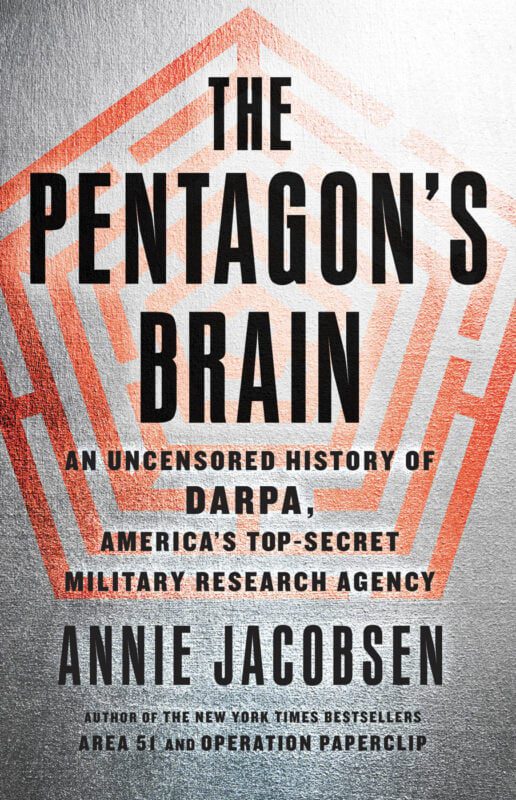
The Pentagon's Brain by Annie Jacobsen investigates the untold history and ongoing influence of DARPA, America’s Defense Advanced Research Projects Agency, as it redefines the frontiers of military technology and national security. From its inception in the late 1950s through the present, the agency fuels a relentless drive for technological supremacy, casting ripples that transform the military, industry, and society.
Origins in the Shadow of Catastrophe
The launch of Sputnik in 1957 galvanized the United States to create a research body that would guarantee technological dominance in the face of existential threats. Congressional action led to the formation of DARPA, charged with the mission to prevent surprise by imagining, designing, and delivering scientific revolutions. Annie Jacobsen traces the agency’s roots through the anxiety and ambition that defined the Cold War era, where the specter of thermonuclear catastrophe and the shock of Soviet advances demanded new forms of scientific mobilization.
The agency’s birth followed the hydrogen bomb’s terrifying debut. In March 1954, the Castle Bravo test detonated a weapon on Bikini Atoll with unprecedented force—fifteen megatons, much greater than the scientists predicted. The radioactive fallout spread across the Pacific, poisoning lands and people far from the blast, revealing the consequences of unbounded military innovation. The event underscored a central paradox: scientific genius creates security through the same process that engineers existential threat. Policymakers and scientists alike recognized the need for an institution that would perpetually accelerate research while remaining vigilant for the next disruptive technology.
Organizational DNA: Agility, Secrecy, and Authority
DARPA operates as an agile, semi-autonomous entity within the Department of Defense. Program managers, drawn from the upper echelons of American scientific achievement, wield extraordinary autonomy. Their mandate extends from identifying critical technological gaps to funding and managing ambitious, sometimes audacious projects. A lean staff—averaging about 120 program managers—rotates rapidly, bringing fresh urgency to each new initiative. The agency’s headquarters, hidden behind glass in Arlington, Virginia, belies its outsized influence.
DARPA neither builds weapons nor maintains laboratories in the conventional sense. Instead, it orchestrates a nationwide and sometimes global constellation of defense contractors, university scientists, and national laboratories. Through funding, vision, and oversight, the agency transforms academic research into operational military systems. Results transition rapidly to the military services and intelligence agencies, producing a cascade effect that alters both the battlefield and civilian life.
Game Theory, War Games, and the Logic of Strategy
Jacobsen’s account delves into the intellectual climate of the Cold War, where RAND Corporation analysts, including luminaries like John von Neumann, built the theoretical scaffolding of modern defense strategy. RAND functioned as the Pentagon’s first postwar think tank, hosting war games that shaped the logic of nuclear deterrence. Here, von Neumann’s mastery of game theory, especially the minimax theorem, enabled new strategies for survival under the threat of mutual assured destruction. These concepts extended from abstract mathematical models to concrete national security decisions.
The introduction of the Prisoner’s Dilemma to defense planning exposed the psychological underpinnings of strategy, where trust, risk, and self-preservation dictated the logic of escalation. Analysts saw the nuclear arms race as a non-zero-sum game: every advance provoked a counter-move, feeding a dynamic of perpetual competition. Jacobsen shows how this mindset permeated DARPA’s DNA, hardwiring a relentless drive to outpace adversaries by leaping ahead in technological capability.
Computing Machines and the Birth of Digital Supremacy
Parallel to nuclear strategy, the book traces DARPA’s role in catalyzing the computer revolution. Early computers such as ENIAC and MANIAC—designed with input from von Neumann and other Manhattan Project veterans—represented the transition from human to machine computation. These machines, funded by the military and operated by scientists at universities, enabled calculations that surpassed even the greatest human minds. As these systems evolved, they laid the groundwork for software, digital communications, and the architecture of the modern Internet.
DARPA’s managers saw the potential to harness these new computing capabilities, leading to the creation of ARPANET, the forerunner of the Internet. The agency recognized that control over information flow, processing speed, and networked systems would define the battlefield and society alike. The recursive relationship between military necessity and technological innovation produced cascading effects: what began as a quest for strategic advantage radiated outward, reshaping civilian life, commerce, and culture.
Scientific Competition and the Arms Race
Jacobsen details how the agency’s commitment to competition among scientists, contractors, and laboratories became central to its operating philosophy. DARPA fostered rivalry as an engine for innovation, granting parallel contracts and encouraging different teams to pursue distinct approaches to the same problem. The rivalry between Los Alamos and Livermore national laboratories over hydrogen bomb design exemplifies this ethos. The pursuit of ever-greater yield, efficiency, and miniaturization fueled rapid advancements—sometimes leading to unanticipated risks and disasters.
Herb York, Livermore’s first scientific director, articulated a core principle: to maintain qualitative superiority, American scientists must push technological boundaries without waiting for permission. The desire to maintain a technological edge propelled researchers to imagine weapons of staggering power—such as the proposed 10,000-megaton “Gnomon” and “Sundial” bombs—each theoretically capable of destroying entire continents. The logic of the arms race, driven by perceived necessity and the pursuit of prestige, animated DARPA’s mission and shaped global security.
Ethics, Power, and the Problem of Secrecy
The book presents the agency’s story as a crucible for ethical conflict. Scientists confronted choices that would define the fate of millions. The General Advisory Committee’s unanimous opposition to the hydrogen bomb—on ethical and practical grounds—ultimately yielded to the momentum of military necessity. Once the nation’s leaders prioritized technological dominance, the moral debate lost traction, replaced by a pragmatic calculus of risk and benefit.
DARPA’s structure enables rapid action and risk-taking by shielding program managers from bureaucratic oversight. This autonomy permits bold, transformative research, yet also places immense power in the hands of a few. Secrecy permeates the agency’s culture. Projects unfold behind closed doors, with results revealed only when they become militarily or strategically useful. The agency’s public relations machine shapes a carefully curated image, emphasizing health, wellness, and innovation, while more controversial programs remain classified.
From Battlefield to Society: The Ripple Effects of Innovation
Jacobsen documents the profound impact of DARPA’s work on society. Technologies born in the agency’s classified projects transition into the civilian domain, reshaping communications, medicine, transportation, and public safety. The Internet, GPS, and stealth technology began as defense initiatives; their adoption transformed commerce, navigation, and daily life. At the same time, less visible projects—such as drones, cyberweapons, and artificial intelligence—create new vulnerabilities and redefine the meaning of security.
DARPA’s work reverberates across the globe. As soon as new capabilities become operational, other nations accelerate their own programs. The diffusion of technology creates feedback loops, spurring new arms races and shifting the balance of power. The proliferation of drones after their debut in Afghanistan exemplifies this dynamic: once the world glimpsed the possibilities, dozens of nations began fielding their own versions, and the future of warfare changed overnight.
Presidential Leadership and the Management of Catastrophe
American presidents and their advisors struggled to manage the dangers that technological innovation unleashed. The book describes how President Eisenhower, after witnessing the fallout pattern of Castle Bravo, recognized the limitations of civil defense in the nuclear age. The creation of secret presidential bunkers like Raven Rock Mountain Complex reflected a stark realism: while technology can shield leaders, it offers no guarantee for the safety of the population. Government officials faced agonizing dilemmas—how to communicate the truth, maintain morale, and prepare for contingencies that might overwhelm society’s capacity for response.
As nuclear tests continued and the arms race escalated, the boundaries between military necessity and public welfare blurred. Civil defense plans, such as burying citizens in trenches or concrete pipes, demonstrated the inadequacy of solutions available in the face of total war. Congressional hearings exposed the grim realities, forcing a reckoning with the limits of planning and the cost of technological escalation.
DARPA’s Role in Shaping the Future
The narrative builds toward the present, where DARPA stands at the nexus of war, science, and society. The agency operates with the expectation that its classified programs are decades ahead of public knowledge. Its managers envision, fund, and deliver capabilities that transform national defense—often with consequences that extend far beyond the military sphere.
Jacobsen compels the reader to confront the core question: who should decide the future? As DARPA projects new forms of intelligence, autonomy, and power, the stakes escalate. The world becomes the future because DARPA imagines it so. Scientific genius, institutional autonomy, and the drive to win at any cost converge to set the trajectory for generations.
In recounting the agency’s history, Jacobsen reveals the patterns that shape not only military policy, but the architecture of the modern world. The Pentagon’s Brain illuminates the convergence of strategy, invention, and ambition, showing how the relentless pursuit of technological advantage creates a future shaped as much by uncertainty as by intention. As DARPA’s visionaries and skeptics continue their work, the fate of nations depends on how wisely and ethically they wield the power of invention.


About the Book