The Secret Doctrine: The Synthesis of Science, Religion, and Philosophy
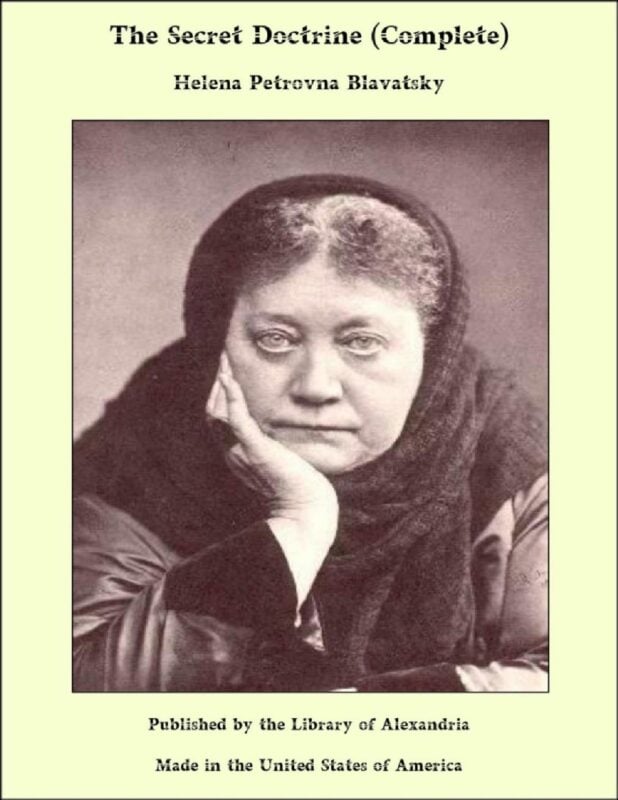
The Secret Doctrine by Helena Petrovna Blavatsky stands as a monumental synthesis of esoteric philosophy, religious tradition, and scientific speculation. Blavatsky asserts a bold ambition: to reveal the concealed architecture underpinning the cosmos and human consciousness, to articulate the origins and destiny of existence, and to recover the veiled wisdom at the root of civilization’s spiritual heritage.
Origins of a Wisdom Tradition
Helena Petrovna Blavatsky establishes her narrative within a framework of ancient wisdom—what she names the “Secret Doctrine”—dispersed in fragmentary form throughout the sacred scriptures and symbolic systems of the world. She claims that this doctrine predates recorded history, encoded in myth, preserved through initiation, and safeguarded in the crypts of temples and monastic libraries. She grounds her authority in years of study, travel, and initiation into Eastern and Western occult fraternities, yet she frames herself as a transmitter, not a solitary revelator. She insists that the essential tenets she expounds derive from a lineage of advanced adepts and hidden teachers whose wisdom was, for ages, reserved for the initiated few.
Blavatsky traces the transmission of this doctrine through civilizations—Aryan, Chaldean, Egyptian, Buddhist, and beyond—showing that the wisdom-religion survived persecutions, conquests, and the catastrophic destruction of archives. She points to legendary and historical losses, from the burning of the Alexandrian Library to the concealment of manuscripts during the reign of Akbar, as pivotal events that forced the keepers of wisdom into secrecy. Through symbolic language, allegory, and cryptic teachings, initiates protected these truths from both profanation and misuse.
Esoteric Cosmogenesis
The Secret Doctrine opens with a cosmological vision: the genesis of worlds, cycles of evolution, and the emergence of consciousness. Blavatsky invokes the “Book of Dzyan,” a purportedly ancient text inaccessible to Western scholars, as her primary source for the metaphysical stanzas that structure her exposition. She outlines an unfolding universe governed by law, rhythm, and spiritual causality. According to her schema, the cosmos manifests in periodic cycles, through stages of involution and evolution, each governed by septenary (sevenfold) structures reflected in every dimension of existence.
She asserts that the earliest phase of manifestation arises from an abstract, ineffable Principle—beyond definition, yet the source of all differentiation. This primal Unity, veiled in the language of paradox, radiates the building blocks of matter, mind, and spirit into successive planes. The doctrine describes planetary chains and the birth of worlds, where life emerges and evolves through kingdoms, races, and forms. She links these cycles to ancient mythologies, arguing that the stories of gods, titans, and heroes encode cosmic processes.
Sevenfold Nature of Man
Humanity, in Blavatsky’s cosmology, reflects the septenary order of the cosmos. She delineates the human being as a composite of seven principles—ranging from the physical body to the immortal spiritual essence (Atma). These principles interlock with planes of existence, linking microcosm to macrocosm. She describes human evolution as a process of spiritual ascent through successive incarnations, each life refining the soul’s faculties and bringing consciousness closer to self-realization.
Blavatsky develops the concept of root races and rounds—epochs of humanity evolving on planetary chains. She details how each root race, with its unique capacities and spiritual challenges, carries forward the development of the soul. These cycles encode lessons in ethics, knowledge, and spiritual power, shaping the trajectory of civilization. By framing history as an evolutionary drama, she provides a context for interpreting the myths, symbols, and moral imperatives that pervade world religions.
Symbolism and Initiation
The Secret Doctrine insists that the great religious and philosophical systems are veiled expressions of a single wisdom-tradition. She argues that ancient scriptures—Vedic hymns, Buddhist sutras, Egyptian hieroglyphs, Chaldean tablets—use symbolism to conceal their highest teachings. For Blavatsky, symbols serve both as mnemonic aids for initiates and as protective barriers against the unprepared. She explains that the most potent truths—concerning the nature of the soul, the afterlife, cosmic cycles, and occult powers—must remain hidden from those who might distort or exploit them.
Blavatsky emphasizes that initiation was the key to unlocking these mysteries. In temples and mystery schools, aspirants underwent rigorous training, ritual, and purification to earn access to deeper layers of knowledge. She claims that this initiatory tradition survived through historical cataclysms, passing underground when public persecution threatened its existence. She points to the persistence of esoteric schools in Tibet, India, and elsewhere as evidence that the chain of transmission remains unbroken.
Unity of Religious Traditions
Throughout the work, Blavatsky asserts that major religious systems—Hinduism, Buddhism, Judaism, Christianity, Islam—share a common esoteric foundation. She traces correspondences among myths, doctrines, and ritual practices, uncovering patterns that reveal their shared origin in the secret doctrine. By analyzing linguistic roots, symbolic motifs, and cosmological structures, she demonstrates that the wisdom-religion surfaces in different cultural contexts, shaped by local tradition but fundamentally unified.
She maintains that the degeneration of original teachings into dogma and sectarianism resulted from the loss of keys to symbolism and the closing of the mysteries. When exoteric religion replaces inner knowledge with literalism and external authority, spiritual meaning recedes. Theosophy seeks to reawaken the latent unity by restoring the methods of interpretation and practice that connect spiritual seekers to the source of wisdom.
Science, Religion, and Occultism
Blavatsky critiques the prevailing materialism of her era, challenging the idea that nature is reducible to a fortuitous concurrence of atoms. She argues that science, when limited to physical phenomena, omits the causal forces and intelligences that underlie the observable world. She claims that true science converges with esoteric philosophy, as both seek to uncover the laws governing life, mind, and cosmos.
She anticipates a future synthesis, where scientific inquiry recognizes the existence of subtle energies, occult forces, and spiritual hierarchies. The Secret Doctrine details ancient knowledge of astronomy, physics, and psychology, claiming that the initiates of antiquity possessed insights now lost or ignored. She urges that humanity’s progress depends on the reintegration of science and spirituality, overcoming the dichotomy between reason and faith.
Guardianship of Dangerous Knowledge
Blavatsky explains the rationale for secrecy surrounding occult teachings. She asserts that certain doctrines—such as the nature of the planetary chain, the sevenfold constitution of man, or the operation of occult forces—possess the power to transform consciousness or grant access to formidable energies. When disclosed to those lacking ethical maturity or proper training, such knowledge can lead to harm, distortion, or the amplification of destructive tendencies.
She insists that the responsibility to safeguard these teachings falls to the adepts and hierophants of the mystery tradition. They reveal only what is suitable for the spiritual development of an age, withholding dangerous doctrines until humanity reaches the required level of ethical and intellectual readiness. She characterizes this guardianship as an act of compassion, aimed at protecting both the teachings and those who seek them.
Loss, Preservation, and Transmission
The narrative records the disappearance of crucial texts and the deliberate obfuscation of sacred teachings. She catalogues the disappearance of thousands of Sanskrit works, the veiling of commentaries in cryptic scripts, and the destruction of Chaldean, Egyptian, and Buddhist canons. She posits that the esoteric schools retain copies of these works in hidden libraries, accessible to initiates and awaiting a future period of renewed openness.
Blavatsky draws upon traditions of lost continents, vanished civilizations, and the cycles of history to explain how wisdom retreats and returns. She affirms that the wisdom-tradition cannot be eradicated; it persists in secret until the world matures enough to receive it again. She offers the Secret Doctrine as a partial unveiling—one turn of the key—pointing to the prospect of further revelation as humanity progresses.
Promise of Future Revelation
Blavatsky closes her prologue with a prophetic vision. She foresees that, in the coming centuries, scholars and seekers will recognize the value and authenticity of esoteric traditions. She predicts that the convergence of science, philosophy, and occultism will transform the intellectual and spiritual landscape. The Secret Doctrine, she claims, serves as a preliminary beacon, a bridge between the concealed past and the potential future.
She entrusts the judgment of her work to humanity and future generations, urging readers to engage with sincerity, rigor, and open-mindedness. She maintains that truth must climb the arduous path against inertia and prejudice, but that the ascent is possible. As the cycles of history unfold, the doctrine will emerge again, kindling the aspiration for wisdom and the pursuit of the highest potential in human life.
Enduring Impact and Legacy
The Secret Doctrine’s impact reverberates through the Theosophical movement, occult philosophy, comparative religion, and spiritual literature. Readers and scholars continue to engage with its dense symbolism, ambitious cosmology, and expansive synthesis. The book’s insistence on the unity of religious traditions, the primacy of spiritual evolution, and the guardianship of esoteric knowledge continues to inspire seekers and challenge conventions.
Blavatsky’s synthesis offers a vision of meaning that interlaces myth, science, and metaphysics. The Secret Doctrine demands intellectual engagement, ethical commitment, and the courage to look beyond surface appearances toward the profound order shaping existence. The book stands as a call to discovery, a map to hidden realms, and an invitation to participate in the ongoing drama of spiritual evolution.


About the Book