Orientations
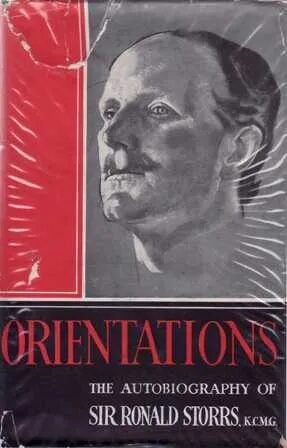
Orientations by Ronald Storrs reconstructs the life of a British colonial official whose intellectual and administrative reach spanned Egypt, Palestine, and Cyprus during the height of the British Empire. The book, first published in 1937, operates as both memoir and record, detailing the intricate connections between imperial governance, cultural diplomacy, and the shifting politics of the early twentieth-century Middle East. Storrs writes as an insider who built his career within the imperial machine yet maintained a scholar’s curiosity and a humanist’s skepticism. His experiences form a layered portrait of empire as an enterprise of persuasion, misunderstanding, and fragile authority.
Early Formation and the Making of a Public Servant
Born in 1881 to an Anglican cleric, Storrs grew up within the moral certainties of late Victorian England. His childhood in Eaton Square, London, shaped a temperament defined by precision and decorum. Charterhouse and Pembroke College, Cambridge, refined his discipline and introduced him to mentors such as Thomas Ethelbert Page and Edward Granville Browne. These figures trained his mind to balance philology with diplomacy, and classical form with contemporary politics. From Browne, he absorbed a fascination for Persian and Arabic cultures, and from Page, a belief in the moral weight of language. The path from Cambridge to Cairo formed almost seamlessly, a product of intellectual ambition and the British Empire’s need for literate, tactful administrators.
Entry into Egypt and the Education of an Orientalist
In 1904, Storrs joined the Egyptian Ministry of Finance, beginning a career that would carry him from the bureaucratic corridors of Cairo to the deserts of Arabia. He observed Egypt under Lord Cromer’s supervision, when British rule operated through financial control and a rhetoric of reform. Cairo’s European and native quarters offered him a field of study: one illuminated by opera, language, and art; the other animated by markets, religion, and rising nationalism. Storrs developed fluency in Arabic and immersed himself in both the aesthetic and administrative dimensions of the East. He saw how policy, when reduced to reports and tariffs, could not account for the moral and emotional life of a population shaped by centuries of empire and faith. His friendships with figures such as Howard Carter and Harry Cust situated him at the intersection of culture and governance, where scholarship and politics overlapped.
The Challenge of Administration and the Problem of Conscience
By 1907, Egypt’s political climate had shifted under Sir Eldon Gorst, whose softer approach to governance met resistance from both Egyptian reformers and British officials. Storrs confronted the paradox of British occupation: the demand to impose order while professing respect for autonomy. His detailed portraits of Gorst, Kitchener, and the Khedive Abbas Hilmi II reveal the human texture of imperial policy—ambition tempered by fatigue, control fractured by personality. The daily work of administration exposed him to the instability beneath colonial confidence. Reports became moral tests; decrees, acts of faith. Storrs’ prose translates these pressures into narrative momentum rather than abstract complaint. He charts how small gestures—a handshake, a rumor, an unsigned letter—could tilt the balance of provincial peace.
War and the Desert Mission
When the First World War reached the Near East, Storrs’ command of Arabic and his diplomatic record positioned him for roles that merged intelligence with cultural negotiation. In 1914 he joined the efforts that shaped the Arab Revolt, working alongside T. E. Lawrence, Sir Henry McMahon, and Sharif Husain of Mecca. His diaries record journeys through Jeddah, Mecca, and the Hejaz, describing councils under desert tents and negotiations that determined the map of postwar Arabia. The book captures the immediacy of those exchanges—how every alliance rested on interpretation, every promise on translation. Storrs’ perspective on Lawrence extends beyond heroism: he depicts a mind both visionary and erratic, drawn equally to self-sacrifice and control. The Revolt, for Storrs, embodied the moral ambiguity of empire, where liberation and manipulation operated through the same channels of persuasion.
The British in Palestine and the Reconstruction of Jerusalem
After General Allenby’s forces captured Jerusalem in 1917, Storrs became its Military Governor, a position demanding both aesthetic sensitivity and political endurance. The city, emerging from Ottoman neglect, required restoration in infrastructure, sanitation, and diplomacy. Storrs founded the Pro-Jerusalem Society, which united British officers, local craftsmen, and scholars in rebuilding the urban fabric while preserving sacred architecture. His work extended from repairing the Dome of the Rock tiles to instituting systems of municipal administration that reflected British ideals of order. The narrative of this period displays his belief in beauty as a civilizing instrument. Jerusalem, for him, was a living museum whose preservation justified authority.
The Question of Zionism and the Arab Response
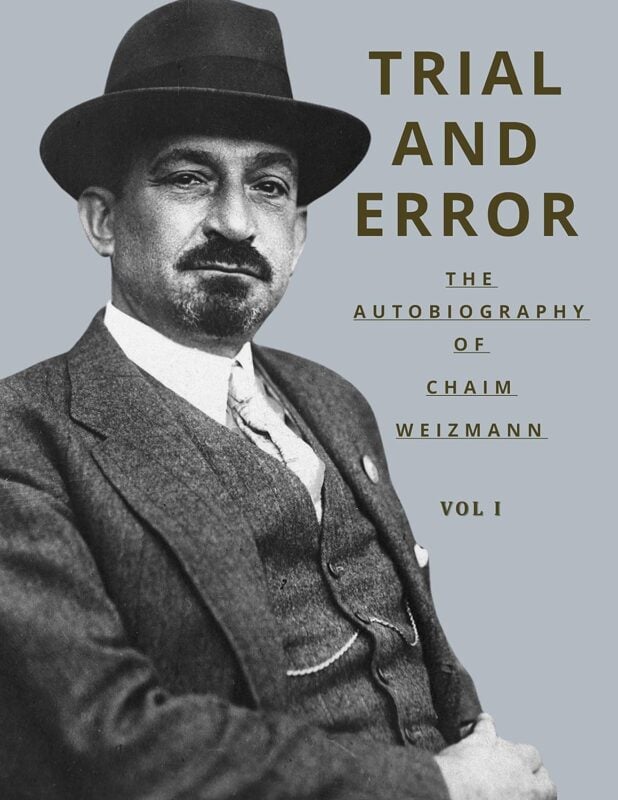
The book’s central analytical chapter, “Excursus on Zionism,” investigates the political and emotional fallout of the Balfour Declaration. Storrs presents the Zionist Commission’s arrival in 1918 as a moment of profound misunderstanding. He describes meetings with Chaim Weizmann and Arab leaders who viewed the Declaration as both a promise and a betrayal. The text enumerates the obstacles that confronted British administrators: linguistic confusion, mutual suspicion, and the pressure of world opinion. Storrs examines the internal divisions among Jews—the differences between Russian immigrants, Sephardim, and British officials—and contrasts them with the disunity among Arab notables. His account of the Wailing Wall disputes, the status quo negotiations, and the administrative correspondence with Whitehall gives the debate its human dimensions. The tone is analytical without detachment; he insists that policy must account for sentiment, because sentiment determines endurance.
Administration under Herbert Samuel and the Politics of Faith
When Sir Herbert Samuel arrived as the first High Commissioner of Palestine in 1920, Storrs continued as Governor of Jerusalem. Their cooperation produced innovations in civic planning, education, and religious diplomacy. Storrs catalogues the city’s communities—the Franciscans, the Orthodox Patriarchate, the Copts, Armenians, Anglicans, and Moslems—and the delicate balance of rights that defined their coexistence. He saw governance as orchestration, where each group retained its voice within a regulated harmony. The section detailing the restoration of Bethlehem’s silver star, the organization of Easter and Ramadan processions, and the regulation of the Holy Fire ceremony demonstrates his view of ritual as politics by other means. Jerusalem functioned as a litmus of imperial legitimacy; order in the city symbolized control across the region.
From Jerusalem to Cyprus: The Burden of Continuity
In 1926, Storrs was appointed Governor of Cyprus, entering a new arena of imperial challenge. The island, linguistically Greek and administratively British, presented a conflict of loyalties encapsulated in the demand for Enosis—union with Greece. Storrs approached the problem as a cultural governor rather than a military one, expanding education, encouraging archaeological research, and developing communications. His writing about Cyprus reveals exhaustion mixed with discipline. The tone grows introspective as he recounts the riots of 1931, the burning of Government House, and his subsequent illness. Yet he transforms these events into reflection rather than complaint. Governance becomes, in his view, a test of endurance and imagination—the ability to reconcile duty with disbelief.
The Architecture of Character and the End of Service
Storrs’ later chapters shift from public chronicle to personal essay. He examines the personalities who shaped his career—Kitchener’s authority, Lawrence’s contradictions, Weizmann’s strategic vision, Husain’s dignity in exile. He writes with precise intimacy, offering portraits that emerge from observation rather than summary. The tone of recollection fuses gratitude with critique. When describing Lawrence’s renunciation of fame or King Husain’s decline in Cyprus, Storrs constructs scenes of ethical clarity: action judged by consequence, loyalty measured by silence. The memoir culminates in an image of Lawrence lying in state, his legacy both secure and misunderstood. Through these pages, Storrs defines friendship as a moral commitment sustained by intellect.
Aesthetics, Administration, and the Idea of England
Throughout the book, art and governance remain inseparable. Storrs’ understanding of beauty extends beyond taste to include justice, moderation, and the capacity to order complexity without coercion. His efforts to revive local crafts, music, and architecture in Jerusalem and Cyprus stem from this conviction. He saw culture as policy enacted through material form. The Preface, written from Capri after the loss of his papers in a 1931 fire, emphasizes the difficulty of reconstructing memory without documents, yet his prose reconstructs atmosphere through detail—letters, sounds, and gestures. The method mirrors his administration: build coherence from fragments, recover order from ruin.
The Human Scale of Empire
Orientations accumulates power through its specificity. The book lists names, places, and incidents with archival precision—Damietta, Jeddah, Abdin Palace, Nabi Musa, Nicosia. Every anecdote carries a structural function, demonstrating how policy originates from individual temperament. Storrs measures the empire’s effectiveness by the conduct of its agents rather than its proclamations. His conclusion on English character—“the balanced poise of England, over-personal and under-departmental”—encapsulates his belief that the empire’s strength lay in personality guided by principle. When the balance shifted toward bureaucracy, vitality diminished.
The Legacy of Observation
Storrs’ memoir endures because it transforms administrative record into literature. He writes with the precision of a civil servant and the rhythm of a classicist. His sentences, shaped by Latin discipline, impose order on the flux of empire. The book serves as a record of how culture, power, and faith interacted across the early twentieth-century Middle East, but also as a meditation on the limits of governance. Its chapters build from personal experience toward historical synthesis, demonstrating how one man’s career can trace the arc of an empire’s confidence and decline. The tone remains poised, never elegiac, anchored in the conviction that observation itself constitutes service.
The Final Vision
The closing pages return to England, where Storrs contemplates a nation that has lost its equilibrium between individuality and institution. His final meditation links the personal and imperial arcs: the loss of his home and library mirrors the disintegration of the world he served. Yet he resists despair. The act of writing becomes restoration. Through memory, he reclaims continuity between the England of his youth, the Cairo of his service, and the Jerusalem of his stewardship. The book ends not with lament but with composure—a recognition that orientation, in its deepest sense, is an act of moral geography, the effort to find direction within the debris of history.
About the Book