The Holocaust Industry: Reflections on the Exploitation of Jewish Suffering
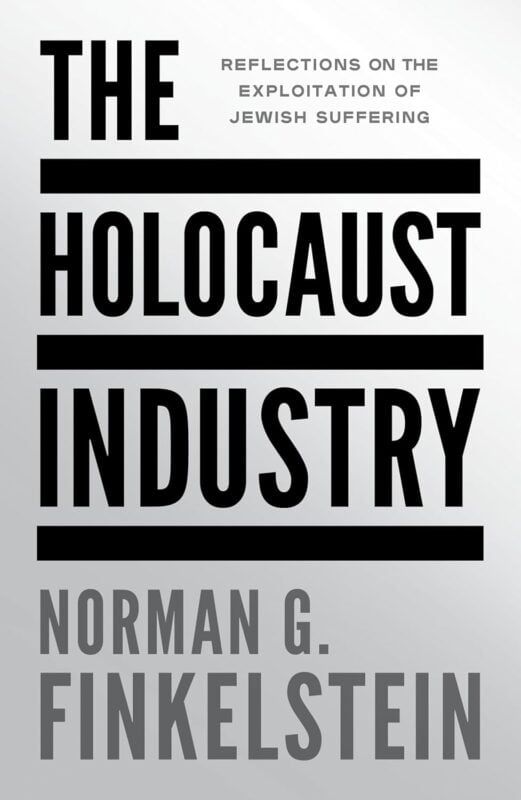
The Holocaust Industry by Norman G. Finkelstein interrogates the transformation of Holocaust memory into a political and economic instrument wielded by elite organizations. Finkelstein grounds his critique in both historical documentation and personal legacy, examining how powerful interest groups converted Jewish suffering into leverage for strategic influence and monetary gain. Through a tightly argued narrative, he exposes a network of institutions and individuals who built careers, reputations, and revenue streams through the systematic codification and exploitation of Holocaust remembrance.
A Construct of Power
Finkelstein defines "The Holocaust" not as the historical event of genocide but as a constructed ideology. This ideology functions through a set of institutional dogmas, including sacralization, uniqueness, and non-comparability. He identifies specific actors—elite American Jewish organizations and political bodies—that institutionalized this framework post-1967, particularly following Israel’s military victory in the Six-Day War. Within this system, Holocaust remembrance serves less to educate or memorialize than to validate claims of perpetual victimhood. This perceived victim status becomes a shield against critique and a mechanism to extract privileges, both political and financial.
Origins in Political Calculation
The narrative traces how the Holocaust remained peripheral in American public discourse until the late 1960s. Finkelstein reveals that American Jewish leadership, during the postwar decades, actively downplayed the genocide. The Cold War realignment with West Germany demanded silence, not memory. Jewish leaders, pursuing assimilation and influence, complied. This strategic silence lasted until geopolitical conditions shifted. With Israel's ascendancy as a regional power and strategic ally to the United States, the ideological apparatus of The Holocaust gained traction as a parallel justification for unwavering support.
Monetization of Memory
The book’s most explosive charge is the financial exploitation of Holocaust narratives. Finkelstein focuses on the restitution campaigns targeting Swiss banks and German industries, revealing how settlements often bypassed actual survivors. Legal firms and Jewish organizations collected vast sums under the guise of justice but retained disproportionate shares. Survivors received token compensation. Institutions like the Claims Resolution Tribunal, originally tasked with equitable distribution, underwent restructuring that ensured insulation from transparency. These structures favored reputational protection over restitution integrity.
Institutional Interests and Media Collusion
Finkelstein dissects the role of prominent American media in perpetuating Holocaust-centric narratives. He cites The New York Times as instrumental in over-representing Holocaust themes relative to broader geopolitical events. He connects this saturation to editorial decisions influenced by elite networks closely aligned with Zionist organizations. The result is a media landscape where Holocaust symbolism dominates discourse, often eclipsing more urgent or large-scale contemporary atrocities. Finkelstein asserts that this prioritization distorts moral frameworks and weakens the universality of human rights dialogue.
Selective Compassion and Ethnic Chauvinism
The author critiques how institutionalized remembrance excludes broader human suffering. He recounts his own upbringing as the child of survivors, noting the absence of communal interest in the Holocaust during his youth. This indifference, he argues, reveals the disingenuous nature of later commemoration. He contrasts this with his parents' consistent empathy toward other oppressed peoples, including African-Americans and Palestinians. For Finkelstein, real moral lessons from genocide lie in solidarity, not ethnic exceptionalism. The Holocaust industry, by enforcing a hierarchy of suffering, undermines that possibility.
Silencing Dissent and Redefining Antisemitism
Finkelstein explores how Holocaust memory has been weaponized against critics of Israel and dissenting voices within Jewish communities. He documents campaigns against intellectuals like Noam Chomsky and Hannah Arendt, whose work questioned prevailing Zionist orthodoxy. Organizations labeled any such challenge as antisemitic, regardless of argumentation or evidence. The term “new antisemitism” emerged as a catch-all for opposing views, effectively criminalizing legitimate political debate. This pattern created an environment where power, not principle, dictated moral legitimacy.
The Role of Cultural Production
The proliferation of Holocaust museums, memorials, and educational programs reflects more than remembrance. Finkelstein identifies these efforts as performative exercises reinforcing ethnic identity and political solidarity with Israel. He critiques the aestheticization of suffering through commercialized narratives and dramatized testimonials. This curated memory, he argues, often distorts historical accuracy and substitutes emotional manipulation for education. The real survivors, those with complex or non-heroic experiences, frequently find themselves excluded from these institutionalized narratives.
The Eichmann Trial and the Pivot of 1967
The book identifies the 1961 Adolf Eichmann trial as a pivotal moment in the elevation of Holocaust discourse. The trial broadcasted survivor testimonies globally, initiating a narrative shift. Still, it wasn’t until after 1967 that the Holocaust became central to Jewish identity in the United States. Israel’s military dominance recalibrated the strategic value of Holocaust memory. It could now buttress an image of moral legitimacy, even as Israel exercised regional military power. American Jews, previously distanced from Zionism, now rallied around Israel as a symbol of ethnic pride and strength.
Holocaust as Diplomatic Capital
Finkelstein examines how Holocaust narratives facilitated diplomatic leverage. He details negotiations with European governments where restitution became entangled with political alliances. By framing reparations as moral debts, organizations extracted significant concessions. However, these negotiations prioritized institutional gain over survivor welfare. He presents documented cases where funds designated for victims were funneled into general budgets of powerful organizations, while survivors remained in poverty. The Holocaust, in this schema, became a financial asset—a currency in international relations.
Redemptive Closure and Historical Integrity
The book closes by arguing for the moral recovery of Holocaust history. Finkelstein calls for dismantling the ideological scaffolding and restoring the event as a moment of shared human catastrophe. He urges readers to reject the dogmas that restrict comparative suffering and to embrace the Holocaust’s universal implications. This means acknowledging other genocides and confronting injustice without bias. He demands transparency in restitution, honesty in education, and courage in critique. He positions historical integrity not as a scholarly concern but as a moral imperative.


About the Book