Palestine in Israeli School Books: Ideology and Propaganda in Education

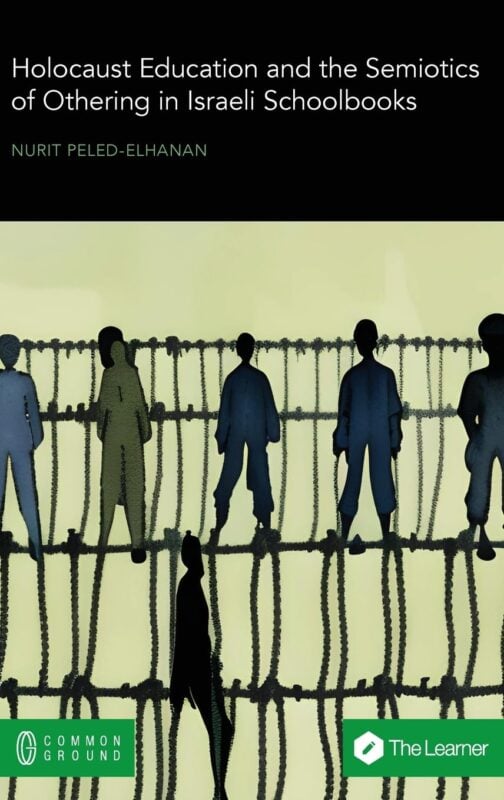
Palestine in Israeli School Books by Nurit Peled-Elhanan investigates how educational texts shape national identity and political ideology within the Israeli context. Drawing from decades of Israeli history, geography, and civics textbooks, the author dissects the mechanisms through which state-sponsored narratives reinforce Jewish ethnonational identity while erasing or demonizing Palestinian existence. The book does not merely analyze content but exposes the pedagogical and political strategies that direct educational production.
Textbooks as Agents of the Ethnocratic State
Israeli school textbooks serve as ideological instruments of the ethnocratic structure. Peled-Elhanan defines ethnocracy as a regime that privileges one ethnic group in its legal, territorial, and cultural policies. Textbooks construct Israel as a Jewish state not through neutrality but through strategic representations of space, identity, and history. They do this by aligning geographic depictions with political goals—merging the West Bank into Israel, labeling it “Judea and Samaria,” and omitting the Green Line. These textual and cartographic strategies claim contested territory through visual facticity.
Curricula authorize these messages under state oversight. Approval mechanisms ensure alignment with Zionist ideology, subordinating pedagogical content to nationalist imperatives. Disciplinary boundaries collapse as history becomes myth, geography becomes politics, and civics becomes loyalty instruction.
Historical Narratives and the Cult of Continuity
Textbooks teach history as memory, anchoring Jewish identity in a seamless timeline from biblical antiquity to modern sovereignty. This “cult of continuity” connects current statehood with mythic ancestry. Events like the Maccabean revolt, Holocaust, and 1948 war appear in a continuum of Jewish struggle and redemption. Visuals and stories render historical complexity into emotionally resonant archetypes—Jewish heroes vs. external enemies.
Palestinians appear in this narrative only as antagonists or absences. Their history vanishes between biblical past and Zionist present. The land, imagined as empty or misused, awaits Jewish reclamation. Trees planted by schoolchildren on “Tree Day” symbolically overwrite Arab presence. Such rituals convert historical displacement into national virtue.
Construction of the Palestinian Other
Peled-Elhanan demonstrates that textbooks produce a consistent Palestinian image: violent, irrational, backward, and demographically threatening. They exclude Palestinian cultural, social, and intellectual life. When Palestinians do appear, it is as anonymous mobs, terrorists, or obstacles to peace. The absence is structural. Palestinian citizens of Israel rarely receive representation as legitimate participants in state life. Palestinian national identity, especially the Nakba, is censored or criminalized through legal instruments such as the Nakba Law.
These portrayals function as security discourse. By embedding threat perception into educational content, the state prepares students not just for citizenship but for military service. Schoolbooks do not merely describe Palestinians—they encode the justification for containment, control, and colonization.
Multimodal Analysis of Textbook Structure
The book applies social semiotics to reveal how text and image jointly transmit ideology. Page layouts prioritize dominant narratives through framing, typography, and color. Salient “source windows” appear in sidebars, guiding interpretation without debate. These windows often include testimonies, maps, quotes, and data points selected to reinforce central themes. The main narrative text, when interspersed with these authoritative signals, becomes less a forum for inquiry and more a guided tour through sanctioned belief.
This structure resists plurality. Intertextuality—where texts refer to and transform other texts—is controlled. Quotations from Palestinian or critical Israeli historians, when included, appear undercut or are selectively omitted in revisions. Even “progressive” textbooks, authored by historians with liberal reputations, re-inscribe Zionist myths through strategic silences.
Geography as Political Tool
Israeli geography textbooks frame the land not as a shared or contested space but as the territorial embodiment of Jewish destiny. Maps collapse temporal boundaries, merging ancient kingdoms with modern political claims. Settlement expansion, portrayed as natural growth, appears alongside biblical references. The absence of Palestinian towns and the depiction of settlements as normalized spaces removes ambiguity.
Peled-Elhanan shows that geography does not describe landscape but constructs national space. The goal is not spatial literacy but territorial identity. Lessons direct students to “know and love our land,” translating emotion into land claims. Geography becomes an affective discipline—one that binds map to myth.
Discourse of Identity and Exclusion
Identity in Israeli textbooks derives from alignment with collective memory. Students encounter Jewishness as destiny and duty. The question “Who is a Jew?” arises not from personal belief but from ideological positioning. Jewish identity converges with state loyalty, military service, and historical inheritance.
Arab identity, in contrast, appears as problem. Demographic growth is labeled threat. Citizenship is framed in conditional terms. The Nakba, the foundational trauma of Palestinian identity, is rendered unspeakable. The book demonstrates that educational texts institutionalize difference through invisibility and delegitimization.
By defining inclusion through ideological terms, the textbooks naturalize exclusion. Textbook authors, guided by curriculum standards, act not as historians but as pedagogical engineers. They do not merely recount—they construct.
Ideological Recontextualization and Policy Control
Textbooks are recontextualized texts—products of disciplinary content transformed to fit political objectives. Peled-Elhanan emphasizes that the process of recontextualization involves deletion, substitution, and emphasis. Content selection is ideological. Ministry-approved books undergo annual revisions, with content shifts reflecting government changes. Progressive content, such as reference to “ethnic cleansing,” is removed or replaced with state-sanctioned terms like “organized expulsion.”
The process is not neutral. Every deletion erases history. Every substitution recodes meaning. The control over textbooks reflects deeper state mechanisms for shaping collective consciousness. Authors do not operate freely—they function within a regime of acceptability, where deviation invites suppression.
Educational Systems as Memory Engines
The state uses education to anchor collective memory. Memory in this context does not denote recall—it denotes narrative. Peled-Elhanan draws on theorists like Wertsch and Nora to explain how nations institutionalize usable pasts. Textbooks do not teach history as inquiry. They transmit myth as continuity. They sustain group identity by affirming what must be remembered and by excising what must be forgotten.
This pedagogy constructs loyalty. It recruits the student into the state’s interpretive community. It builds coherence through sameness, and coherence becomes identity. The cost is plurality. The cost is truth.
Visual Erasure and the Role of Design
Visual design functions ideologically. The absence of Palestinian cities from maps, the portrayal of settlers in pastoral scenes, and the use of biblical iconography all shape perception. Students absorb geography not through neutral data but through images encoded with values. The land becomes a symbol, and its rightful stewards are those presented within the frame.
Textbook visuals do not illustrate—they persuade. They bypass critical engagement and deliver visceral affirmation. This is not incidental. It reflects deliberate design.
From Representation to Mobilization
Textbooks prepare students not just for tests but for national service. They bridge education and militarization. The enemy is known before uniform is worn. Palestinian identity, preemptively delegitimized, becomes target before any confrontation. Peled-Elhanan shows that the textbook’s role is neither benign nor academic—it is strategic.
This mobilization occurs through narrative structure, visual messaging, and policy enforcement. It trains minds to see division, to valorize one group, and to fear the other.
Implications and the Need for Pedagogical Reform
Peled-Elhanan calls attention to the urgency of educational reform. The Israeli-Palestinian conflict cannot move toward resolution while its roots are reinforced daily in the classroom. Recognizing the role of textbooks in shaping perception opens space for intervention.
Reform must begin with representation. Palestinian history, culture, and identity require presence in educational discourse. Maps must reflect political realities. History must invite inquiry. Geography must teach coexistence. Pedagogy must prioritize multiplicity.
Where the book ends, the challenge begins. How can a society unlearn its own mythology? How does a system trained to remember selectively begin to see? The stakes are historical. The outcome is generational.
About the Book
https://www.youtube.com/watch?v=rXs1zkvHDGc