Holocaust Education and the Semiotics of Othering in Israeli Schoolbooks
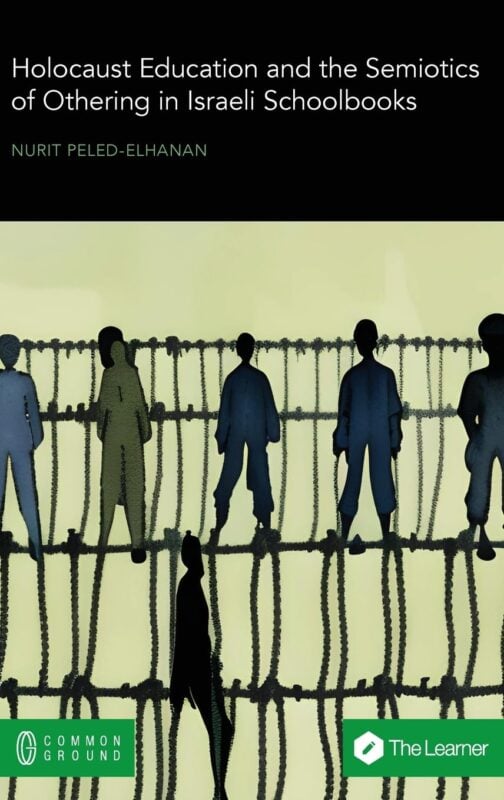
Holocaust Education and the Semiotics of Othering in Israeli Schoolbooks by Nurit Peled-Elhanan investigates how Israeli educational materials encode ideologies of victimhood, power, and exclusion through visual and textual representations of the Holocaust, Palestinian Arabs, and non-European Jews.
The Holocaust as a Pedagogical Apparatus
Israeli schoolbooks frame the Holocaust as the defining trauma of national consciousness. This framing operates through images of suffering, standardized icons, and categorical depictions that deny individual victim subjectivity. Textbooks extract photographs from Nazi archives and repurpose them to authenticate Zionist narratives, positioning the Holocaust as the moral rationale for national rebirth and perpetual vigilance. Schoolchildren encounter these decontextualized visuals alongside directives that encourage viewing victims as representative types, such as “the hungry,” “the labeled,” or “the hanged.” The design compels students to classify rather than empathize.
A ritualized activity called “Name and Candle” instructs children to adopt a Holocaust victim, construct a personal profile, and light a commemorative candle. However, the curriculum offsets this affective practice with a barrage of disturbing images and analytical questions that reinforce distance, objectification, and abstraction. The inspector general's stated aim to “punch the children in their guts” reveals the pedagogical intention: shock produces loyalty. The lessons do not animate individual histories but instead reinforce the existential necessity of the state.
The Zionist Doctrine of Selective Memory
David Ben Gurion’s early declarations shaped the state’s foundational attitudes toward Holocaust victims. He dismissed survivors as morally inferior, blaming their weakness for their fate. He did not regard them as builders of the new Israeli citizen but as reminders of the kind of Jew Israel must overcome. In official rhetoric, Holocaust victims became a collective emblem of vulnerability, useful only insofar as they warned against repeating a perceived passivity. Israeli children are taught to remember the Holocaust not to mourn the dead but to fear a future without a powerful army or sovereign state. In this formulation, Holocaust remembrance justifies current militarism.
This narrative permeates school excursions to former extermination camps, where students draped in Israeli flags perform ceremonies that collapse mourning into national affirmation. Military flyovers and anthem singing signal the conflation of memory with force. The educational message reduces historical analysis to an ideological imperative: remember in order to defend.
Victimhood as a Template for Power
Textbooks adopt a rhetoric that positions Israeli Jews as perpetual victims whose survival mandates dominance. Drawing on Dominick LaCapra’s theory of “acting out” versus “working through,” the curriculum cultivates repetition of trauma rather than critical reflection. The past becomes a source of emotional armor rather than ethical inquiry. Empathy dissolves under the pressure of inherited fear, as textbook narratives insist that Jewish safety depends on military strength and demographic supremacy.
This rhetoric reaches its apex in depictions of Palestinians. Schoolbooks transpose the Holocaust's imagery onto the Arab population, casting them as future exterminators. This visual and textual Nazification merges the political with the existential. Palestinians appear not as adversaries in a territorial conflict but as enemies in an apocalyptic frame. The past and future collapse into one narrative of threat.
Pedagogies of Fear and Demographic Control
Israeli textbooks articulate a worldview rooted in existential insecurity. The dominant message asserts that the Jewish people remain in a constant state of siege, whether physically or culturally. Fear functions as the ideological engine of the curriculum. It justifies the occupation, demonizes Palestinians, and marginalizes Jews from Muslim countries. Textbook language links demographic balance to national survival, expressing anxiety over ethnic purity and cultural cohesion.
Mizrahi and Ethiopian Jews, portrayed as culturally deficient, fill the demographic void left by the Holocaust’s victims but never receive full symbolic integration. Textbooks represent these communities through images of backwardness, poverty, and religious conservatism. These Jews are not considered partners in nation-building but as subjects of acculturation. The educational narrative treats them as raw material in need of transformation into Westernized Israeli citizens.
Textbooks erase the histories and cultures of non-European Jews, reducing them to folklore and juxtaposing their supposed primitiveness against the idealized Israeli “Sabra.” In this schema, Eastern Jews must forget their origins and assimilate into a Eurocentric model that defines the national identity.
Racial Taxonomies of Belonging
Ashkenazi Jews, aligned with Western rationalism and military discipline, dominate the representational field. Ben Gurion and successive leaders conceived of Israel as a Western outpost. Schoolbooks reinforce this identity by marginalizing those who deviate from it. The educational system embeds a racial logic in its visual and narrative structures, portraying non-Western Jews as burdens to be cultivated or managed.
Official correspondence from senior educational figures explicitly defends this worldview, asserting that the state's Western orientation requires resisting a “false and artificial feeling of equality.” Schoolbooks mirror this perspective, delineating social worth through origin, culture, and compliance with the dominant ethos.
Palestinians as the Ultimate Other
Textbooks construct Palestinians not just as political adversaries but as ontological threats. They appear as violent, irrational, and fanatical figures locked in a timeless hatred of Jews. The Holocaust provides the frame: just as Jews faced annihilation in Europe, so too must they defend against Arab attempts to destroy them. This analogy operates not as metaphor but as structural doctrine.
Ben Gurion’s early assertion that reparations from Germany were necessary to avoid slaughter by “Arab Nazis” anchors this logic in statecraft. In educational materials, Palestinian resistance to occupation becomes a form of genocidal intent. The historical specificities of the Nakba and the Intifadas disappear under a narrative that foregrounds Jewish vulnerability and Arab barbarism.
Narrative Authority and the Politics of History
The official pedagogical narrative denies historical agency to those it classifies as “others.” Holocaust victims, Palestinian citizens, and non-European Jews are represented not as individuals but as case studies or pathologies. Their stories are stripped of causality and reduced to functions within a larger national myth.
The textbook layout—its images, captions, and reading paths—structures student engagement through categories rather than contexts. The multimodal design reinforces hierarchies of knowledge and authority. Questions prompt taxonomic thinking: identify, compare, classify. The act of learning becomes a process of internalizing the state’s ideological order.
Proposing a Polycentric Curriculum
Peled-Elhanan calls for a dismantling of the nationalist historiography that underpins current education. She advocates for a joint narrative framework built on the principles of multidirectional memory. This approach, drawing on Michael Rothberg’s theory, emphasizes interaction between different historical traumas—Holocaust, Nakba, slavery, colonialism—and cultivates ethical reflection rather than defensive identification.
A polycentric curriculum would foreground diverse voices, promote dialogic engagement, and reject the fetishization of suffering as a source of national cohesion. It would treat the Middle East not as an arena of hostility but as a shared cultural and historical landscape. In this vision, education becomes a site of solidarity and mutual recognition rather than ideological reproduction.
Restructuring Memory, Rethinking Identity
The book situates its critique within a rigorous methodological framework, using social semiotics and multimodal discourse analysis to reveal how textbook signs operate within broader systems of meaning. It identifies the rhetorical and design strategies that shape student perception and aligns them with the political objectives of state education.
By interrogating the semiotic architecture of textbooks, Peled-Elhanan uncovers the ideological scaffolding that supports exclusion, militarism, and racial hierarchy. The analysis does not merely expose flaws; it offers a blueprint for reimagining history education as a pluralistic, humane enterprise grounded in critical inquiry and ethical responsibility.
Memory serves as both mirror and mold in national identity formation. Peled-Elhanan’s work confronts the ways in which that mirror distorts and that mold confines. Her call for a restructured curriculum demands not only new content but a fundamental shift in the educational purpose—one that embraces complexity, fosters empathy, and prepares students to engage with history as active participants in a shared human story.

About the Book
https://youtu.be/rXs1zkvHDGc?si=jnYTh4ToFQue0Fdc