The Seventh Million: The Israelis and the Holocaust

The seventh million by Tom Segev investigates how the Holocaust shaped Israeli national identity, politics, and culture, tracing decisions made in the shadow of unprecedented trauma. Drawing from declassified archives, interviews, and personal diaries, Segev maps a complex interplay between memory, ideology, and historical legacy. He demonstrates how the Holocaust became not only a defining event for the Jews who survived but a foundational narrative for the state that received them.
The German Arrival in Palestine
The pre-state Jewish community, the Yishuv, experienced the rise of Nazism through fragmented reports and ideological filters. When German refugees—called "Yekkes"—arrived in the 1930s, Zionist leaders saw them through a lens of practicality, viewing their skills and capital as essential to building a sustainable economy in Palestine. The Nazis, intent on expelling Jews, found common ground with the Zionist goal of Jewish immigration to Palestine. This convergence produced the Haavara Agreement, a financial mechanism allowing Jews to emigrate with capital by purchasing German goods that were later sold in Palestine.
Zionist leaders framed this transaction as urgent necessity. David Ben-Gurion and others prioritized building the future homeland over participating in a broader anti-Nazi boycott. The political cost proved significant. Accusations of moral compromise divided the Zionist world. Revisionist leader Ze'ev Jabotinsky decried the arrangement, escalating political tensions that culminated in the assassination of Haim Arlosoroff, one of the negotiators. The deal, operational until World War II, enabled about 20,000 Jews to relocate, shaping demographic and economic structures in the emerging Jewish state.
Narratives of Heroism and Shame
As Holocaust survivors began arriving in Palestine, they encountered a society fixated on the image of the “new Jew”—resilient, self-reliant, militarily capable. Survivors, with their stories of victimization, often contradicted this ethos. Instead of celebration, they faced suspicion, pity, or outright disdain. The state honored partisans and ghetto fighters, creating a selective memory that elevated resistance over survival.
This prioritization produced a collective discomfort with the broader survivor population. School curricula, public speeches, and cultural productions focused on heroic resistance while minimizing the realities of mass death and helplessness. Survivors internalized shame, hesitating to share their stories. Many concealed tattoos or avoided discussing their experiences, reinforcing a silence that persisted for over a decade.
Reparations and the Question of Justice
In the early 1950s, the Israeli government negotiated reparations with West Germany. The agreement, while crucial to stabilizing Israel's economy, ignited fierce internal opposition. Demonstrations framed the talks as a betrayal of Jewish honor. Protesters viewed accepting German money as equivalent to pardoning genocide. Yet Ben-Gurion insisted that reparations were not only justified but necessary for national survival.
The funds transformed Israel’s infrastructure. They financed transportation networks, power plants, and industrial development. More than monetary, the agreement symbolized Israel’s strategic orientation. It chose pragmatic engagement over moral absolutism, a pattern Segev reveals as recurrent throughout Israeli history.
The Kastner Controversy
In 1954, the trial of Malchiel Gruenwald for libel against Rezső Kastner exploded into a national scandal. Kastner, a Zionist official, had negotiated with Adolf Eichmann to save a select group of Hungarian Jews during the Holocaust. Gruenwald accused him of collaboration, alleging that Kastner’s silence about Auschwitz doomed thousands. The court ruled that Kastner had indeed "sold his soul to the devil," igniting public fury.
The government appealed and later reversed the verdict, but not before Kastner was assassinated. Segev positions this affair as a rupture in Israeli memory politics. The trial forced a confrontation with the murky realities of survival, choice, and sacrifice under Nazi terror. It questioned who had the right to act and who bore the burden of guilt.
The Eichmann Trial as National Therapy
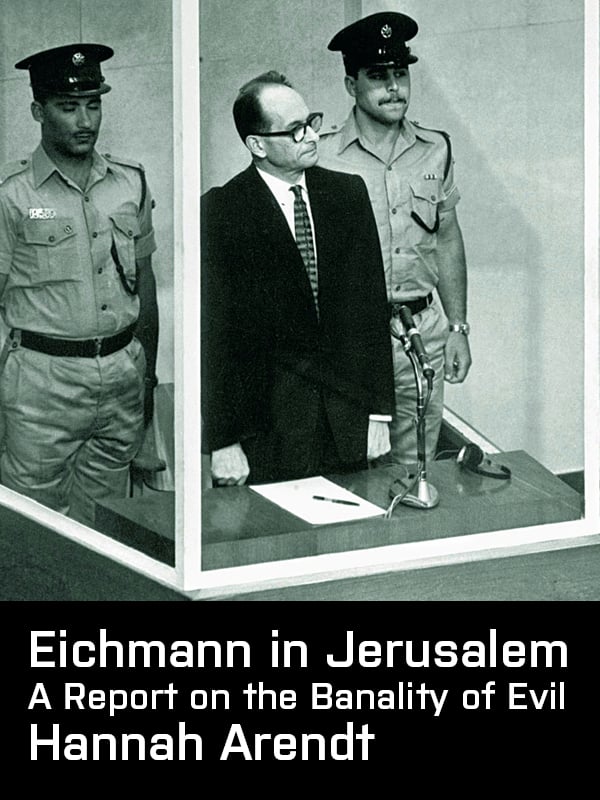
The 1961 capture and trial of Adolf Eichmann in Jerusalem shifted the national discourse. Televised testimony from hundreds of survivors created a collective moment of reckoning. For the first time, Israelis widely heard stories of humiliation, starvation, and murder. The courtroom became a stage for integrating Holocaust memory into national identity.
Segev shows how the trial functioned as psychological release. Survivors found validation. The public, long shielded from the emotional depth of the Holocaust, began to engage with its implications. The state, previously ambivalent, endorsed remembrance as patriotic duty. Museums expanded, curricula changed, and commemorative rituals gained prominence.
The Lingering Divide Between Survivor and State
Despite increased visibility, survivors continued to struggle with poverty, mental illness, and marginalization. Bureaucratic hurdles delayed compensation. Medical institutions often misdiagnosed trauma as personal weakness. Segev details the rise of psychiatric understanding of “KZ syndrome,” a term used to describe the long-term psychological damage inflicted in camps. Treatment remained inconsistent, and stigma persisted.
Official ceremonies celebrated heroism, but daily life offered little support. Survivor associations emerged to advocate for rights, education, and public acknowledgment. Through grassroots pressure, they gradually reshaped the national narrative. Public opinion evolved, but institutional inertia slowed tangible change.
Memory as Political Instrument
Segev demonstrates how Holocaust memory became politically instrumental. Leaders invoked it to justify security policies, diplomatic strategies, and cultural directions. The memory of extermination underpinned arguments for nuclear deterrence, border security, and military preemption. During conflicts such as the Six-Day War, rhetoric linked survival in battle to survival in Europe’s ghettos.
This instrumentalization often blurred historical understanding. Simplified analogies replaced complex memory. Politicians drew on Holocaust imagery to rally support or suppress dissent. Museums and textbooks sometimes favored emotional impact over historical precision. Segev criticizes this trend as reductive, warning that such use risks distorting the very lessons the memory seeks to preserve.
Shivitti and the Aftermath of Trauma
The book returns to the story of Yehiel De-Nur, also known as Ka-Tzetnik, whose literary works captured Auschwitz as a parallel universe. De-Nur’s collapse during the Eichmann trial became symbolic of suppressed national trauma. His later LSD-assisted therapy in the Netherlands, detailed in his book Shivitti, revealed the depth of his internal torment and his eventual synthesis of identity.
De-Nur’s journey paralleled Israel’s. His therapeutic breakthrough—that the capacity for evil resided in all humans—challenged simplistic moral binaries. He concluded that Auschwitz was not alien but human. This realization, Segev argues, is central to a mature engagement with the Holocaust.
The Legacy of the Seventh Million
Segev defines the "seventh million" as those who survived and reshaped Israeli society with their presence. Their journey from marginalization to recognition tracks the nation’s evolving relationship with its past. They entered a country unprepared to understand them. Through decades of advocacy, storytelling, and resilience, they transformed collective consciousness.
Their legacy remains contested. In politics, media, and education, debates over how to remember continue. Segev emphasizes that this struggle reflects deeper questions about justice, belonging, and the responsibilities of statehood. As time distances Israel from the events of the Holocaust, the choices made about memory will define the country’s moral and historical trajectory.

About the Book