The Ideology of Tyranny: Bataille, Foucault, and the Postmodern Corruption of Political Dissent
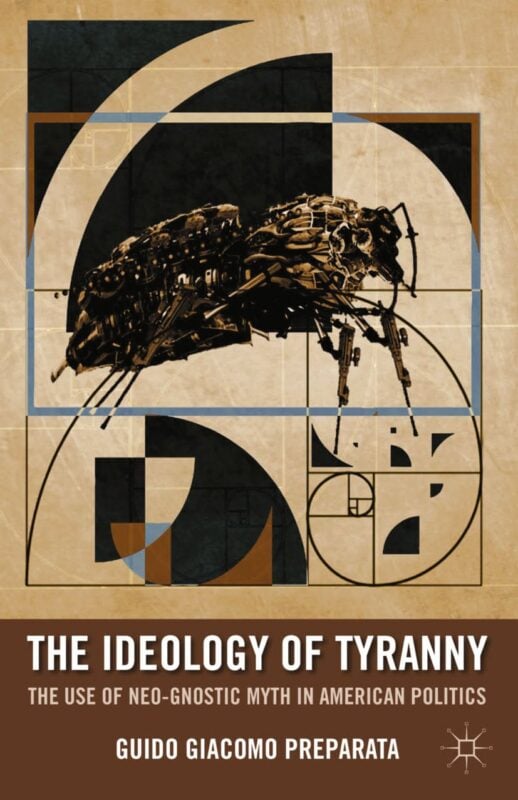
The Ideology of Tyranny by Guido Giacomo Preparata dissects how American political culture internalized a reengineered version of European postmodern thought, transforming it into a mechanism of control rather than a tool of dissent.
The Mythological Engine of Political Control
Preparata begins by locating the intellectual source of the American Left’s collapse within the esoteric writings of Georges Bataille and their academic rehabilitation by Michel Foucault. Bataille’s project centered on a modern revival of Gnostic myth, channeling ancient religious rituals into a theoretical construct that deified violence, eroticism, and sacrifice. Foucault distilled this mythic grammar into a coherent doctrine of “Power/Knowledge,” and American academics adopted it as a liberatory framework. Preparata shows how this myth, stripped of its original sacred ferocity, found a second life in university departments and media discourse. What function does such a mythology serve in contemporary political life? It arrests unity. It dismembers ideology into fragments. It proliferates conflict without resolution.
From Transgression to Pedagogy
Foucault reimagined Bataille’s sacrificial cosmos as a structure of surveillance and subversion. The prison, the clinic, the school—all became theaters of coercion. Yet in translating these metaphors for American audiences, educators codified a new curriculum rooted in relativism. By sacralizing multiplicity and disavowing universal values, postmodern pedagogy recast learning as cultural dissection. Instructors encouraged students to interrogate identity markers—race, gender, sexuality—not as shared coordinates for emancipation but as irreducible differences. Political correctness emerged not from humanitarian aims but from ritualized antagonism. The academy ceased to challenge institutions of power and began to mirror them through ideological reproduction.
Postmodernism’s Institutional Trajectory
Preparata tracks the consolidation of this philosophy within American public discourse. Institutions once tasked with nurturing critical thought adopted the rhetoric of marginality as policy. Bureaucracies, universities, and think tanks restructured their communications around inclusion not to repair social rifts but to perpetuate division. Where did postmodernism gain such authority? Preparata locates the answer in its ritualistic appeal. Postmodern discourse sanctifies disorder while providing no escape from it. It simulates resistance without confrontation. This cycle neutralizes dissent because it celebrates difference without reconciliation, dissent without direction, critique without program. The result is paralysis framed as progress.
The Left's Drift into Symbolic Resistance
By the time postmodernism had saturated American academia, the Left no longer articulated systemic critique. Instead, it splintered into identity-based movements. These fragments lacked unifying principles. Feminism, ethnic studies, and queer theory began as demands for justice but were soon recoded as expressions of epistemic otherness. Preparata documents how this shift facilitated the absorption of these movements into the ideological framework of the very state they once opposed. They spoke the language of marginality while operating within institutional cores. Why did these movements capitulate? Because their philosophical foundation in Foucault’s neo-Gnosticism disavowed structure, hierarchy, and truth. The Left became a priesthood of specialists in fragmentation.
The Neoconservative Convergence
Preparata reveals a startling convergence between the American Right and its postmodern adversaries. Neoconservatives such as Leo Strauss and Francis Fukuyama mirrored Bataille’s belief in necessary violence and the mythic foundations of politics. The same sacrificial logic animated both ideologies: the necessity of war, the ennobling power of destruction, the mystique of order born from chaos. Preparata does not treat this convergence as a coincidence. He uncovers shared philosophical roots. Both the Neoconservative Right and the postmodern Left reject transcendence. Both define politics as the management of instability. Both deploy myth to sanctify their worldviews. Power becomes the central sacrament, and language its most potent liturgy.
Post-9/11: The Discourse of Consensus
In the aftermath of 9/11, the alignment between postmodern discourse and state propaganda intensified. Foucault’s concept of dispersed, decentered power mirrored official narratives of terrorism as networked, fluid, and omnipresent. The War on Terror, framed through postmodern metaphors, adopted the language of resistance to justify domination. Hardt and Negri's Empire, lionized by academics, rephrased geopolitical hegemony as an inevitable result of decentralized globalization. Preparata highlights how dissent collapsed under this consensus. The Left failed to mount an ethical or strategic challenge to American foreign policy because its own conceptual tools had been co-opted. Terrorism, surveillance, occupation—these became subjects of theoretical exploration, not moral outrage.
The Myth of Multiplicity
Postmodernism depends on the rejection of universals. Preparata challenges this epistemological premise by showing how the denial of common ground enables domination. Without shared truths, justice becomes a private fantasy. Without common cause, resistance becomes performance. Preparata demonstrates how the institutional promotion of difference obstructs political unity. Policies framed as inclusive serve to segregate. Discourses of liberation reinforce hierarchy by multiplying grievances without connecting them. Diversity becomes doctrine. Multiplicity becomes mandate. The political subject fractures into sub-identities, each competing for recognition, none advancing solidarity.
The Foucauldian Ruse
What does Foucault offer the American state? A vocabulary of rebellion that deflects rebellion. Preparata identifies this as the strategic value of Foucauldian discourse: it converts transgression into spectacle. Surveillance becomes a cultural metaphor rather than a policy to dismantle. Power becomes a theoretical abstraction rather than a structure to resist. Preparata maps the genealogy of this rhetoric back to Bataille, whose mysticism of violence found expression in Foucault’s sociology of control. The Left inherited these myths without interrogation. They built pedagogies on aesthetics of rupture. They chanted resistance without building coalitions.
The Death of Compassion
Preparata centers compassion as the missing element in postmodern politics. He contends that true dissent requires a moral compass, a belief in justice as more than a cultural construct. The postmodern Left, by renouncing transcendence, also renounced empathy. Identity became ontology. Politics became grammar. The possibility of universal compassion disappeared from theory and practice. Preparata revisits Thorstein Veblen’s vision of social reform as a humane alternative. He proposes a return to compassionate dissent, rooted in systemic critique and solidarity, as the only viable path forward.
Postmodernism as the Ideology of Tyranny
Preparata concludes that postmodernism functions as the new ideological armature of authoritarian governance. Its exaltation of multiplicity, relativism, and symbolic resistance creates a political culture devoid of strategic coherence. It divides, distracts, and disables. The embrace of Foucault by American educators, journalists, and policymakers represents not a victory of critical theory but its defeat. Preparata asserts that the ideology of tyranny thrives under the banner of tolerance. He calls for a radical reevaluation of intellectual allegiance, a break with the postmodern priesthood, and a rearticulation of dissent grounded in shared humanity and structural clarity. Tyranny persists when critique becomes a ritual. It recedes only when language regains its ethical spine.