The Wise Men: Six Friends and the World They Made
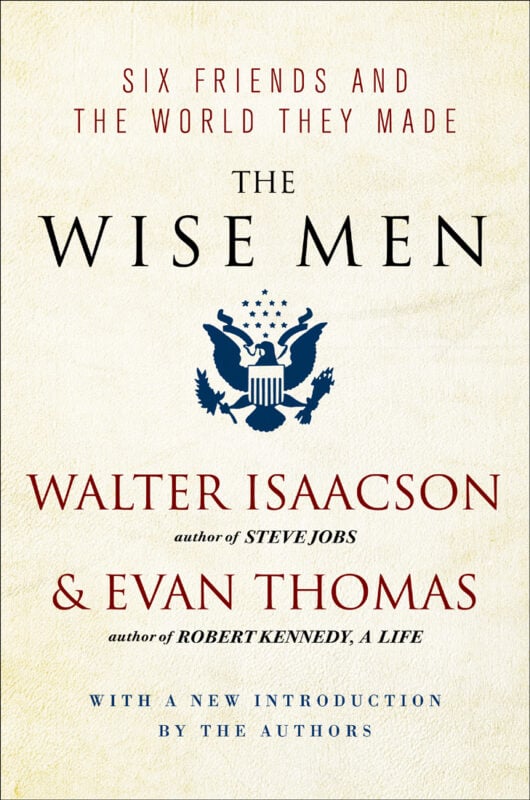
The Wise Men: Six Friends and the World They Made by Walter Isaacson and Evan Thomas reconstructs the emergence of the American world order through the intertwined lives and careers of Averell Harriman, Robert Lovett, Dean Acheson, John McCloy, George Kennan, and Charles Bohlen. These statesmen, molded by elite backgrounds and elite education, navigated America’s passage from isolation to global dominance, forging institutions and policies that shaped the postwar landscape.
Origins of the American Century
Inherited wealth and expectation set the trajectory for Averell Harriman, who absorbed lessons of duty and ambition in the shadow of his father’s railway empire. From the lakeside training of private rowing coaches to Groton’s disciplined regimen, Harriman’s childhood embedded the ethic of noblesse oblige. Early experience with Russian diplomacy during his father’s expeditions foreshadowed his future engagement with the Soviet Union. The Harriman family treated wealth as a tool for power and reform, turning Arden, their estate, into a laboratory for American resourcefulness and social responsibility.
The parallel upbringing of Robert Lovett, whose partnership with Harriman extended from Yale’s Skull and Bones to Wall Street’s most powerful banking houses, positioned him at the administrative core of the War Department and later the State Department. Dean Acheson, the son of a Connecticut bishop, brought fierce intellectual rigor honed at Harvard Law, infusing U.S. foreign policy with analytical precision and creative force.
From Exclusive Networks to National Service
The Wise Men’s rise unfolded within tightly knit social networks rooted in elite prep schools and exclusive clubs. Membership in these circles did not solely rest on birthright. Meritocratic inclusion, fostered by mentors like Henry Stimson and Elihu Root, granted access to outsiders such as McCloy, a self-made lawyer who rose to global prominence as High Commissioner for Germany and president of the World Bank. These networks bridged Wall Street, government, and think tanks, threading together public service, private ambition, and national mission.
These men conceptualized leadership as both privilege and obligation. Their American Century vision drew inspiration from European diplomatic traditions and a belief in the moral destiny of the United States. Service became both calling and creed, reinforced by the camaraderie and rivalry among themselves.
Formulating Postwar Strategy
World War II catalyzed the convergence of these figures at critical junctures of strategy. Harriman, as Roosevelt’s envoy, negotiated with Churchill and Stalin, absorbing the complexities of Soviet power. Lovett and McCloy administered wartime logistics and the expansion of air power. Bohlen and Kennan, stationed in Moscow, synthesized intelligence and insight into cables that began shaping official attitudes toward the USSR.
The experience of occupation, alliance management, and early confrontation with the Soviets drove them to articulate the doctrine of containment. Kennan’s Long Telegram and anonymous “X” article distilled the challenge of Soviet expansionism into a conceptual framework, rapidly adopted by policymakers seeking order in the emerging bipolar world.
The Marshall Plan and Institutional Creation
As Europe teetered on economic collapse and political chaos, the Wise Men orchestrated the Marshall Plan, linking economic reconstruction to the broader project of safeguarding democratic institutions. They engineered bipartisan support by engaging influential senators and deploying a narrative of moral and pragmatic necessity. In their view, American prosperity depended on the restoration of global markets, but security required stable, free societies on both sides of the Atlantic.
Through the National Security Act, NATO, and the Bretton Woods institutions, the Wise Men embedded American power in a network of alliances and agencies. Their efforts forged a durable architecture for the Cold War order, institutionalizing the principle that U.S. security interests converged with international stability and economic openness.
The Containment Ethic and the Limits of Consensus
The doctrine of containment defined the structure of U.S. policy, blending economic aid, diplomatic pressure, and military alliances. Acheson, as Secretary of State, translated Kennan’s analysis into actionable commitments, rallying allies and resisting calls for retrenchment. The Wise Men exercised power through direct counsel to presidents, operating from the conviction that strategic clarity and consensus offered the best defense against both Soviet aggression and domestic isolationism.
Their approach to Soviet relations mixed businesslike negotiation with hardheaded skepticism. Their firsthand encounters with Stalin’s regime eroded the belief in postwar cooperation, yet they maintained a commitment to measured responses and alliance-building rather than crusading fervor. Their advice often carried through the Oval Office to Congressional committees, shaping the policy environment with both substance and style.
The Burden of Leadership and Consequences
The decisions of the Wise Men carried profound consequences. Their orchestration of aid and alliances preserved Western Europe’s autonomy and fostered economic revival. Their policies deterred Soviet expansion into the power vacuums of the postwar world, stabilizing the international system and legitimizing U.S. primacy.
Yet their vision of the world—shaped by elite consensus and confidence—sometimes generated overreach. Their counsel underpinned American engagement in Korea and Vietnam, where the logic of containment clashed with the complexities of local realities. Their ability to build consensus, so vital in the 1940s, at times encouraged escalation and limited dissent during periods of crisis. The structures they established outlived their creators, but not all proved equally adaptable to new conditions.
Legacy in the Modern Era
The social order that enabled the Wise Men’s dominance waned in the decades after their greatest influence. The rise of the meritocracy, the proliferation of policy professionals, and the diffusion of authority within government shifted the nature of decision-making. No longer do informal networks of friends and rivals wield near-total influence over statecraft. Regulatory and political barriers complicate the movement between private wealth and public power, disincentivizing the sort of government service that once attracted Harriman and Lovett.
Yet the institutional framework these men designed remains central to global affairs. The IMF, World Bank, NATO, and the broader Atlantic alliance structure continue to shape outcomes from financial crises to security challenges. The containment ethic echoes in contemporary debates over intervention, alliance management, and democracy promotion. The world that emerged from their choices persists in the ongoing convergence of economic, political, and military interests across continents.
Human Character at the Heart of Strategy
Isaacson and Thomas illuminate the inner lives of their subjects, drawing on personal correspondence, private journals, and family interviews. The narrative builds tension not merely through events but through the relationships and ambitions that drove these men. Harriman’s sober detachment, Acheson’s wit and brilliance, Lovett’s backstage mastery, Kennan’s tormented intellectualism, Bohlen’s diplomatic tact, and McCloy’s confidence in institutions—each contributed distinct strands to the postwar fabric.
Peer influence and the pressure to conform shaped their deliberations. Dialogues among friends and rivals often produced the policies that defined an era. The narrative reveals how the pressures of office, the desire for approval, and the struggle to balance principle and pragmatism animated their decisions. Their strengths—loyalty, intellect, and discipline—sometimes merged with arrogance and insularity, yielding both historic achievement and costly error.
A Model of Elite Public Service
The Wise Men embodied an ethic of nonpartisanship, moderation, and pragmatic internationalism. Their careers moved fluidly between government and the private sector, reinforcing the conviction that stewardship of national power required both personal sacrifice and broad perspective. They treated public service as both burden and honor, a tradition that drew on the values of Groton and Harvard as much as on the demands of crisis and opportunity.
Their worldview prioritized consensus over ideology. They valued Atlantic ties, economic openness, and institutional stability, seeking to embed American power in structures that could survive individual leadership. The archetype of the Wise Man—measured, discreet, trusted—reflected the needs and possibilities of their historical moment.
Lessons and the Continuing Question
Contemporary policy debates echo the dilemmas faced by the Wise Men. When do personal networks strengthen or distort judgment? How do leaders sustain institutions beyond the founders’ vision? What new structures must rise to confront evolving threats, from cyberwar to global financial instability?
Their legacy, debated and reinterpreted, persists as both inspiration and caution. Their successes in building alliances and preserving freedom have shaped decades of global order. Their failures in escalation and hubris warn against the dangers of unchecked elite consensus.
Isaacson and Thomas close by reflecting on the fading spirit of public service that animated the Wise Men. The allure of private wealth, the complexity of modern governance, and the loss of institutional confidence all pose challenges for future generations. As American power continues to confront change, the qualities that defined Harriman, Lovett, Acheson, McCloy, Kennan, and Bohlen—intellect, discipline, and a sense of duty—remain vital touchstones for renewal.
The Wise Men stands as a definitive haigiography of the American Century’s architects, a meditation on leadership, ethics, and the architecture of world order. The narrative affirms that the convergence of ambition, vision, and friendship, bound to the requirements of history, can alter the fate of nations and the shape of global power.