Ten Myths About Israel

Ten Myths About Israel by Ilan Pappe reconfigures the historical landscape of the Israeli-Palestinian conflict through rigorous investigation and systematic dismantling of entrenched narratives. Pappe, a leading Israeli historian, sets out to clarify the origins, evolution, and function of foundational myths that structure mainstream perceptions of the conflict. His book offers a direct challenge to prevailing beliefs by exposing the mechanisms through which history becomes weaponized in service of power.
Disinformation as Policy: The Historical Battleground
Pappe anchors his analysis in the assertion that historical understanding drives political outcomes. When states and elites shape history, they establish frameworks for legitimacy and denial. In the Israeli-Palestinian context, manipulated memories undergird occupation and shape policies that affect millions. Western media and political institutions adopt these narratives, entrenching myths as truths that justify non-intervention and rationalize cycles of violence. Who benefits when dominant histories remain unchallenged? Pappe identifies the answer in the ongoing preservation of privilege and power at the expense of Palestinian lives and rights.
Chronology of Myths: A Structural Overview
The book organizes its intervention around ten core myths, each sequenced to trace the transformation of the land, its peoples, and their entangled destinies. Pappe’s inquiry does not simply compile counterpoints; it reconstructs the timeline through which historical fiction becomes public dogma.
Myth One: The "Empty Land" Fallacy
The claim that Palestine offered itself as an empty, arid expanse awaiting cultivation erases the complexity and vitality of nineteenth-century Palestinian society. Ottoman records, local histories, and demographic data reveal a land alive with urban and rural dynamism. At the twilight of Ottoman rule, Muslims comprised the overwhelming majority, with significant Christian and Jewish minorities living in established towns and cities. Agricultural productivity, mercantile networks, and modernization initiatives shaped a landscape of diversity and interaction. Ottoman administrative reforms and local governance produced strong civic identities that foreshadowed emergent national consciousness.
Myth Two: "A People Without a Land"
Western religious and imperial projects catalyzed the narrative that Jews, scattered across Europe, represented a singular people yearning for return. Protestant millenarian movements and British strategic interests, seeking a foothold in the declining Ottoman Empire, wove the idea of restoration into imperial planning. Political actors advanced practical programs for Jewish immigration and settlement, establishing the preconditions for later colonial enterprise. The Balfour Declaration in 1917 formalized this vision, embedding it within the machinery of British policy. These developments did not merely reflect religious sympathy—they formed a deliberate architecture for intervention and transformation of the local landscape.
Myth Three: The Equivalence of Zionism and Judaism
Zionism’s emergence from nineteenth-century European currents reflects responses to persecution and exclusion, but it remains a specific ideological project rather than a religious imperative. Jewish communities across Europe and the United States responded with ambivalence or outright resistance. Orthodox and Reform movements, in Germany and America, repudiated the identification of Judaism with territorial nationalism. They redefined themselves through religious or cultural bonds, refusing to conflate faith with statehood. Political activism, literary movements, and social ideologies within Jewish life developed along varied trajectories, often challenging the Zionist assertion of a singular path.
Myth Four: Zionism as National Liberation
Pappe investigates the colonial architecture underpinning Zionist settlement. Zionist leaders, inspired by European models, developed strategies of land acquisition, agricultural colonization, and demographic transformation. They built alliances with imperial authorities, notably Britain, to secure material and political support. The creation of Jewish-only spaces and institutions set precedents for exclusionary policies and anticipated later patterns of displacement. The struggle for land and resources intensified with British endorsement, setting in motion processes that would shape every subsequent phase of the conflict.
Myth Five: The Voluntary Exodus of 1948
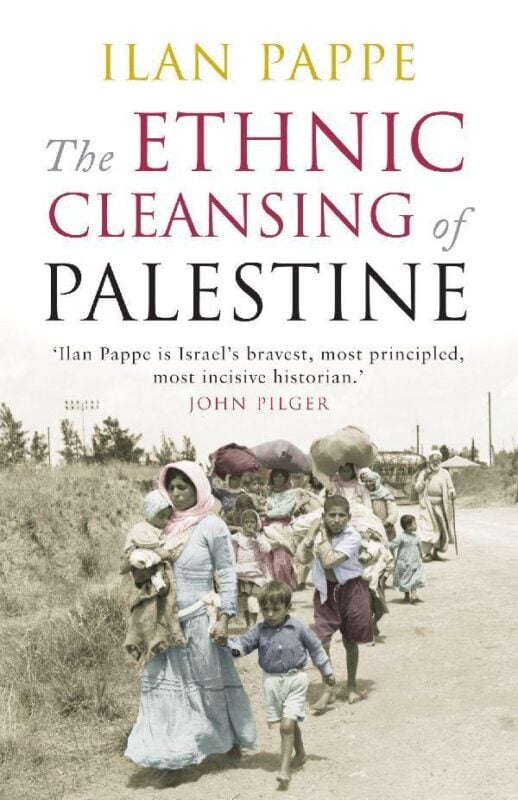
The events of 1948—known to Palestinians as the Nakba—produced the largest forced displacement in the history of the region. Pappe exposes the myth that Palestinians fled of their own accord. Archival research, eyewitness testimony, and the findings of Israeli historians demonstrate systematic campaigns of intimidation, violence, and expulsion. Village depopulations, massacres, and property seizures were not random outcomes of war, but planned operations. The creation of the refugee crisis formed a foundational moment, producing irreversible changes in demographic and territorial realities.
Myth Six: The June 1967 War as Defensive Necessity
Pappe interrogates the widely circulated narrative that Israel fought the 1967 war to stave off imminent destruction. Military planning, political calculations, and archival evidence point to strategic aims of territorial expansion and consolidation. The occupation of the West Bank, Gaza, East Jerusalem, Sinai, and the Golan Heights followed premeditated plans developed over decades. Postwar policies institutionalized control, constructed settlement infrastructures, and imposed legal regimes that reshaped the region’s map and future.
Myth Seven: The Sole Democracy in the Middle East
Examining Israel’s self-definition as a democracy, Pappe foregrounds the lived experience of Palestinians under its rule. Within the pre-1967 borders, legal and civil inequalities stratify the citizenry. In the occupied territories, military law and bureaucratic mechanisms maintain domination over millions deprived of basic rights. The claim to democratic exceptionalism obscures the realities of exclusion, surveillance, and coercion. Elections, legal systems, and representative institutions serve to sustain the prevailing order rather than extend equal participation.
Myth Eight: Oslo and the Mirage of Peace
The Oslo Accords initiated a diplomatic process that promised a framework for peace and statehood. Pappe analyzes the mechanisms through which the accords entrenched occupation and fragmented Palestinian agency. By delegating limited administrative powers and creating an illusion of self-governance, the process reified existing power dynamics. The expansion of settlements, construction of barriers, and imposition of movement restrictions accelerated in the post-Oslo years. Diplomatic negotiations became an instrument for managing, rather than resolving, the core issues of sovereignty and justice.
Myth Nine: Gaza as a Self-Inflicted Crisis
Narratives that attribute Gaza’s suffering to internal misrule deflect scrutiny from external actions that sustain the humanitarian crisis. The blockade, periodic military offensives, and systematic restrictions on resources and movement generate conditions of chronic deprivation. Pappe situates Gaza within the broader architecture of control, linking the enclave’s fate to regional and international strategies that treat its population as both a threat and a bargaining chip.
Myth Ten: The Two-State Solution as Inevitable Destiny
Pappe questions the inevitability of partition as the solution to the conflict. He surveys the intellectual and activist challenges to the two-state paradigm, tracing arguments that call for alternative frameworks rooted in equality, justice, and shared belonging. Demographic, territorial, and political developments undermine the viability of partition, compelling a reevaluation of assumptions that have shaped diplomatic orthodoxy for decades. Pappe’s concluding analysis proposes that sustainable resolution requires confronting the legacies of settler colonialism, dispossession, and structured inequality.
Commitment and Scholarship: The Historian’s Mandate
Throughout his work, Pappe advances the argument that rigorous scholarship can become an instrument of justice. He rejects the false dichotomy between academic detachment and ethical engagement. By situating himself as both a participant and observer, Pappe models a form of historical inquiry that resists cooptation by power. He encourages future researchers, activists, and students to embrace commitment without sacrificing intellectual rigor.
Practical Utility: Knowledge for Advocacy
The book functions as a resource for advocates, scholars, and citizens who engage with the Israeli-Palestinian question. Its structure and clarity enable readers to navigate complex arguments and mobilize historical evidence in public debate. Pappe’s research invites application in policy analysis, educational settings, and activism. The timeline and references facilitate further exploration, while the sustained argumentation grounds discussions in empirical reality.
Contextualizing the Narrative: Regional and Global Implications
By exposing the constructed nature of dominant myths, Pappe situates the Israeli-Palestinian conflict within broader patterns of colonialism, state formation, and resistance. He demonstrates the interdependence of local and global forces in shaping the conflict’s trajectory. International actors, including Western governments and organizations, continue to reproduce narratives that align with their strategic interests. Recognizing this dynamic becomes essential for any effort to transform the terms of debate and create conditions for reconciliation.
Prospects for Reconciliation: Setting the Record Straight
The closing chapters articulate a vision for peace rooted in historical clarity and moral responsibility. Pappe insists that reconciliation cannot proceed on the foundation of distortion and denial. By illuminating the realities obscured by myth, he creates space for new political imaginaries. The work of setting the historical record straight, he contends, possesses the potential to disrupt entrenched systems of privilege and violence. What futures become possible when myths yield to truth, and when history serves justice rather than power?
Conclusion: Refuting Myths, Transforming Possibilities
Ten Myths About Israel by Ilan Pappe accomplishes a dual task: it decodes the architecture of historical narrative and demonstrates its enduring impact on political life. Through detailed research and methodical exposition, Pappe reclaims the possibility of shared understanding and justice. The struggle over history shapes the present and the future. By confronting the myths that animate the Israeli-Palestinian conflict, readers encounter the urgent necessity of reimagining what is possible for the land and its peoples.

About the Book