Rothschild and Early Jewish Colonization in Palestine (Geographical Perspectives on the Human Past)

Rothschild and Early Jewish Colonization in Palestine by Ran Aaronsohn examines the formative years of Jewish agricultural settlement in Palestine and positions this historical process within the wider framework of global colonization in the late nineteenth century. Aaronsohn locates the unique geographic, economic, and cultural factors that drove Jews from Eastern Europe to migrate and establish new lives on unfamiliar land. The narrative anchors on the role of Baron Edmond de Rothschild and his administration, whose intervention altered the trajectory of these pioneering communities and forged a legacy that endures in the landscape and society of the region.
Jewish Colonization Defined: The Migration-Settlement Sequence
Colonization begins with movement and culminates in rootedness. Aaronsohn defines colonization as the process that starts with migration and proceeds through the creation of new settlements—an active, visible transformation of the land. He rejects the confusion between colonization and colonialism, arguing that Jewish settlement involved neither conquest nor exploitation but rather a conscious, organized migration driven by necessity, aspiration, and communal intent. The Jewish settlers’ goal centered on the cultivation of land, building of homes, and the formation of agricultural societies. These actions transformed both the physical geography and the social fabric of Palestine. The book explains the difference between terms, stating that colonization involves the deliberate act of establishing a society in a foreign territory, generally for economic or ideological purposes, while colonialism signals domination and control by a foreign power.
The Global Context: Colonization in the Nineteenth Century
Population growth, industrial change, and shifting social currents in Europe fueled a wave of colonization throughout the nineteenth century. Jews who faced exclusion, persecution, and declining prospects in Russia, Romania, and elsewhere found in Palestine an opportunity for both national and agricultural renewal. Aaronsohn situates Jewish settlement within the broader flow of contemporaneous European migration and colonization, referencing major projects such as the French and Italian settlements in North Africa, German Templer communities in Palestine, and the Jewish Colonization Association in Argentina. He demonstrates that Jewish colonization in Palestine exhibited traits shared with other projects: reliance on private and public sponsorship, strategic selection of location, adaptation to environmental and social conditions, and persistent tension between settlers and sponsors over autonomy, administration, and vision.
The First Wave: The Pre-Rothschild Years
The resurgence of Jewish settlement in Eretz Israel began in 1882 as the First Aliyah pioneers established the foundational colonies of Rishon le-Zion, Rosh Pinna, and Zikhron Ya‘akov. Petah Tikva, first settled in the 1870s, saw its revival through the efforts of returning founders and Russian Jewish newcomers. The driving energy behind these efforts came from the Hovevei Zion movement, which mobilized resources, screened settlers, acquired land, and shaped the first communal structures. Each society drew up its own charter, organized logistics, and dispatched emissaries to secure property. In these early years, settlement followed a communal model—land remained collectively held, labor was distributed according to communal planning, and families established themselves under challenging environmental and economic conditions. Colonists often began by camping on site while families lived nearby, only later transitioning to permanent housing as infrastructure developed.
Sporadic Growth and Persistent Hardships
The first settlements struggled to transform vision into sustainable reality. Land acquisition required negotiation with Arab landlords and Ottoman authorities. Much of the available land lay underutilized, sometimes entirely barren, necessitating extensive preparation before planting or construction could begin. Settlers faced the dual challenge of harsh terrain and limited capital, forcing them to improvise with tents, shacks, and repurposed existing structures. The pattern of staged migration—from temporary encampments to permanent villages—emerged out of necessity, dictated by logistical and environmental constraints. Colonists organized communal farms and introduced new crops, including vineyards, which would become a distinguishing feature of Jewish agricultural enterprise.
Baron Rothschild Enters: Transformative Patronage
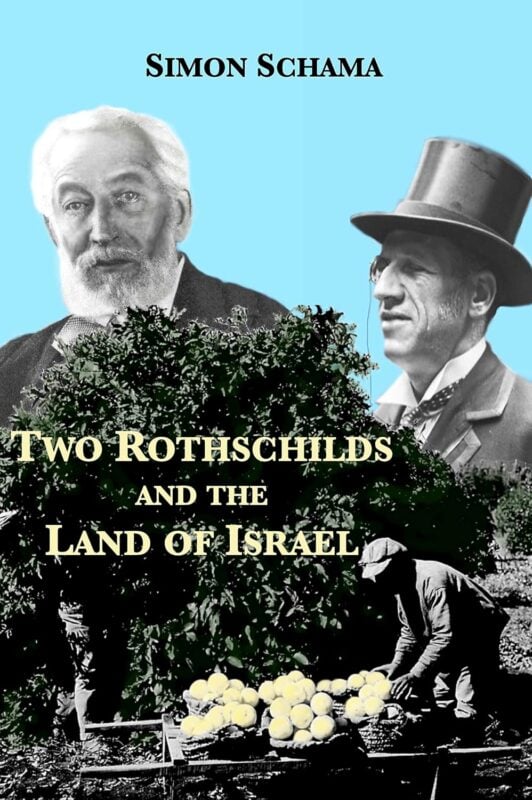
By the mid-1880s, the sustainability of these early colonies hung in the balance. At this critical juncture, Baron Edmond de Rothschild intervened, bringing with him not only financial resources but also a new administrative structure. Rothschild’s agents assumed responsibility for funding, land purchases, agricultural equipment, and technical expertise. The book tracks the transformation of the colonies under Rothschild’s patronage, detailing the evolution of management, the introduction of new agricultural methods, and the gradual shift from communal to more individualized landholding. Rothschild’s administration imposed new standards for planning, reporting, and productivity, demanding both compliance and accountability from settlers. This partnership, at times fraught with tension, established a hierarchical administrative model that left a lasting imprint on the character and structure of Jewish settlement in Palestine.
Administration, Expertise, and Social Fabric
Aaronsohn explores the organizational dynamics that emerged as Rothschild’s involvement deepened. The administration he installed brought together layers of agents: clerks, agronomists, technicians, and communal workers. These professionals imported agricultural knowledge and technological innovation from Europe, introducing new crops, irrigation techniques, and farm management strategies. Their presence shaped not only the economy of the colonies but also their social composition, as hierarchies of labor and authority developed. Colonists navigated these new structures, balancing the drive for autonomy with the benefits and restrictions of organized support.
Physical and Social Landscape: Transformation and Permanence
Through Rothschild’s investment and organizational discipline, the colonies gradually stabilized and expanded. New settlements appeared, and existing ones consolidated their agricultural bases. Permanent stone and wood houses replaced makeshift structures. Infrastructure—roads, wells, mills, communal halls—emerged, often funded or initiated by Rothschild’s administration. The physical transformation of the landscape mirrored social consolidation: communal governance yielded to administrative authority, but the bonds of shared experience and collective effort remained strong. The demographic character of the colonies, shaped by waves of Russian and Romanian immigrants, produced a unique blend of cultural, linguistic, and social influences.
Comparative Perspectives: Models and Lessons
Aaronsohn’s narrative draws upon examples from French and Italian colonization in Algeria, Libya, and Tunisia, as well as the Jewish Colonization Association in Argentina and German Templer colonies in Palestine, to illuminate the particularities of Jewish settlement. French colonization in Algeria, for example, proceeded through phases of “heroic” spontaneous settlement, government-sponsored official colonization, and private capitalist initiatives. These phases reflected shifting priorities—security, economic exploitation, social integration—and each introduced specific strategies for land acquisition, population settlement, and infrastructure development. Italian and French settlement in North Africa featured the interaction of government support, private capital, and local adaptation. The JCA’s experience in Argentina illustrated the challenges of remote agricultural colonization, with geography, administration, and social cohesion determining outcomes.
Obstacles, Adaptations, and Innovations
Jewish colonists in Palestine confronted a series of obstacles—lack of capital, insufficient infrastructure, uncertain land tenure, and adverse environmental conditions. Rothschild’s administration mitigated some of these difficulties by providing resources, expertise, and centralized management, but the process also introduced new challenges. Bureaucratic oversight sometimes created friction between settlers and administrators. Agricultural planning required adaptation to unfamiliar soils, climates, and market conditions. Colonists introduced new methods and crops, notably vineyards, which proved both economically significant and symbolically resonant. The book tracks the evolution of settlement patterns, agricultural production, and economic diversification across the first eight years of colonization.
The Social Structure of the Colonies
As the colonies matured, their social structures evolved. The communal model of the early years gradually gave way to more differentiated roles and responsibilities, shaped by both necessity and external influence. Rothschild’s administration employed clerks, agronomists, communal workers, and technicians, each contributing specialized skills to the operation of the settlements. Social hierarchies emerged, with lines of authority defined by expertise, function, and connection to the Rothschild administration. Education, religious practice, and cultural traditions adapted to the new environment, blending inherited customs with the realities of pioneering life.
Long-Term Impact and Enduring Legacy
Aaronsohn asserts that the first eight years of Jewish colonization in Palestine—1882 to 1890—created a mold for subsequent development. The patterns of land acquisition, agricultural innovation, communal governance, and administrative oversight established during this period shaped the trajectory of Jewish settlement for decades. Rothschild’s imprint endures in the physical landscape, the administrative culture, and the ethos of collective endeavor that characterized later waves of immigration and settlement.
The Epilogue: Colonization Reconsidered
The book closes by revisiting the question of colonization: how do motives, methods, and outcomes intersect to produce a distinctive settlement process? Aaronsohn advances a typology based on government involvement, economic resources, settler motivation, and interaction with indigenous populations. He defines “root colonization” as the deliberate effort to settle and develop a new land, driven by genuine engagement with the territory and its possibilities. This type of colonization—exemplified by Jewish agricultural settlement in Palestine—differs from exploitative or dominion colonization, which seeks control and extraction. The interplay of migration, land development, and communal aspiration produces an enduring legacy, rooted in both landscape and memory.
A Foundational Work in Historical Geography
Rothschild and Early Jewish Colonization in Palestine by Ran Aaronsohn synthesizes historical narrative, geographic analysis, and comparative study. Through meticulous documentation and clear structural argument, the book offers both a detailed case study of Jewish settlement and a framework for understanding colonization as a world-shaping force. For readers seeking insight into the transformation of Palestine, the agency of Jewish pioneers, and the legacy of Rothschild’s intervention, this work provides a compelling and authoritative account. The story unfolds through the convergence of individual aspiration, communal action, administrative innovation, and landscape transformation—producing a model of colonization that continues to resonate across history and geography.

About the Book